
Range Hood Ducting Types and Installation Requirements: A B2B Guide for Kitchen Appliance Buyers
For kitchen distributors, dealers, and project buyers, the range hood is often the most technically demanding appliance to specify correctly. Unlike plug-and-play cooktops or ovens, a range hood’s performance depends heavily on one factor that is decided long before installation: the ducting system. Choosing the wrong duct type, size, or route can reduce extraction efficiency by 30% or more, create noise problems, and even violate local building codes. This guide examines the main ducting types, installation requirements, and what B2B buyers should verify when planning a kitchen lineup—whether for a residential development, a commercial kitchen, or a multi-unit hospitality project.
Ducted vs. Ductless Systems: The Core Decision
The first and most important distinction in range hood ventilation is between ducted (vented) and ductless (recirculating) systems. A ducted range hood captures cooking smoke, grease, and odors and expels them outside through a network of ductwork. This is the preferred method for serious cooking because it removes moisture and airborne grease entirely from the kitchen environment. Ductless hoods, by contrast, pass air through a charcoal filter and recirculate it back into the room. While ductless models are easier to retrofit into kitchens without external wall access, they are less effective at removing heat and humidity, and the filters require regular replacement.
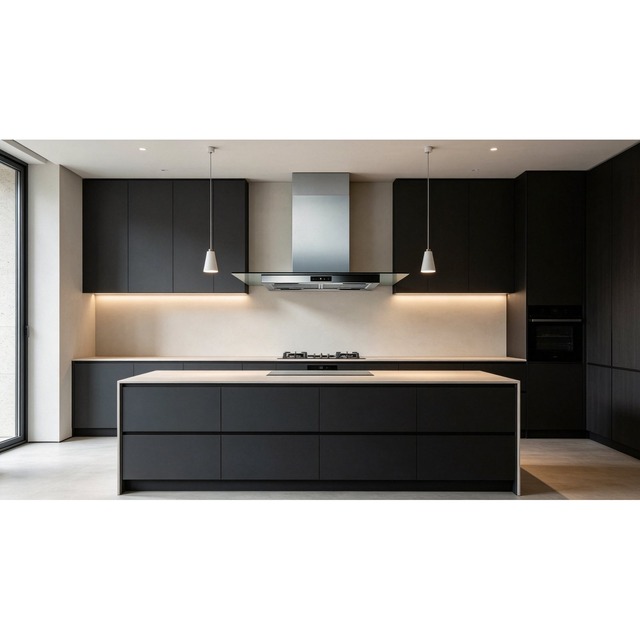
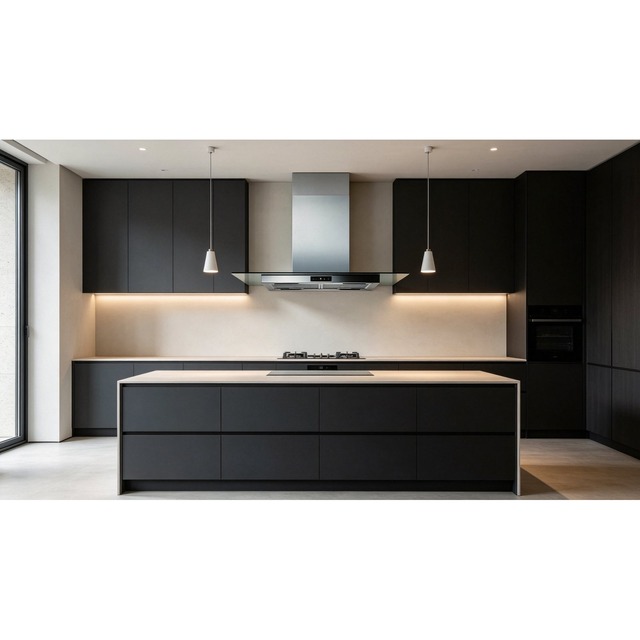
For B2B buyers, the choice between ducted and ductless is rarely about the hood itself—it is about the building’s structure. A wall-mounted ducted hood, such as Golenda’s CV60BK-B-V1T1L angled glass model with a maximum airflow of 750 m³/h, requires a clear path to the exterior. An island hood, like Golenda’s 850 m³/h touch-control model, demands ceiling ducting, which must be planned during the architectural phase. If the building design does not accommodate duct runs, a ductless unit becomes the only option, but the buyer must accept lower overall air quality performance.
Duct Materials, Sizing, and Routing Requirements
Industry standards are clear on duct material: ducts used for domestic kitchen range or cooktop ventilation must be made of metal and have smooth interior surfaces. This requirement exists because cooking exhaust contains grease particles that can accumulate on rough surfaces, creating fire hazards and reducing airflow. Smooth metal ducts—typically galvanized steel or aluminum—are easier to clean and offer less resistance to air movement. Flexible semi-rigid aluminum ducts are sometimes used for short runs, but they should be kept as straight as possible because every bend increases static pressure and reduces the hood’s effective extraction rate.
Duct sizing is equally critical. The most common residential duct sizes are 6-inch and 7-inch round ducts, with 6-inch ducts suitable for hoods up to approximately 600 CFM (cubic feet per minute). For higher-capacity hoods, larger ducts are required. A Golenda island hood delivering 850 m³/h (roughly 500 CFM) will perform best with a 7-inch or larger duct to minimize backpressure. Local building codes may specify minimum duct sizes based on the range hood’s capacity and the kitchen’s layout, so buyers must verify these requirements before finalizing specifications.
Routing is another factor that is often underestimated. Range hood ducts must be isolated from all other exhaust systems, including bathroom exhaust fans and clothes dryer vents. Combining these systems can cause backdrafting, where contaminated air is pushed back into living spaces. The duct run should also be as short and straight as possible, with a maximum of two 90-degree elbows for optimal performance. Each elbow adds significant resistance, and long horizontal runs can allow condensation and grease buildup over time. For installations that require drilling a new vent hole through a wall or ceiling, the structural implications—including new wiring and ductwork—must be assessed by a qualified installer before the hood is purchased.
Installation Requirements and 2026 Design Trends
The physical installation of a ducted range hood involves more than mounting the unit and connecting power. For wall-mounted models, the installer must locate wall studs, ensure the hood is level, and connect the duct collar to the exhaust pipe with proper sealing. For island hoods, the duct must pass through the ceiling, which often requires coordination with roofing, insulation, and structural beams. Replacing an old hood can be simpler if existing ductwork is in place, but even then, the new unit’s duct collar size must match the existing pipe—a mismatch that can void performance guarantees.
Looking ahead to 2026, extraction is becoming more discreet and integrated. According to industry trend reports from Miele and kitchen design firms, high-performance extraction continues to be a must-have for open-plan spaces, with quiet efficiency and minimal visual impact among the top priorities. Lighting integration is also gaining importance, as consumers expect their hoods to double as task lighting over the cooktop. For Golenda’s B2B partners, this means specifying hoods that offer not just strong airflow—like the 750 m³/h and 850 m³/h models—but also features such as touch controls, multiple fan speeds, and designs that complement modern cabinetry.
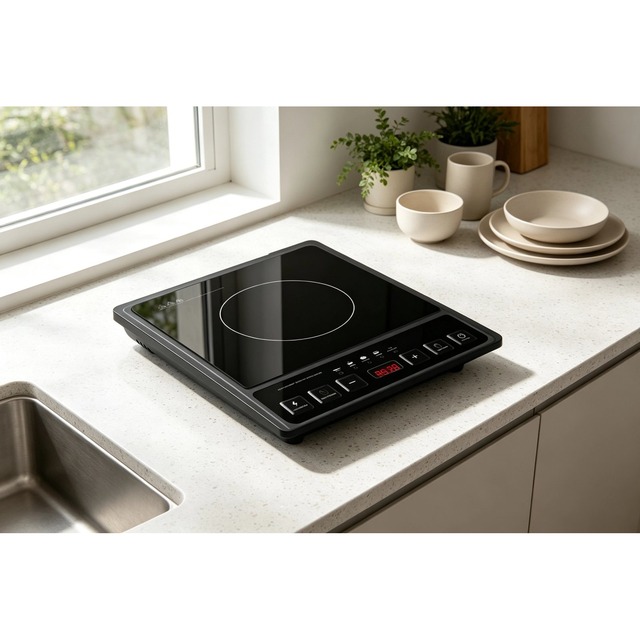
Another trend affecting ducting decisions is the shift toward induction cooking. As induction cooktops gain market share—the global induction cooktop market was estimated at USD 5.97 billion in 2026—the heat load in kitchens changes. Induction cooktops produce less ambient heat than gas, which means the ventilation requirements may be slightly lower. However, buyers should not undersize ducting based on cooktop type alone. The range hood must still handle steam, odors, and grease from all cooking methods, and a properly sized duct system ensures the hood operates at its rated efficiency.
Recent Company News
Golenda Appliances, operating under its parent company Shenzhen Xinhuike, has made significant investments to support its B2B partners. In November 2025, Golenda Appliances launched a new production base operating under a comprehensive 4S management system, ensuring streamlined operations, strict quality control, and superior product consistency from raw components to finished goods. The company has also established a multi-million-dollar annual innovation fund to drive core competitiveness and overcome external challenges through sustained creativity and technology-driven innovation. Additionally, CHK (Stock Code: 831167), the entity behind Golenda’s smart control technologies for home appliances, successfully listed on the Beijing Stock Exchange on May 27, marking the company’s official entry into the capital market.
Conclusion
Range hood ducting is not a one-size-fits-all component. The choice between ducted and ductless systems, the selection of metal duct materials, the sizing of ducts to match airflow capacity, and the routing that isolates kitchen exhaust from other ventilation systems all determine whether a hood performs to its specifications. For B2B buyers, these decisions must be made early in the design process, with input from architects and HVAC engineers. By partnering with manufacturers like Golenda Appliances, which offers a range of wall-mounted and island hoods with airflow ratings from 750 m³/h to 850 m³/h, buyers can ensure their kitchen projects meet both performance expectations and regulatory requirements.
About Golenda Appliances
Golenda Appliances is a Chinese OEM/ODM kitchen appliance manufacturer specializing in induction cooktops, infrared cookers, gas hobs, built-in ovens, range hoods, dishwashers, and air fryers. The company operates a new production base with advanced 4S management and full automation, and is backed by a multi-million-dollar annual innovation fund. Golenda’s product lineup includes the CV60BK-B-V1T1L angled glass range hood (750 m³/h, touch control, 3 speeds) and an island hood with 850 m³/h airflow, both designed for modern kitchen installations.
Sources
- https://www.amorettibrothers.com/journal-post/range-hood-duct-size-a-complete-guide-custom-kitchen
- https://prolinerangehoods.com/blogs/news/range-hoods-that-vent-outside
- https://www.homedepot.com/c/ah/how-to-install-a-range-hood/9ba683603be9fa5395fab90602e0727
- https://www.lambro.net/kitchen-venting/kitchen-ducts
- https://forum.nachi.org/t/range-hood-exhaust-proper-duct-material/233114
- https://www.sbid.org/11-key-kitchen-appliance-trends-for-2026-from-miele
- https://www.businessresearchinsights.com/market-reports/induction-cooktop-market-122403