
Kitchen Appliance Voltage and Frequency Standards by Country: A B2B Sourcing Guide
For importers, distributors, and private-label buyers in the kitchen appliance trade, understanding global voltage and frequency standards is not a technical afterthought—it is the foundation of successful product specification. A 3500W portable induction cooktop that performs flawlessly in Germany may fail immediately in the United States if the electrical configuration is wrong. This guide provides a practical overview of mains electricity standards across key markets, helping you align your sourcing strategy with real-world conditions.
The Global Landscape: 220–240V Dominance and the 100–127V Exception
According to World Standards, the vast majority of countries operate on a mains supply between 220 and 240 volts at either 50 or 60 Hz. Countries that operate on 100–127 volts are greatly outnumbered. This means that for most global markets, a dual-voltage or 220–240V-rated appliance will cover the largest addressable customer base. However, the exceptions matter enormously for product planning.
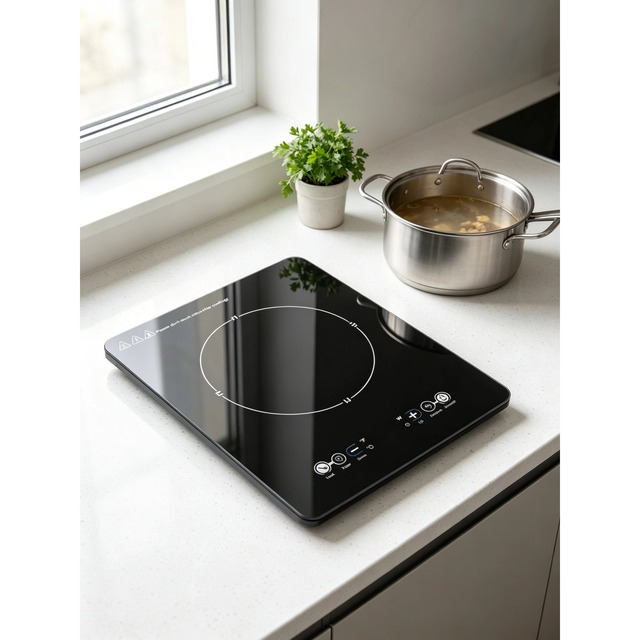
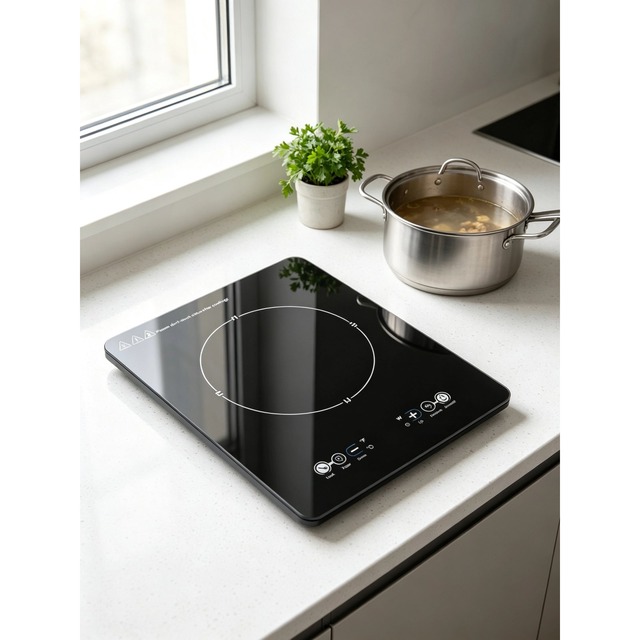
The United States, Canada, Japan, Taiwan, and parts of Central and South America (such as Guatemala at 120V and Costa Rica at 120V) operate on lower voltages. In North America, the standard residential supply is 120V at 60 Hz, though high-power appliances like electric ovens and dryers often use 240V circuits. For portable kitchen appliances—such as the Golenda GXMI-S02 portable induction cooktop with a real rated power of 1300W—a 120V configuration is essential for the North American retail channel. In contrast, the same model destined for Europe, the Middle East, or most of Asia would require a 220–240V rating at 50 Hz.
Frequency is equally critical. Most of the world, including Europe, Asia, Africa, and Oceania, uses 50 Hz. North America and parts of South America, along with a few Asian markets like South Korea and the Philippines, use 60 Hz. While many modern induction cooktops and infrared cookers are designed to handle both frequencies, motors in appliances like range hoods and dishwashers are frequency-sensitive. A 60 Hz motor running on a 50 Hz supply will run slower and may overheat; the reverse can cause excessive wear. For B2B buyers, specifying the correct frequency is non-negotiable.
Regional Breakdown: What Buyers Need to Know
**Europe and the United Kingdom:** The European Union standardizes on 230V at 50 Hz, with plug types C and F being most common. The UK uses 230V at 50 Hz with the distinctive Type G plug. For induction cooktops and built-in ovens, this is a relatively uniform market, simplifying SKU management. However, certification requirements—such as CE marking—remain a critical compliance step, as highlighted in Golenda’s own guide for importers on CE, CB, and ETL certification.
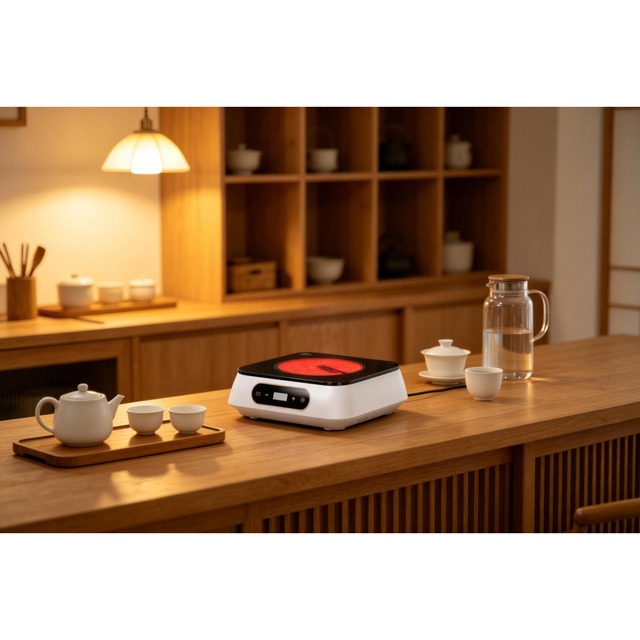
**North America:** The United States and Canada use 120V at 60 Hz as the primary residential supply, with 240V available for high-load appliances. Plug types A and B dominate, though Type B (grounded) is increasingly required in new construction. For portable countertop appliances like the Golenda CHK-RTS1003 infrared cooktop (800W), a 120V configuration is standard. For larger built-in appliances such as dishwashers or range hoods, a dedicated 240V circuit may be required, depending on the model’s power draw.
**Asia-Pacific:** This region is a patchwork of standards. Japan uses 100V at 50 Hz in the east and 60 Hz in the west—a unique challenge for appliance importers. China, Australia, and New Zealand use 220–240V at 50 Hz. India also operates on 230V at 50 Hz. For high-power portable induction cooktops like the Golenda YL-3501B (3500W), the 220–240V standard in most of Asia is well-suited, but buyers must verify the plug type (Type I in Australia/New Zealand, Type D/M in India, Type A/I in China).
**Middle East and Africa:** Most countries in these regions use 220–240V at 50 Hz, with plug types C, D, G, or F depending on the country. This is a favorable environment for standard 230V products. However, some countries, like Saudi Arabia, have both 127V and 220V supplies in different regions, so market-specific research is essential.
**Latin America:** Standards vary widely. Brazil uses 127V in some states and 220V in others, both at 60 Hz. Mexico uses 127V at 60 Hz. Argentina uses 220V at 50 Hz. For a distributor covering multiple Latin American markets, offering both voltage variants of a product—or selecting models with wide voltage tolerance—can significantly reduce inventory complexity.
Practical Implications for Product Sourcing and OEM Partnerships
For B2B buyers, the voltage and frequency question is not just about the product itself—it affects the entire supply chain, from component sourcing to final certification. When working with an OEM/ODM manufacturer like Golenda Appliances, buyers should specify the target market’s electrical standards at the outset. This ensures that the correct heating elements, control boards, and plug types are integrated during production, rather than requiring costly retrofits later.
Golenda’s product line demonstrates how a single platform can serve multiple markets. For example, the Golenda GXMI-SC01 portable induction cooktop, delivering a real power of 3500W with 11 precise stage settings, can be configured for either 230V/50Hz or 120V/60Hz markets. Similarly, the Golenda ALP-I03 single-burner induction cooktop, featuring an unpolished black crystal plate and a copper-clad aluminum heating coil, is a versatile model suitable for a range of regional specifications. The key is early and clear communication with your manufacturing partner.
Another consideration is the growing global shift toward induction cooking. Market research from Mordor Intelligence indicates that the residential induction cooktops market is expected to grow from USD 16.49 billion in 2025 to USD 23.90 billion by 2031, at a CAGR of 6.39%. Europe currently dominates the household induction cooktop market with a 38.6% share, driven by energy efficiency regulations and high electricity costs. For importers, this trend underscores the importance of sourcing induction cooktops that meet both electrical standards and energy performance expectations in target markets.
Recent Company News
Golenda Appliances continues to strengthen its manufacturing and innovation capabilities. In November 2025, the company launched a new production base operating under a comprehensive 4S management system, ensuring streamlined operations, strict quality control, and superior product consistency across the entire production process. The facility covers everything from raw components to finished goods, reinforcing Golenda’s commitment to manufacturing excellence for its B2B partners.
Additionally, the parent company, Shenzhen Xinhuike, has established a multi-million-dollar annual innovation fund to drive core competitiveness. This strategic initiative underscores a long-term commitment to technology-driven product development. In a related milestone, CHK—the group’s affiliated entity—successfully listed on the Beijing Stock Exchange on May 27, with the stock code 831167. CHK has been dedicated for years to the research and development of smart control technologies for home appliances, a capability that directly benefits Golenda’s product engineering.
Conclusion
Navigating global voltage and frequency standards is a fundamental responsibility for any kitchen appliance importer or distributor. The world is broadly divided between 220–240V/50Hz markets and 100–127V/60Hz markets, with significant regional variations in plug types and secondary voltages. A successful sourcing strategy begins with precise specification of your target market’s electrical requirements and continues through certification, production, and quality control.
By partnering with an experienced OEM/ODM manufacturer that understands these complexities, you can ensure that your products are not only compliant but also optimized for performance in each market. As the global demand for induction cooktops and energy-efficient cooking solutions continues to rise, getting the electrical fundamentals right will be a key differentiator for successful brands.
About Golenda Appliances
Golenda Appliances is a Chinese OEM/ODM manufacturer specializing in kitchen appliances, including induction cooktops, infrared cookers, gas hobs, built-in ovens, range hoods, dishwashers, and air fryers. The company operates a new production base with advanced 4S management and full automation, ensuring consistent quality from raw components to finished products. Golenda’s product range includes models such as the GXMI-S02 portable induction cooktop (1300W), the CHK-RTS1003 portable infrared cooktop (800W), the YL-3501B portable induction cooktop (3500W), and the GXMI-SC01 high-performance induction cooktop (3500W). The company is backed by Shenzhen Xinhuike’s multi-million-dollar annual innovation fund and its affiliated entity CHK, which is listed on the Beijing Stock Exchange (Stock Code: 831167).
Sources
- World Standards: Plug, socket & voltage by country — https://www.worldstandards.eu/electricity/plug-voltage-by-country
- GeneratorSource: Voltage & Frequency by Country — https://generatorsource.com/tools-info/voltages-frequencies-hz-around-the-world
- Depco Power Systems: Voltage and Frequency By Country — https://www.depco.com/resources/voltage-and-frequency-by-country
- LISUN: National input voltage, frequency and plug types — https://www.lisungroup.com/news/technology-news/voltage-and-frequency-of-all-over-the-world.html
- Wikipedia: Mains electricity by country — https://en.wikipedia.org/wiki/Mains_electricity_by_country
- Mordor Intelligence: Residential Induction Cooktops Market Report — https://www.mordorintelligence.com/industry-reports/residential-induction-cooktops-market
- Coherent Market Insights: Household Induction Cooktops Market — https://www.coherentmarketinsights.com/market-insight/household-induction-cooktops-market-4572