
How to Import Kitchen Appliances from China: A B2B Sourcing Guide
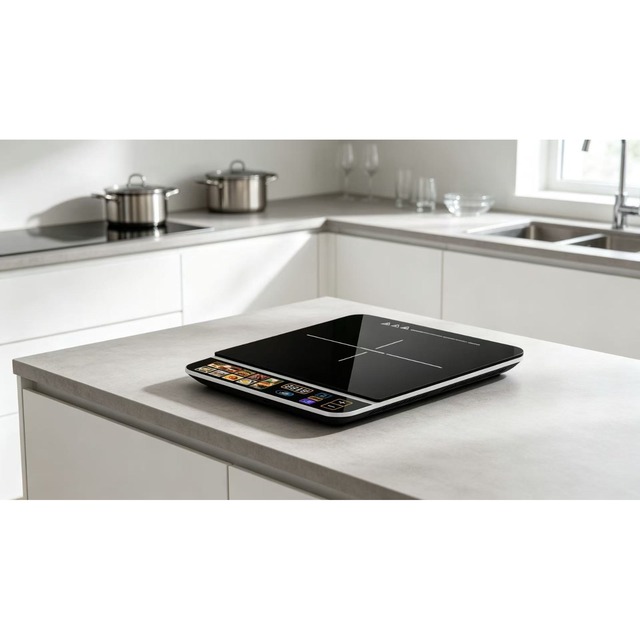
Importing kitchen appliances from China remains one of the most effective strategies for distributors and retailers seeking competitive pricing, diverse product ranges, and flexible OEM/ODM manufacturing options. With the global induction cooktop market projected to grow from USD 24.79 billion in 2025 to USD 39.53 billion by 2035, according to industry analysts, the timing for building a reliable supply chain has never been more critical. This guide walks through the essential steps—from verifying manufacturers to managing shipping terms—so you can source with confidence.
Step 1: Define Your Market Demand and Product Specifications
Before contacting any supplier, clarify what your target customers actually need. Are you serving urban apartment dwellers who prefer portable induction cookers, or are you equipping professional kitchens that require heavy-duty gas hobs? European markets, for instance, continue to lead global adoption of household induction cooktops with a 38.6% market share in 2026, driven by high electricity costs and strict environmental regulations. If you are distributing in that region, portable single-burner units under $150 represent the fastest-growing segment at 22% annual growth.
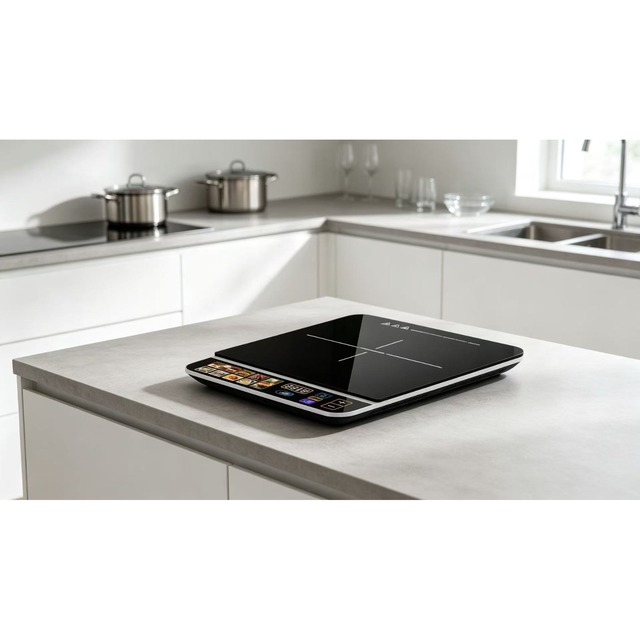
Once demand is clear, map your technical requirements: voltage and frequency standards for your destination country, available certifications, panel materials, power output, and safety features. For example, a distributor targeting the EU market would look for appliances carrying CB, GS, EMC, LVD, and RoHS certifications. Golenda Appliances, a Chinese OEM/ODM manufacturer, offers portable induction cookers such as the BI-18A17-C with 10 power levels and a 60–240°C temperature range, already certified with CB, GS, EMC, LVD, BSCI, RoHS, and Reach—an indication of the compliance levels possible from experienced suppliers.
Step 2: Select a Verified OEM or ODM Manufacturer
The heart of successful importing lies in choosing the right factory partner. Not all manufacturers are equal in capability, quality control, or willingness to customize. Look for suppliers who demonstrate:
- **Transparent production facilities**: Golenda, for instance, launched a new production base in November 2025 operating under a comprehensive 4S management system with full automation, ensuring streamlined operations and consistent product quality from raw components to finished goods.
- **OEM/ODM experience**: Whether you need a private-label portable infrared cooktop or a built-in oven with specific cavity sizes, a manufacturer with proven customization capabilities saves you months of development time.
- **Financial stability and long-term vision**: Golenda’s parent company, CHK, successfully listed on the Beijing Stock Exchange on May 27, and has established a multi-million-dollar annual innovation fund to drive core competitiveness—signals of a supplier committed to sustained R&D.
Request factory audit reports, visit production lines if possible, and ask for client references in your region. A supplier that openly shares its manufacturing processes is far more likely to deliver on its promises.
Step 3: Confirm Certifications and Compliance for Your Destination Market
Certifications are non-negotiable in kitchen appliance imports. They protect your customers, your brand reputation, and your legal standing. The specific marks required vary by country: CE and GS for Europe, ETL or UL for North America, SAA for Australia, and so on. Beyond product safety, social compliance audits like BSCI are increasingly demanded by large retailers.
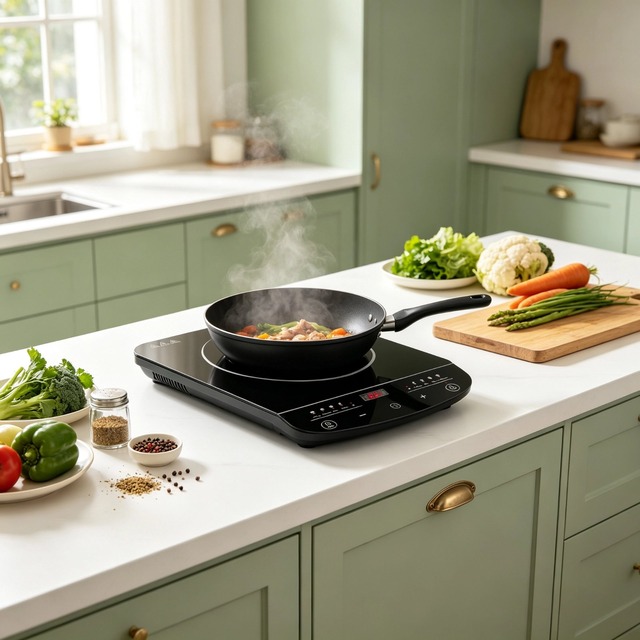
When evaluating a manufacturer, ask which certifications they already hold on specific models. For example, Golenda’s 2000W portable induction cooktop (CHK-CCX01-EU) and its 3500W infrared cooktop (CHK-RTD3401) are designed for countertop cooking with touch controls and timers—features that must meet rigorous electromagnetic compatibility (EMC) and low-voltage directive (LVD) standards in the EU. If a supplier cannot produce valid certificates for the exact model you intend to import, treat that as a red flag.
Step 4: Negotiate MOQ, Pricing, and Payment Terms
Once you have shortlisted manufacturers, negotiate the commercial terms. Minimum order quantities (MOQs) vary widely depending on product complexity and factory capacity. Portable cookers typically have lower MOQs than built-in ovens or gas hobs, which require more tooling and materials. Be realistic about your initial volume, but also consider long-term growth—suppliers are more willing to offer favorable pricing for committed partnerships.
Payment terms in China commonly involve a 30% deposit with the balance before shipment, though letters of credit are also used for larger orders. Clarify whether quoted prices are FOB (Free on Board) or CIF (Cost, Insurance, and Freight). Industry guidance from experienced importers recommends FOB terms—such as FOB Shenzhen or FOB Guangzhou—as the most common and transparent arrangement for B2B buyers. Under FOB, the factory covers costs and risks of transporting goods to the export port and clearing them for export, giving you clearer control over shipping costs.
Step 5: Request Samples and Conduct Pre-Shipment Quality Inspections
Never skip the sample stage. A pre-production sample allows you to verify build quality, functionality, and compliance with your specifications before committing to mass production. Test the appliance yourself: check power levels, temperature accuracy, timer functions, and overall finish. For gas hobs, verify the burner configuration and pan support stability—Golenda’s 4-burner stainless steel model (E60-4005S) supports both natural gas and LPG, while its 5-burner version includes a 3.3kW main burner and cast iron pan support, details that matter to end users.
After mass production begins, schedule a quality inspection at the factory before shipment. Independent third-party inspection agencies can verify quantity, packaging, and product conformity against your approved sample. This step is particularly important when importing built-in appliances like ovens, where installation dimensions and electrical ratings must match your market’s standards exactly.
Step 6: Arrange Logistics, Customs Clearance, and Warehousing
With goods ready for shipment, engage a freight forwarder to handle transportation and a customs broker to manage clearance procedures. Many freight forwarders offer both services, simplifying coordination. Decide whether to ship by sea (cost-effective for large volumes) or air (faster but more expensive for urgent orders). For bulky items like built-in ovens or range hoods, sea freight in full or less-than-container loads is typically the norm.
Prepare your documentation carefully: commercial invoice, packing list, bill of lading, certificates of origin, and any required compliance certificates. Work with your customs broker to classify products correctly under HS codes, as misclassification can lead to delays or unexpected duties. If you are importing into the EU, be aware of the Ecodesign requirements advancing for domestic cooking appliances, which may affect product specifications in the coming years.
Recent Company News
Golenda Appliances has made significant strides in manufacturing and corporate development. In November 2025, the company unveiled a new production base operating under a comprehensive 4S management system with full automation, designed to ensure strict quality control and superior product consistency. Meanwhile, CHK, the parent entity, successfully listed on the Beijing Stock Exchange on May 27, marking its official entry into the capital market. The company has also announced the establishment of a multi-million-dollar annual innovation fund, reinforcing its commitment to technology-driven development and core competitiveness in the home appliance sector.
Conclusion
Importing kitchen appliances from China is a structured process that rewards careful planning and diligent supplier verification. By defining your market needs, selecting a certified OEM/ODM partner, confirming compliance, negotiating clear terms, and inspecting quality before shipment, you can build a reliable supply chain that supports long-term growth. With induction cooktops and energy-efficient cooking solutions gaining global traction, now is the time to secure manufacturing partnerships that can scale with your business.
About Golenda Appliances
Golenda Appliances is a Chinese OEM/ODM manufacturer of kitchen appliances, including induction cooktops, infrared cookers, gas hobs, built-in ovens, range hoods, dishwashers, and air fryers. The company operates a new production base with advanced 4S management and full automation, and its parent company, CHK, is listed on the Beijing Stock Exchange. Golenda offers a range of certified products, including portable induction cookers, built-in gas hobs, infrared cooktops, and built-in ovens, with capabilities for private-label manufacturing.
Sources
- https://yld-home.com/how-to-import-kitchen-appliances-from-china
- https://kodiohome.com/how-import-kitchen-appliances-from-china-guide
- https://www.quora.com/How-can-I-impot-home-appliances-from-China
- https://www.worldfirst.com/au/insight/importing-from-china/sourcing-electronics-from-china
- https://www.snsinsider.com/reports/induction-cooktops-market-9823
- https://www.coherentmarketinsights.com/market-insight/household-induction-cooktops-market-4572
- https://czckitchen.com/induction-cooktop-rate
- https://www.mordorintelligence.com/industry-reports/residential-induction-cooktops-market