
Kitchen Appliance Voltage and Frequency Standards by Country: A B2B Sourcing Guide
For importers and distributors, electrical compatibility is not a technical footnote — it is a commercial precondition. A container of induction cooktops rated for the wrong mains supply cannot be sold, and a gas hob with an incompatible ignition circuit creates service headaches in every market. Understanding how voltage and frequency standards vary by country is therefore one of the first checks in any sourcing plan. This guide summarises the global picture and explains how buyers can align product selection with destination-market requirements.
The Global Picture: 220–240V Dominates, 50 Hz and 60 Hz Split the World
According to World Standards, the vast majority of countries operate on a mains supply between 220 and 240 volts, at either 50 or 60 Hz. That single fact shapes most sourcing decisions. Europe, for example, follows a 220–240V standard at 50 Hz, with plug types C, E, F, and G commonly used across the continent. North America sits outside this norm: the United States and Canada both run on a 60 Hz frequency standard, which is essential for the correct functioning of alternating-current appliances. Frequency is the detail buyers most often overlook. A 50 Hz motor or timer circuit does not simply run “a little differently” on a 60 Hz supply — it can affect speed, timing accuracy, and long-term reliability. Voltage and frequency must therefore be specified together, never treated as separate line items.
Why This Matters for Kitchen Appliance Categories
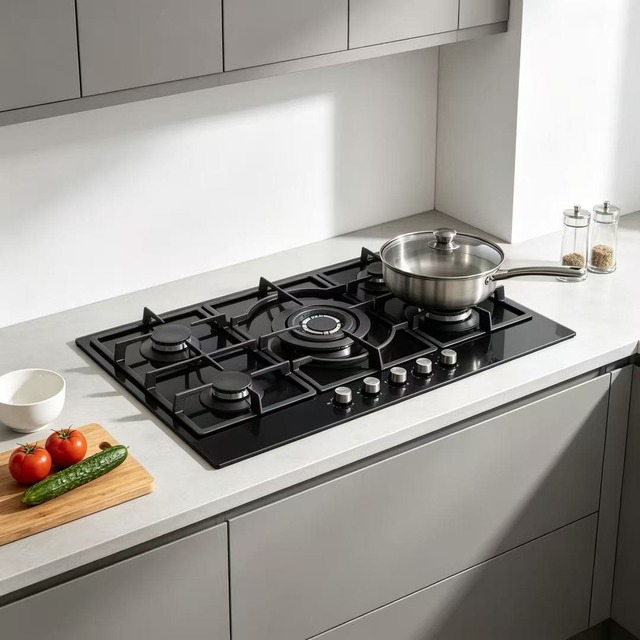
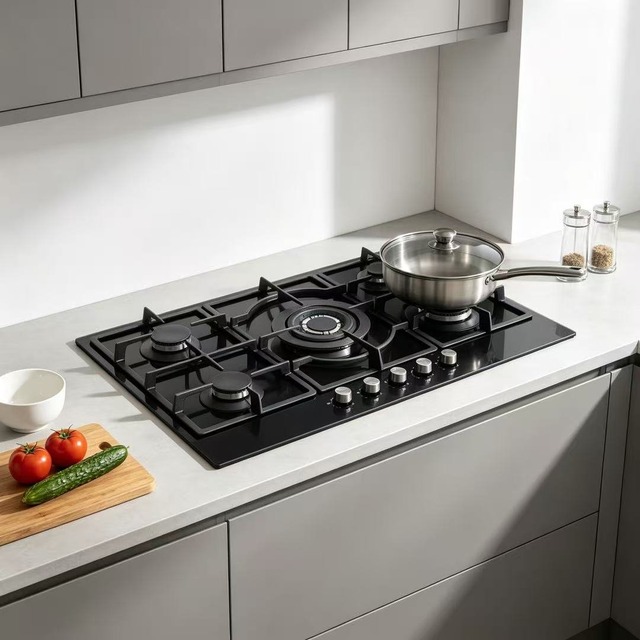
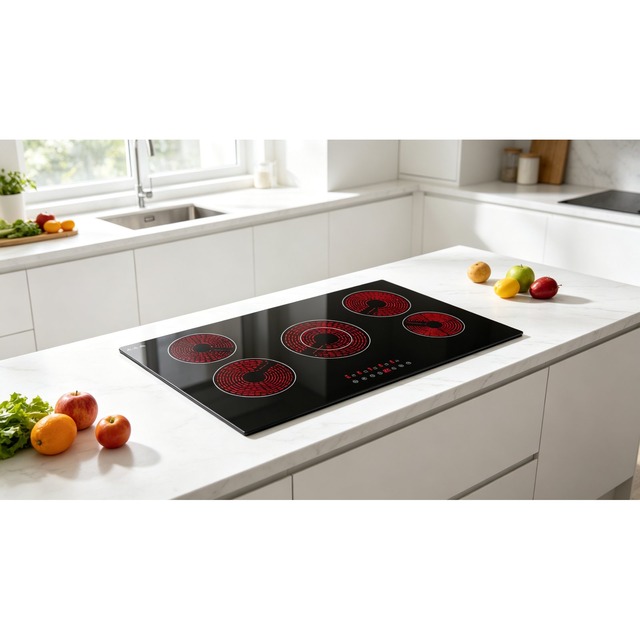
Different appliance types carry different electrical risk profiles. Built-in induction and infrared cooktops are among the most sensitive, because their power electronics are engineered around a specific input. The Golenda 7000W built-in induction hob (Model PIT03B70CAD), for instance, delivers 7000W across three zones with a 280mm centre zone rated at 3000W and 3500W boost, plus 9 power levels and a 99-minute timer — a specification that must be matched to the correct mains supply before it leaves the factory. The Golenda 6400W built-in infrared cooktop with five zones, touch control, and a 99-minute all-zone timer raises the same question. Gas appliances introduce a second variable: the Golenda E60-4017S built-in gas hob supports dual gas types (NG/LPG) with a gas pressure of 2000/2800Pa and offers ignition via DC 1.5V or AC 110–, showing how electrical and gas parameters are specified side by side. Larger appliances follow the same logic. The Golenda OHCHULY range hood (model JO-HW016) is a 900mm chimney hood delivering 1400 m³/hr through a 40# copper motor — motor-driven products where frequency directly influences performance. Even small appliances such as the Golenda AF-50CM 5L single-pot air fryer with mechanical control must be configured for the target market’s supply.
Practical Guidance for Importers and Distributors
The most reliable approach is to treat voltage and frequency as part of the product brief from the outset, not as a post-order adjustment. Where a market’s standard differs from your existing catalogue, confirm the configuration in writing before tooling or production begins. Buyers shipping appliances into markets with different plug types should also plan for plug and cable specification alongside electrical ratings, since a pin change alone does not resolve a voltage or frequency mismatch. For markets such as Italy, the practical considerations extend beyond electricity to kitchen dimensions and installation conventions, which is why experienced distributors evaluate the full installation environment rather than the appliance in isolation. Finally, keep documentation aligned: the rated voltage, frequency, and gas pressure on the nameplate should match the destination market exactly, because mismatches surface later as warranty claims and returns.
Recent Company News
Golenda Appliances continues to publish sourcing and manufacturing resources for B2B buyers through its blog, including the Private Label Kitchen Appliance Branding Guide for B2B Buyers, the Private Label Kitchen Appliance Branding Guide for Importers and Distributors, the Dishwasher Buying Guide for Importers and Distributors, and the OEM Kitchen Appliance Manufacturing Process Step by Step series. These guides support importers and distributors in planning private-label programmes and understanding the OEM production workflow.
Conclusion
Voltage and frequency standards are foundational to kitchen appliance sourcing. With most of the world on 220–240V and the market split between 50 Hz and 60 Hz, and with North America operating on a 60 Hz standard, buyers cannot assume a single configuration will travel. Matching each product — from induction and infrared cooktops to gas hobs, range hoods, and air fryers — to its destination market’s supply is the difference between a sellable shipment and a costly rework. Build these specifications into the brief, confirm them before production, and document them accurately on the final product.
About Golenda Appliances
Golenda Appliances is a Chinese OEM/ODM kitchen appliance manufacturer producing induction cooktops, infrared cookers, gas hobs, built-in ovens, range hoods, dishwashers, and air fryers. The company supports private-label and OEM programmes for importers and distributors worldwide.
Sources
- https://golenda-appliances.com/kitchen-appliance-voltage-and-frequency-standards-by-country-a-b2b-sourcing-guide/
- https://handlighting.com/pages/global-voltage-reference-guide
- https://travelpander.com/are-plug-sockets-in-canada-the-same-as-us/
- https://italyhandbook.com/should-you-ship-appliances-to-italy-voltage-plugs-and-kitchen-dimensions/
- https://www.suntransformer.com/transformer-information/worldwide-voltage-and-frequency-standards/