
Private Label Kitchen Appliance Branding Guide for B2B Buyers
Private label kitchen appliances allow importers, distributors, and retailers to sell products under their own brand identity rather than the manufacturer’s. For buyers sourcing induction cooktops, gas hobs, built-in ovens, dishwashers, or air fryers, private label offers a path to differentiation in a crowded market. This guide outlines the key branding decisions, product considerations, and sourcing practices that help B2B buyers build a successful private label kitchen appliance line.
Understanding Private Label vs. OEM
Private label and OEM are often used interchangeably, but they describe different relationships. In private label, a supplier manufactures a product that carries the buyer’s brand exclusively. In OEM arrangements, the buyer typically contributes design specifications or engineering input, and the manufacturer produces to those requirements. Both models share a common advantage: the buyer controls the brand identity while the manufacturer handles production.
According to industry analysis, private label appliances offer exclusive branding, market differentiation through tailored packaging and design, and the flexibility to start with small batches and expand as demand grows. This flexibility matters for buyers testing a new category before committing to larger volumes.
One practical branding lesson comes from established private label programs: dominant private label brands are often named for the job they do, not for the company that sells them. A single umbrella brand stretched across unrelated product categories tells customers little, while category-specific sub-brands communicate purpose clearly. A buyer launching a cookware line, a beverage-service line, and a storage line may benefit from distinct names for each rather than one generic label.
Product Selection and Branding Considerations
The foundation of any private label program is the product itself. Buyers should select appliances that match their target market’s expectations for performance, design, and compliance.
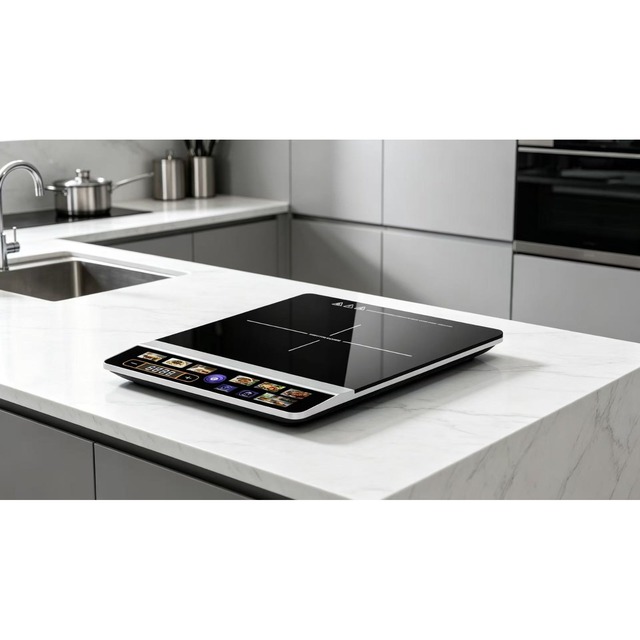
Golenda’s product range illustrates the options available to private label buyers. The Golenda BI-18A9-B 1800W Induction Cooker is a slim model with a copper coil heating system, touch control on a polished black glass panel, 10 power levels, and a temperature range of 60°C to 240°C. It carries CB, GS, EMC, LVD, BSCI, RoHS, and Reach certifications — a combination that supports market entry in Europe and other regulated regions.
For built-in kitchens, the Golenda PIT02B70CAD-3 is a 7000W three-zone built-in induction hob with three independent cooking zones, including a large 280mm right zone with 3000W power and a 3500W boost function. The Golenda BF-6A29E7E5 built-in oven delivers 2900W with nine cooking functions, a 1300W top element, 1600W grill element, 900W bottom element, and 1800W convection element. The Golenda DWB-801 built-in dishwasher operates at 1750W with a 220V-240V 50Hz power supply, 8-14 place settings, and a stainless steel inner tub.
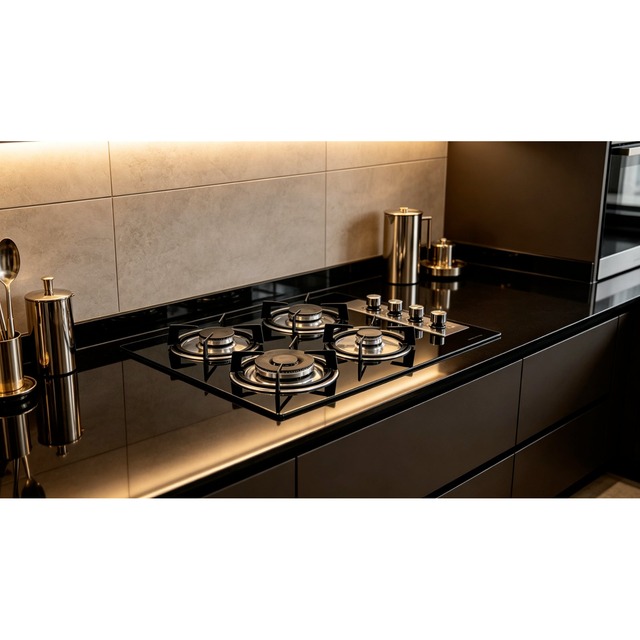
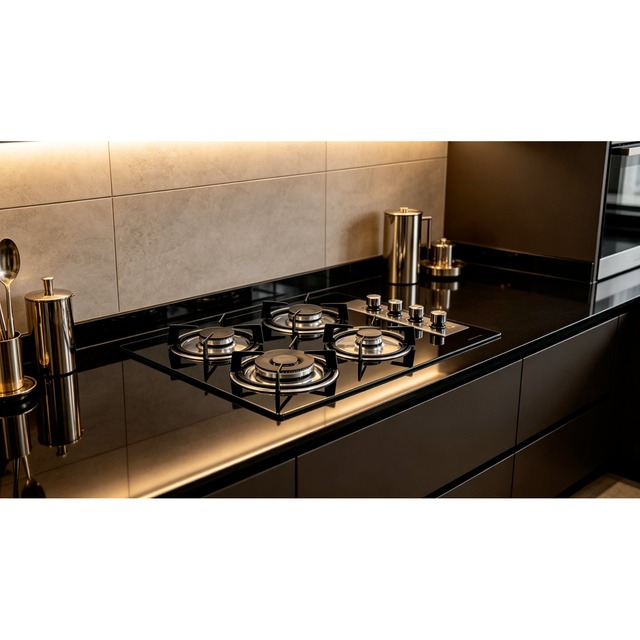
Gas options include the Golenda four-burner gas hob with a tempered glass panel and dual ignition (DC 1.5V/AC 110-240V), supporting both natural gas and LPG, and a stainless steel variant with the same dual ignition and gas-type compatibility.
When branding these products, buyers should consider how design trends align with their market. Stainless steel remains dominant in kitchen design, with industry reporting indicating it accounts for just over 81% of the market, while black and white make up smaller shares. This suggests that finish selection is a strategic branding decision, not merely an aesthetic one.
Compliance is equally important. The EU energy label requirements for kitchen appliances continue to evolve, and buyers selling into Europe should verify that their private label products meet current labeling and ecodesign rules. Golenda’s published guidance on EU energy label requirements offers a starting point for B2B compliance planning.
Sourcing and Manufacturing Partnerships
Choosing the right manufacturing partner determines whether a private label line can scale. Buyers should evaluate production consistency, quality control, and capacity.
Golenda Appliances, also known as Shenzhen Xinhuike, has invested in manufacturing infrastructure. In November 2025, the company launched a new production base operating under a comprehensive 4S management system, designed to ensure streamlined operations, strict quality control, and product consistency from raw components to finished goods. The company also announced a multi-million-dollar annual innovation fund to support technology-driven development.
At the corporate level, CHK (Stock Code: 831167) successfully listed on the Beijing Stock Exchange on May 27, holding a listing ceremony at its headquarters in Guangming. CHK has focused on research and development of smart control technologies for home appliances. This capital-market milestone supports the group’s long-term manufacturing and R&D capacity.
For buyers, these facts matter because private label success depends on a supplier’s ability to deliver consistent quality across repeat orders. Standardized production methods, batch monitoring, and quality control protocols help ensure uniformity — a cornerstone of customer trust in private label programs.
Market context supports the opportunity. The global induction cooktop market is estimated at USD 5.97 billion in 2026 and projected to reach USD 7.52 billion by 2035, growing at a CAGR of 2.6%. Other forecasts place the induction cooktops market at USD 24.79 billion in 2025, reaching USD 39.53 billion by 2035 at a CAGR of 4.78%. Europe dominated the household induction cooktops market in 2026 with a 38.6% share, driven by energy-efficiency preferences and environmental regulations. These figures indicate sustained demand for the categories Golenda manufactures.
Recent Company News
Golenda Appliances unveiled a new production base in November 2025 with advanced 4S management and full automation. Shenzhen Xinhuike announced a multi-million-dollar annual innovation fund to drive core competitiveness. CHK successfully listed on the Beijing Stock Exchange on May 27 under stock code 831167.
Conclusion
Private label kitchen appliance branding requires careful decisions about product selection, compliance, design, and manufacturing partnerships. Buyers who align their brand strategy with proven product platforms and reliable production capacity can build differentiated lines that serve their retail markets. Golenda’s range of induction cookers, gas hobs, built-in ovens, and dishwashers, combined with its manufacturing investments and published compliance guidance, offers a practical foundation for B2B buyers developing private label programs.
About Golenda Appliances
Golenda Appliances is a Chinese OEM/ODM kitchen appliance manufacturer producing induction cooktops, infrared cookers, gas hobs, built-in ovens, range hoods, dishwashers, and air fryers. The company operates under Shenzhen Xinhuike and is associated with CHK (Stock Code: 831167), listed on the Beijing Stock Exchange. Golenda’s product range includes the BI-18A9-B induction cooker, PIT02B70CAD-3 built-in induction hob, BF-6A29E7E5 built-in oven, DWB-801 built-in dishwasher, and four-burner gas hobs in tempered glass and stainless steel.
Sources
- https://www.sokany.com/a-private-label-wholesale-small-appliances-step-by-step-launch-guide.html
- https://cloudkitchens.com/blog/how-to-choose-a-private-label-kitchen
- https://www.oemhomeappliances.com/post/private-label-vs-oem-which-is-right-for-your-business
- https://www.restaurantware.com/blogs/advertising-and-marketing/empowering-private-labels-to-become-dominant-brands
- https://www.businessresearchinsights.com/market-reports/induction-cooktop-market-122403
- https://www.snsinsider.com/reports/induction-cooktops-market-9823
- https://www.coherentmarketinsights.com/market-insight/household-induction-cooktops-market-4572
- https://www.youtube.com/watch?v=tcWyb4BQuQo