
Smart Kitchen Appliance Trends and IoT Integration: What B2B Buyers Need to Know
The kitchen appliance industry is undergoing a structural shift. Buyers are no longer sourcing cooktops, ovens, and hoods purely on power output and price. They are asking how these products fit into connected homes, how they support energy-efficiency targets, and how they can be differentiated on retail shelves. For importers, distributors, and private-label brands, understanding smart kitchen appliance trends and IoT integration is now a sourcing requirement rather than a future consideration.
The Connected Kitchen: From Standalone Appliances to Integrated Systems
IoT is the backbone of the modern smart kitchen. According to Market Research Future, the trend toward integrating smart appliances into kitchen systems is gaining momentum, with IoT-enabled devices allowing users to control and monitor kitchen equipment remotely from smartphones or tablets. This integration improves convenience and efficiency by letting consumers manage cooking processes without being physically present at the hob.
A systematic review published on ScienceDirect reinforces this direction, noting that IoT technology in kitchens is reshaping food storage, preparation, and dining experiences. The review highlights IoT-enabled refrigerators and cooking appliances that enhance food management, reduce waste, and promote nutritional awareness — a signal that connectivity is being tied to measurable household benefits, not just novelty.
Techstrong.ai describes IoT as the backbone of modern smart kitchens, enabling appliances to connect, communicate, and function autonomously. Connected ovens, fridges, and coffee makers can sync with phones or home assistants, send notifications when groceries run low, or preheat remotely. For manufacturers, this means control electronics, sensors, and connectivity modules are becoming as important as heating elements and burners.
Fortune Business Insights identifies increasing integration of AI, IoT connectivity, and voice recognition as key trends in the smart kitchen appliances market, alongside growing demand for energy-efficient products. This combination matters for B2B buyers: smart features are increasingly bundled with efficiency claims, which influence regulatory compliance and consumer messaging in markets such as Europe.
What Buyers Should Look For in Smart-Ready Cooking Appliances
Not every kitchen appliance needs full connectivity, but the components that support smart functionality are already shaping product roadmaps. Control technology is the foundation. Golenda’s parent group, CHK, has focused on research and development of smart control technologies for home appliances, and its listing on the Beijing Stock Exchange reflects the strategic value of that expertise.
At the product level, the building blocks of a smart-ready kitchen are visible across Golenda’s range. The Golenda CHK-B2102 portable induction cooktop delivers 2000W in a compact W270 x D340 x H60mm footprint with a push-button panel featuring 8 keys, 12 LEDs, and a four-digit segment display — a control architecture that can support precise, programmable cooking. The Golenda KS-A01S air fryer uses digital control with a 60–200°C temperature range, 6 presets (Fries, Wings, Steak, Veg, Bake, DIY), and a 1–60 minute timer, illustrating how preset-driven digital interfaces are becoming standard in countertop categories.
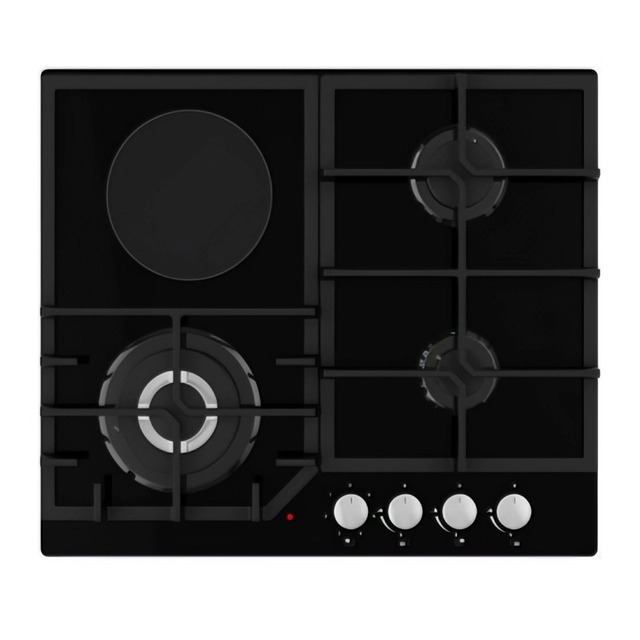
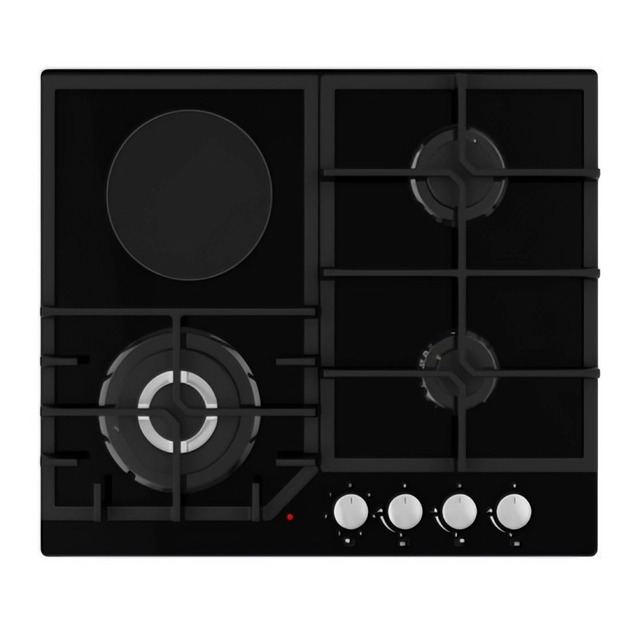
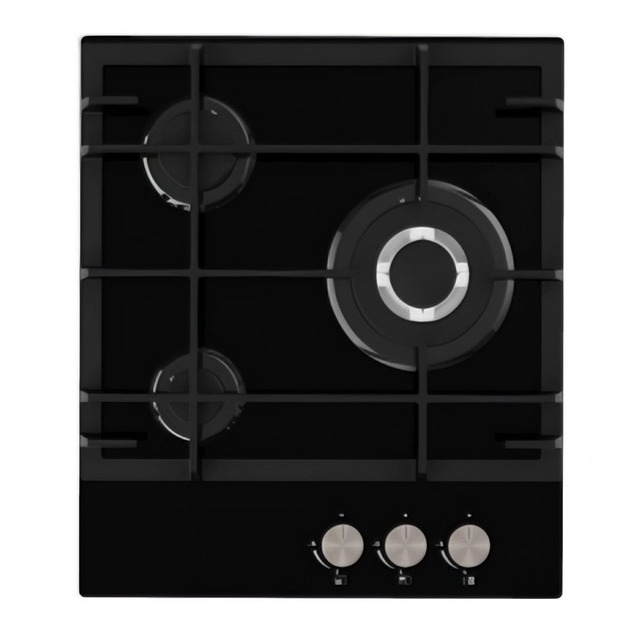
For built-in cooking, Golenda’s gas hob range shows how performance and control precision are being combined. The AGCP6032-B 60cm gas hob features a 3500W wok burner plus 1.0kW auxiliary, 1.75kW semi-rapid, and 1200W rapid burners. The AGCA4532-A 45cm glass hob offers a 3.5kW wok burner, 1.75kW semi-rapid, and 1.0kW auxiliary burner. The 90cm GHS916-P3CI model carries six burners, including two 3.4kW triple ring burners, a 2.4kW rapid burner, two 1.88kW semi-ring burners, and a 0.9kW auxiliary burner. These configurations matter because multi-zone cooking with precise flame control is a prerequisite for the automated, sensor-driven cooking that IoT platforms aim to deliver.
Design trends also intersect with smart functionality. Miele’s 2026 trend outlook points to discreet, high-performance extraction as a must-have for open-plan spaces, with lighting integration and minimal visual impact prioritized in range hood design. Smart waste management is another emerging area, with smart kitchen composters cited among 2026 trends, alongside smart refrigeration technology that helps households extend freshness and plan meals more efficiently. For OEM/ODM buyers, these categories represent adjacent opportunities to extend a connected kitchen portfolio beyond cooking.
Sourcing Implications: Efficiency, Compliance, and Private Label
Induction cooking sits at the center of the efficiency conversation. Coherent Market Insights reports that Europe dominated the global household induction cooktops market in 2026 with a 38.6% share, driven by consumer preference for energy-efficient appliances, high electricity costs, and strict environmental regulations and government incentives. Mordor Intelligence notes that pricing parity is accelerating adoption as Europe advances new Ecodesign requirements for domestic cooking appliances and mandates emissions reporting for gas appliances.
Market sizing varies by scope, but the direction is consistent. Precedence Research estimates the household induction cooktops market at USD 5.30 billion in 2026, projected to reach USD 10.78 billion by 2035 at a CAGR of 8.20%. SNS Insider values the broader induction cooktops market at USD 24.79 billion in 2025, expected to reach USD 39.53 billion by 2035 at a 4.78% CAGR. Business Research Insights estimates USD 5.97 billion in 2026 growing to USD 7.52 billion by 2035 at a 2.6% CAGR.
For B2B buyers, the practical takeaway is that smart and efficient cooking appliances are not a niche premium segment. They are becoming the mainstream specification in regulated markets. Private-label programs can differentiate through control interfaces, preset programming, and connectivity readiness, while OEM partners handle voltage and frequency variants for different regions.
Recent Company News
Golenda’s parent group, CHK (Stock Code: 831167), successfully listed on the Beijing Stock Exchange on May 27, holding a listing ceremony at its headquarters in Guangming. CHK has been dedicated to research and development of smart control technologies for home appliances.
Shenzhen Xinhuike announced the establishment of a multi-million-dollar annual innovation fund, described as a commitment to technology-driven innovation and market leadership.
In November 2025, Golenda Appliances launched a new production base operating under a comprehensive 4S management system, with full automation and strict quality control from raw components to finished products.
Conclusion
Smart kitchen appliance trends and IoT integration are reshaping what buyers should expect from OEM/ODM partners. Connectivity, digital control, energy efficiency, and regulatory readiness are converging, and categories from induction cooktops to air fryers are being redesigned around these priorities. For importers and distributors, the opportunity lies in partnering with manufacturers that combine smart control expertise, flexible production, and a broad cooking appliance portfolio. Golenda Appliances continues to invest in innovation, manufacturing capability, and smart control technology to support private-label and OEM programs worldwide.
About Golenda Appliances
Golenda Appliances is a Chinese OEM/ODM kitchen appliance manufacturer producing induction cooktops, infrared cookers, gas hobs, built-in ovens, range hoods, dishwashers, and air fryers. The company is part of CHK, which is listed on the Beijing Stock Exchange (Stock Code: 831167) and focused on smart control technologies for home appliances. Golenda operates a new production base launched in November 2025 under a 4S management system with full automation. Its product range includes the AGCP6032-B and AGCA4532-A gas hobs, the GHS916-P3CI 90cm six-burner gas hob, the CHK-B2102 portable induction cooktop, and the AF-40AM and KS-A01S air fryers.
Sources
- https://www.marketresearchfuture.com/reports/iot-in-kitchen-systems-market-32482
- https://www.sciencedirect.com/science/article/abs/pii/S0963996925008956
- https://www.fortunebusinessinsights.com/smart-kitchen-appliances-market-117283
- https://techstrong.ai/articles/how-ai-and-iot-are-shaping-the-next-generation-of-smart-kitchens
- https://www.sbid.org/11-key-kitchen-appliance-trends-for-2026-from-miele
- https://shopping.yahoo.com/home-garden/kitchen/articles/5-kitchen-appliance-trends-youll-060000542.html
- https://www.coherentmarketinsights.com/market-insight/household-induction-cooktops-market-4572
- https://www.mordorintelligence.com/industry-reports/residential-induction-cooktops-market
- https://www.precedenceresearch.com/household-induction-cooktops-market
- https://www.snsinsider.com/reports/induction-cooktops-market-9823
- https://www.businessresearchinsights.com/market-reports/induction-cooktop-market-122403