
Private Label Kitchen Appliance Branding Guide for Importers and Distributors
Private label manufacturing has become one of the most effective ways for importers, distributors, and retailers to build a differentiated kitchen appliance portfolio. Rather than competing on price alone with identical products, a private label strategy lets a business attach its own identity to appliances manufactured by an experienced partner. For buyers evaluating this route, the decisions made at the sourcing, branding, and compliance stages determine whether the line succeeds on shelves or stalls in the warehouse.
Understanding Private Label vs. OEM
The terms private label and OEM are often used interchangeably, but they describe different relationships. As explained by OEM Home Appliances, private label appliances are products manufactured by a supplier but branded exclusively for one retailer or distributor. The advantages include exclusive branding, market differentiation through tailored packaging and design, and the flexibility to start with small batches and expand as demand grows. OEM arrangements, by contrast, typically involve manufacturing to a buyer’s existing design and specification.
For most importers, the practical distinction matters at the point of branding. A private label program requires the manufacturer to apply the buyer’s logo, packaging, and sometimes custom control panels or finishes. This is where a supplier’s flexibility and production discipline become critical. Golenda Appliances, for example, operates a new production base launched in November 2025 that runs under a comprehensive 4S management system, covering everything from raw components to finished goods with strict quality control and product consistency. That kind of standardized process is what makes consistent private label output possible across repeat orders.
Building the Brand: Product Selection and Differentiation
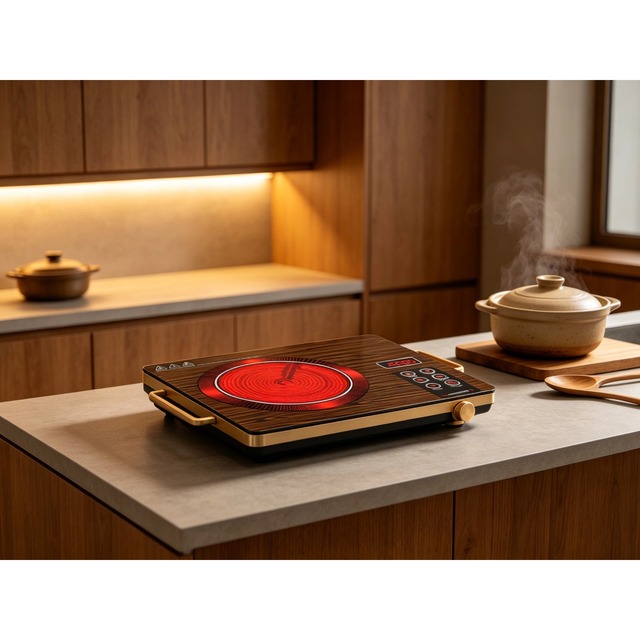
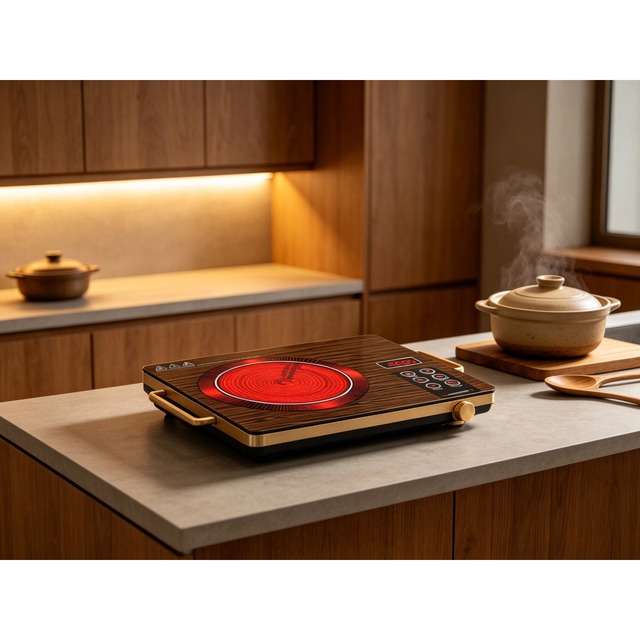
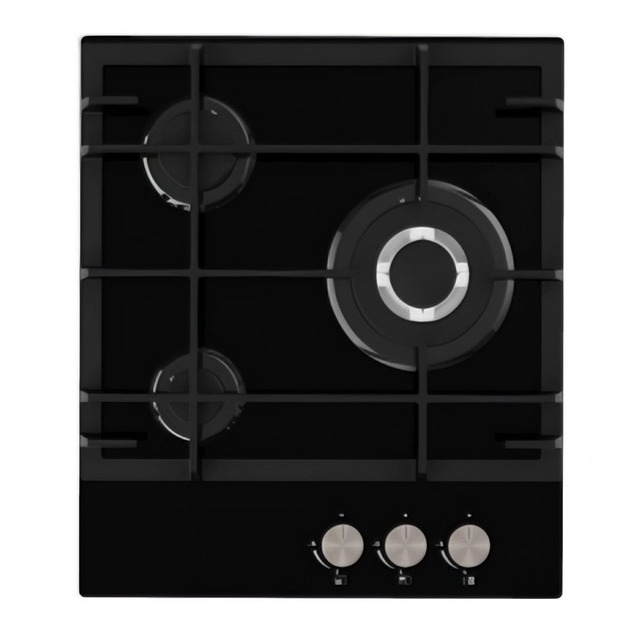
A private label line is only as strong as the products behind it. Buyers should select a core range that matches their market’s cooking habits and price positioning. Golenda’s catalog illustrates the breadth available to private label partners. The Golenda GXMC-S03 portable infrared cooktop delivers 2000W of real power through an A-grade integral micro-crystal panel, with a touch button plus knob control mode and 10 stage settings. For markets that prefer gas, the Golenda AGCA4532-A built-in gas hob is a 45cm glass cooktop with three burners, including a high-output 3.5kW wok burner, a 1.75kW semi-rapid burner, and a 1.0kW auxiliary burner.
Portable induction remains a high-volume category. The Golenda CHK-B2101 portable induction cooktop offers 2000W in a compact W270 x D340 x H60mm frame with push-button control and 12 LED indicators, while the Golenda CHK-IS2001 provides 2000W, a single 165mm zone, 9 power levels, and a 99-minute timer with touch control. For built-in applications, the Golenda PIF06B70CACA 4 zone induction hob delivers 7000W total output with Touch & Slider control, 9 power stages, and a 99-minute digital timer. On the gas side, the Golenda JY-G4031W is a 4 burner stove with 7.05 kW total power, auto ignition, and a safety valve.
Differentiation in private label does not always require new tooling. It can come from control interface choices, finish selection, packaging design, and the accessory set included in the box. SOKANY’s guide to launching a private label small appliance line emphasizes that prioritizing quality and customer satisfaction is central to standing out in a competitive market. Buyers should treat these touchpoints as brand decisions, not afterthoughts.
Compliance, Trends, and Market Context
Private label branding does not remove regulatory obligations. The EU Energy Label Requirements for Kitchen Appliances: A 2026 B2B Compliance Guide published by Golenda highlights that energy labeling remains a live requirement for appliances sold into European markets. Buyers should confirm labeling and documentation expectations with their manufacturing partner before finalizing packaging artwork.
Market data supports continued investment in cooking appliances. According to Precedence Research, the household induction cooktops market reached USD 5.30 billion in 2026 and is projected to reach USD 10.78 billion by 2035, growing at a CAGR of 8.20%. Coherent Market Insights reports that Europe dominated the global household induction cooktops market in 2026 with a 38.6% share, driven by consumer preference for energy-efficient appliances, high electricity costs, and strict environmental regulations. Design trends for 2026, as covered by De Waard and Bode and Harvey Jones, point toward quiet operation, seamless integration, and sustainable features that still feel premium. These are the attributes private label buyers can build into their brand story.
Recent Company News
Golenda’s parent group has marked two significant milestones. CHK successfully listed on the Beijing Stock Exchange on May 27 under stock code 831167, holding a listing ceremony at its headquarters in Guangming. Separately, Shenzhen Xinhuike announced the establishment of a multi-million-dollar annual innovation fund intended to strengthen core competitiveness and support sustained product development. In November 2025, Golenda Appliances launched a new production base operating under 4S management and full automation, reinforcing manufacturing consistency from raw components to finished goods.
Conclusion
A successful private label kitchen appliance program rests on three pillars: a manufacturing partner with disciplined, consistent production; a product range that matches real market demand; and a branding and compliance plan that holds up in the destination market. Importers and distributors who treat private label as a long-term brand investment rather than a one-off sourcing exercise are best positioned to capture the growth projected across the induction and built-in cooking categories.
About Golenda Appliances
Golenda Appliances is a Chinese OEM/ODM kitchen appliance manufacturer producing induction cooktops, infrared cookers, gas hobs, built-in ovens, range hoods, dishwashers, and air fryers. The company operates a production base launched in November 2025 under a 4S management system with full automation, and is part of a group whose affiliate CHK listed on the Beijing Stock Exchange under stock code 831167.
Sources
- https://www.sokany.com/a-private-label-wholesale-small-appliances-step-by-step-launch-guide.html
- https://www.oemhomeappliances.com/post/private-label-vs-oem-which-is-right-for-your-business
- https://www.precedenceresearch.com/household-induction-cooktops-market
- https://www.coherentmarketinsights.com/market-insight/household-induction-cooktops-market-4572
- https://www.dewaardandbode.com/blog/kitchen-appliance-design-trends
- https://www.harveyjones.com/blog/planning/best-kitchen-appliances-2026
- https://golenda-appliances.com/eu-energy-label-requirements-for-kitchen-appliances-a-2026-b2b-compliance-guide/