
Dishwasher Buying Guide for Importers and Distributors
Sourcing dishwashers for a retail or distribution portfolio is not the same exercise as buying one for your own kitchen. Importers and distributors must weigh product configuration, market fit, compliance, and supplier capability before a single container ships. This guide outlines the practical factors that matter when evaluating dishwasher suppliers and building a profitable category.
Start With the Market, Not the Machine
Before requesting quotations, define where the product will sell and who will use it. Commercial warewashing and residential dishwashing are different categories with different buyers, and the buying guides published by specialists such as SilverChef AU and Herits reflect that split — commercial units are specified around throughput and duty cycle, while residential units are specified around capacity, program count, and installation format. Importers should decide early whether they are targeting hospitality and catering channels, retail appliance floors, or both.
Voltage and frequency are the next filter. Golenda Appliances has noted in its own B2B sourcing guidance that global voltage and frequency standards are the foundation of successful product specification for importers, distributors, and private-label buyers — not a technical afterthought. A dishwasher configured for one grid will not sell in a market built around another, and re-engineering after the order is placed is expensive.
Compliance is the third filter. Golenda’s 2026 B2B compliance guide on EU energy label requirements for kitchen appliances is a useful reference point for buyers selling into Europe, where labeling obligations shape what can legally be placed on the market. Buyers should confirm which labeling and documentation requirements apply to their destination before finalizing specifications.
What to Evaluate in a Dishwasher Supplier
Once the market is defined, evaluate suppliers on capability rather than catalog alone.
**Product range and category depth.** A supplier that already manufactures multiple kitchen categories can often support a broader private-label program. Golenda’s range, for example, covers induction cooktops, infrared cookers, gas hobs, built-in ovens, range hoods, dishwashers, and air fryers — which means a distributor can consolidate several SKUs under one manufacturing relationship.
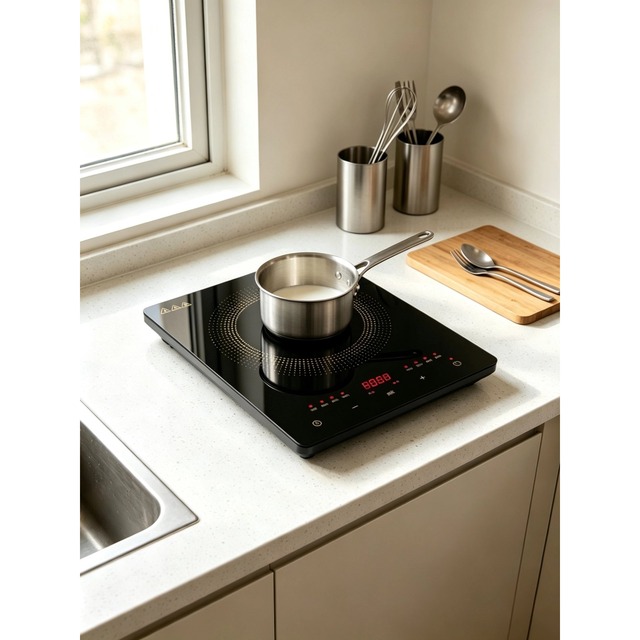
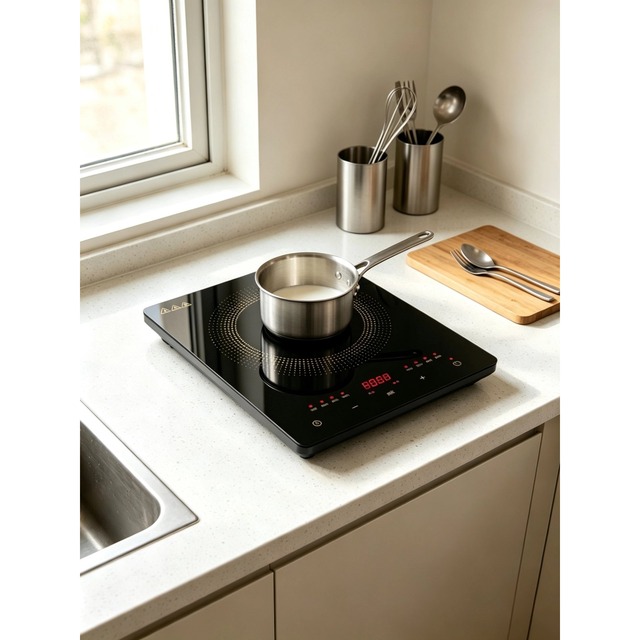
**Control and feature configuration.** Control method is a meaningful differentiator at retail. Golenda’s portable induction cooktop CHK-S2116 uses 5 touch keys with 11 red LED indicators and a four-digit segment display, while model DCL-B22F5 combines knob and touch control with a single red LED indicator. The same logic applies to dishwashers: touch versus mechanical control changes the price band and the end-user segment.
**Build consistency across models.** Review how a manufacturer handles power, cavity, and component specifications across a family of products. Golenda’s built-in oven BH-6A29I1T3 delivers 2900W with 12 functions and a 61L enamelled cavity with chrome side racks and 5 shelf positions, while the CHK-RTD2217 infrared cooktop uses a 255x255mm black ceramic glass panel with 6 touch keys and 22 LED indicators. Consistent documentation across models makes distributor training and after-sales support far easier.
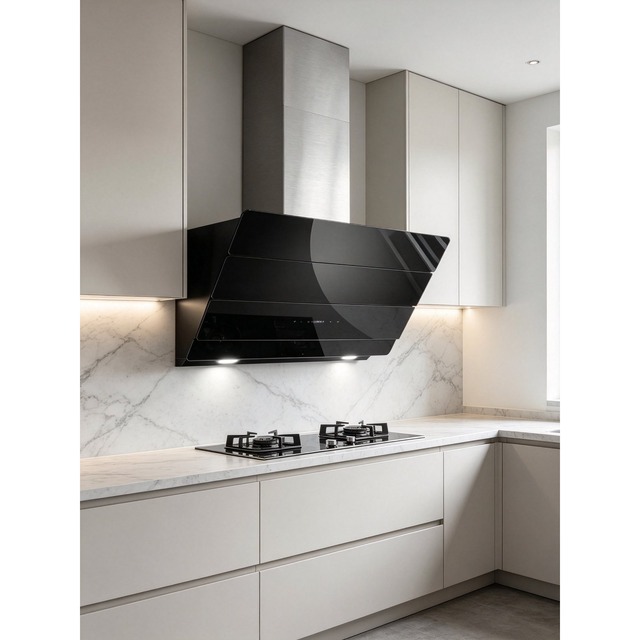
**Ventilation and installation ecosystem.** Dishwashers are frequently sold alongside other built-in appliances. Understanding a supplier’s adjacent range helps with bundle planning — for example, the CV60BK/F-N2T5G wall-mounted range hood delivers 650m3/h across 3 fan speeds with a 210W motor, and the CU90IX-A-N5Q1L island hood delivers 750m3/h with a 280W motor and 3 x 1.5W LED lights.
**Certification status.** Where a supplier states certification, verify it against the destination market. Golenda’s CHK-RTD2217 infrared cooktop is CE certified, which is relevant for European buyers.
Category Trends Worth Factoring Into Your Plan
Adjacent cooking categories offer a useful read on where kitchen appliance demand is heading, and distributors often carry dishwashers alongside them. Market research cited by Golenda indicates the U.S. induction cooktops market was valued at USD 3.23 billion in 2025, and separate forecasts project the global induction cooktop market growing from USD 18.52 billion in 2025 to USD 38.98 billion by 2034 at a CAGR of 8.62%. Another projection estimates the global induction cooktop market at USD 5.97 billion in 2026, reaching USD 7.52 billion by 2035 at a 2.6% CAGR. The spread between these forecasts is itself a signal: analysts disagree on pace, so importers should plan inventory in flexible volumes rather than committing to a single growth assumption.
Industry exhibition activity is another indicator. AWE, described as Asia’s largest and one of the world’s three largest international consumer electronics and smart home exhibitions, remains a key venue for buyers assessing supplier capability in person.
Recent Company News
Golenda Appliances publishes ongoing B2B guidance for trade buyers, including a step-by-step breakdown of the OEM kitchen appliance manufacturing process, a comparison of gas versus electric ovens for retail markets, a 2026 guide to EU energy label requirements for kitchen appliances, and a sourcing guide covering kitchen appliance voltage and frequency standards by country. The company also maintains a range hood supplier and OEM supplier resource page.
Conclusion
For importers and distributors, a dishwasher program succeeds or fails on three decisions made before sourcing begins: which market and channel you are serving, which voltage, frequency, and labeling requirements apply there, and whether your supplier can support the category consistently over repeat orders. Evaluate suppliers on documented specifications and stated certifications rather than catalog claims, and treat adjacent categories — induction, built-in ovens, range hoods — as part of the same commercial conversation, since buyers frequently purchase them together.
About Golenda Appliances
Golenda Appliances is a Chinese OEM/ODM kitchen appliance manufacturer producing induction cooktops, infrared cookers, gas hobs, built-in ovens, range hoods, dishwashers, and air fryers. The company supplies importers, distributors, and private-label buyers, and publishes B2B sourcing and compliance resources for the kitchen appliance trade.
Sources
- https://www.silverchef.com.au/blogs/resources/commercial-dishwasher-buyers-guide
- https://herits.co.uk/blog/commercial-dishwasher-buying-guide/
- https://golenda-appliances.com/kitchen-appliance-voltage-and-frequency-standards-by-country-a-b2b-sourcing-guide/
- https://golenda-appliances.com/eu-energy-label-requirements-for-kitchen-appliances-a-2026-b2b-compliance-guide/
- https://golenda-appliances.com/gas-oven-vs-electric-oven-which-fits-your-retail-market/
- https://www.valuemarketresearch.com/report/induction-cooktop-market
- https://www.businessresearchinsights.com/market-reports/induction-cooktop-market-122403
- https://en.awe.com.cn/