
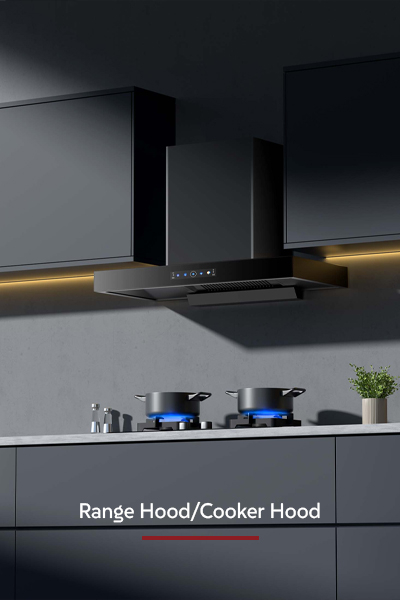
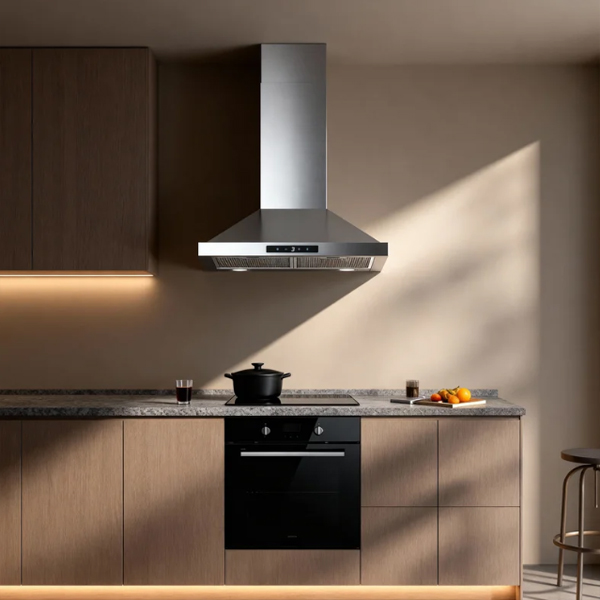
Range hoods are one of the most essential kitchen appliances, directly impacting air quality, cooking comfort, and even long-term health. As Chinese-style cooking relies heavily on high heat and strong flavors, the performance of a range hood can make or break the kitchen environment. This article provides a concise analysis of key factors that define a high-quality range hood and how they meet modern kitchen demands.
1. Core Performance: Suction Power and Noise Control
The most critical indicator of a range hood is its ability to remove smoke effectively. Higher air volume (measured in m³/min) generally means stronger suction, but real performance depends on airflow design and static pressure. For households with heavy frying and stir-frying, a range hood with ≥18 m³/min air volume and good static pressure is recommended to prevent smoke from escaping.
However, strong suction often leads to louder noise. Advanced models now use optimized impeller structures, silent motors, and sound insulation materials to reduce noise levels to below 55 dB, striking a balance between power and comfort.
2. Structural Design: From Traditional to Side-Suction and Integrated
Range hoods have evolved significantly in design. Traditional top-suction hoods offer large capacity and stable performance, suitable for spacious kitchens. Side-suction hoods are more compact and closer to the cooktop, improving smoke capture efficiency and reducing oil accumulation on cabinets. Integrated cooktop-hood combinations save space and improve aesthetics, ideal for modern open kitchens.
3. Filtration and Maintenance: Ease of Cleaning Matters
A good range hood must not only suck smoke but also handle oil effectively. High-quality filter systems—such as bionic filters, centrifugal separation technology, or detachable oil cups—can reduce oil accumulation and simplify cleaning. Models with automatic cleaning functions are becoming increasingly popular, as they reduce the need for frequent manual maintenance.
4. Smart Features: Enhancing Convenience and Safety
Modern range hoods are incorporating more intelligent functions: auto-on/off triggered by smoke or heat sensors, adjustable suction based on cooking intensity, app control for scheduling and monitoring, and LED lighting for better visibility. These features improve user experience and align with the trend of smart kitchens.
5. Environmental and Health Considerations
With growing awareness of indoor air quality, range hoods are no longer just “smoke removers” but also health protectors. Efficient filtration reduces the inhalation of harmful substances such as PM2.5 and oil fumes, which are linked to respiratory issues and lung damage. Energy-efficient motors and low-noise designs also contribute to a more sustainable and comfortable living environment.
Conclusion
A high-performance range hood combines strong suction, smart design, easy maintenance, and aesthetic appeal. When selecting one, users should consider cooking habits, kitchen size, and long-term usability. As technology advances, range hoods will continue to play a vital role in creating healthier, cleaner, and more efficient kitchens.