
Range Hood CFM Guide: Choosing the Right Extraction Power for Your Kitchen Lineup
Selecting the correct CFM (cubic feet per minute) rating for range hoods is one of the most consequential decisions a B2B buyer can make when stocking kitchen appliances. Specify too little power and the hood fails to clear smoke, steam, and odors effectively. Specify too much and you burden your customers with excessive noise, higher energy costs, and ductwork requirements they may not need. This guide cuts through the noise to help you match extraction power to real cooking scenarios, so you can build a product lineup that sells itself.
The Simple Math Behind CFM Selection
The industry offers several formulas for calculating CFM, but the most practical approaches are based on either the cooking surface or the heat output of the appliance below. For electric cooking surfaces—which includes induction hobs and infrared cookers—a common rule of thumb is to aim for a minimum of 100 CFM per linear foot of cooking surface. For gas appliances, the standard shifts to 100 CFM for every 10,000 BTUs of heat output.
Let’s apply this to real-world configurations. A standard 60cm built-in induction hob, such as the Golenda H7254F with its 9 cooking zones and flexible P zone, measures roughly two linear feet across. That translates to a baseline requirement of approximately 200 CFM. However, this assumes moderate cooking. For a household that regularly sears, stir-fries, or uses a wok at high heat, you should recommend stepping up to a 400 CFM unit. For most residential kitchens, industry guidance suggests that a range hood with at least 600 CFM will efficiently vent cooking exhaust for serious home chefs. Yet, for compact kitchens or light cooks who mostly boil, bake, or reheat, a lower CFM range hood in the 260–300 range is perfectly adequate—budget-friendly, easy to install, and without overkill.
The key takeaway for buyers: do not default to maximum power. Instead, segment your inventory by kitchen size and cooking intensity. A small apartment with a 2-zone induction cooktop like the Golenda ID4202—which delivers 4200W across two 180mm zones—will perform admirably with a 300 CFM hood. A larger open-plan kitchen featuring a 7000W 3-zone induction hob with a 280mm center zone and 3500W boost, however, will benefit from a 600 CFM or higher unit to handle the rapid heat output.
Matching Hood Performance to Modern Cooking Trends
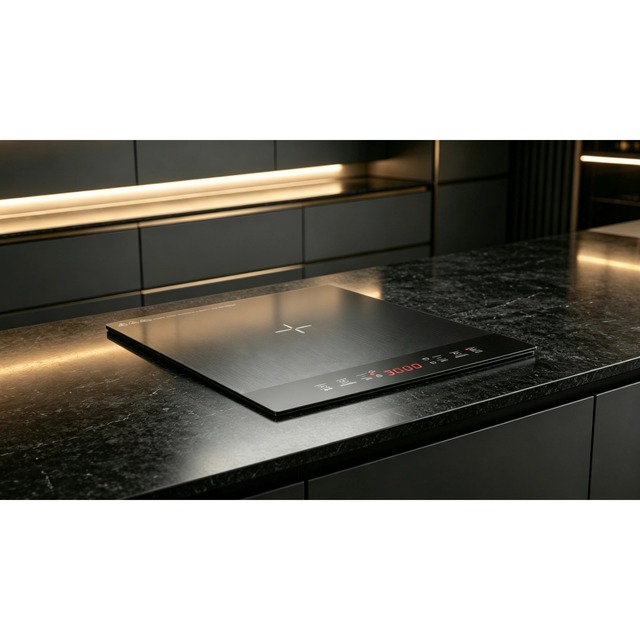
The cooking appliance landscape is shifting rapidly, and your range hood specifications should reflect that. Induction cooktops are now the default choice for many consumers when remodeling, driven by near-instant heating, precise temperature control, and sleek flush installations. The induction cooktops market was valued at USD 24.9 billion in 2025 and is projected to reach USD 34.7 billion by 2031, with Europe holding a 38.6% market share in 2026 due to strong consumer preference for energy-efficient appliances. This electrification trend means more kitchens are cooking with high-power electric surfaces—which generate less ambient heat than gas but still produce significant steam and grease-laden vapor that requires effective extraction.
Another 2026 trend is the rise of induction/ventilation combos and large “freedom” surfaces. As cooktops grow larger and more flexible—like the Golenda H7254F with its dedicated P zone and slider control—the capture area of the hood must expand accordingly. A hood that is too narrow or underpowered for a wide cooking surface will allow smoke and odors to escape around the edges, regardless of its CFM rating. When recommending hoods for these larger cooktops, prioritize models with wider capture zones and consider that the CFM requirement scales with the linear footage of the cooking surface.
Quiet operation is another factor gaining prominence in 2026 kitchen design. Buyers should note that higher CFM ratings often correlate with higher noise levels. For open-plan kitchens where the hood is visible and audible from living spaces, a mid-range 400 CFM unit that balances power and quiet operation is often the sweet spot. Premium models with variable speed controls allow users to run lower settings for everyday cooking and boost modes for high-heat searing—a feature worth highlighting in your product descriptions.
Recent Company News
Golenda Appliances, operating under its parent company Shenzhen Xinhuike, has made significant strides in manufacturing and innovation. In November 2025, the company launched a new production base operating under a comprehensive 4S management system, ensuring streamlined operations, strict quality control, and superior product consistency from raw components to finished goods. Additionally, Shenzhen Xinhuike has established a multi-million-dollar annual innovation fund to drive core competitiveness and overcome external challenges through sustained creativity. In a related milestone, CHK (Stock Code: 831167), the entity behind Golenda’s smart control technologies for home appliances, successfully listed on the Beijing Stock Exchange on May 27, marking its official entry into the capital market.
Conclusion
Choosing the right range hood CFM is not about chasing the highest number—it’s about matching extraction power to the cooking surface, kitchen size, and user habits. For B2B buyers, this means curating a range of hoods that spans from 260 CFM for compact kitchens to 600 CFM and above for serious home chefs. As induction cooking continues its global ascent, with its emphasis on efficiency and precise control, the demand for properly sized ventilation will only grow. By understanding the simple calculations behind CFM and aligning your inventory with real cooking trends, you can offer your customers hoods that perform exactly as needed—no more, no less.
About Golenda Appliances
Golenda Appliances is a Chinese OEM/ODM manufacturer of kitchen appliances, including induction cooktops, infrared cookers, gas hobs, built-in ovens, range hoods, dishwashers, and air fryers. The company operates a new production base under a 4S management system and is backed by a multi-million-dollar annual innovation fund. Golenda’s product line includes the GXMI-AS01 2500W built-in induction hob, the H7254F 60cm induction hob with 9 cooking zones, the ID4202 4200W 2-zone induction hob, the PIT03B70CAD 7000W 3-zone induction hob, the DWF-17 1750W built-in dishwasher, and a 3800W 80L built-in oven. For wholesale and OEM/ODM inquiries, visit golenda-appliances.com.
Sources
- https://therangehoodstore.com/a/blog/how-many-range-hood-cfms-do-you-really-need
- https://www.rokhardware.com/blog/post/how-to-calculate-the-right-cfm-for-your-kitchen-vent-hood-a-diy-guide
- https://www.worldcoppersmith.com/articles/how-to-select-the-right-range-hood
- https://prolinerangehoods.com/blogs/news/cfm-need-range-hood
- https://www.mordorintelligence.com/industry-reports/induction-cooktops-market
- https://www.coherentmarketinsights.com/market-insight/household-induction-cooktops-market-4572
- https://www.ajmadison.com/learn/cooking/trends/cooking-appliance-trends-2026