
OEM Kitchen Appliance Manufacturing Process Step by Step
For retailers, distributors, and brand owners sourcing kitchen appliances, understanding how an OEM partner actually builds a product is the difference between a smooth program and a costly one. An original equipment manufacturer produces parts, components, or finished goods that another company markets under its own brand, and as supply chains have grown more interconnected, OEMs have become central to how appliances are manufactured and distributed globally. This article walks through the OEM kitchen appliance manufacturing process step by step, using Golenda Appliances’ real product range and production setup as a working example.
Step 1: Product Definition and Design Brief
Every OEM project starts with a specification, not a factory line. The buyer defines the category, target market, voltage, control method, and performance targets, and the manufacturer translates that into an engineering brief. The clarity of this stage determines how smoothly everything downstream runs.
Golenda’s catalog shows how varied those briefs can be. A buyer entering the portable cooking segment might specify a slim induction cooker such as the BI-18A9-B, an 1800W model with a copper coil heating system, touch control on a polished black glass panel, 10 power levels, and a 60°C to 240°C temperature range. A buyer targeting higher-power cooking could instead select the BI-29Q4, a 2900W induction cooker with the same 10 power levels and 60°C to 240°C range. For commercial countertop applications, the ALP-C05D commercial induction cooker runs on 220V-240V~ 50-60Hz with push button and knob control and a polished black crystal plate. Each of these starts as a written requirement before any tooling is touched.
Step 2: Component Sourcing and Production
Once the specification is locked, manufacturing moves into component sourcing and assembly. OEMs specialize in specific areas so they can develop deep expertise and advanced manufacturing capability in their chosen fields, which is what allows them to produce at scale with consistent quality.
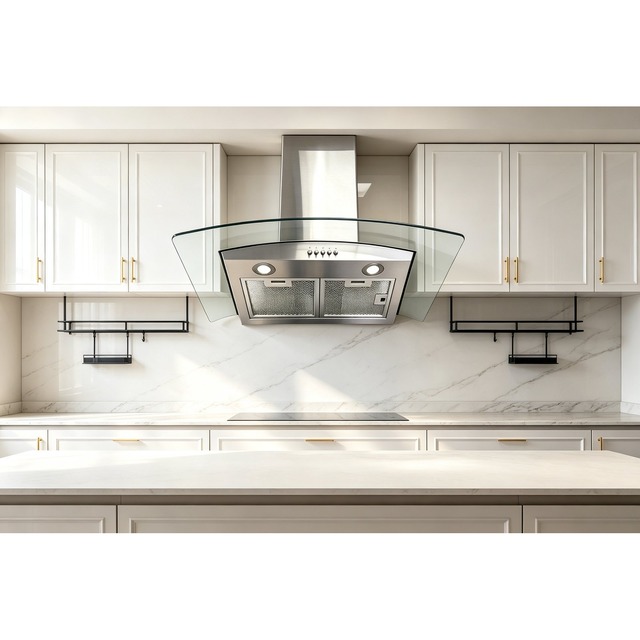
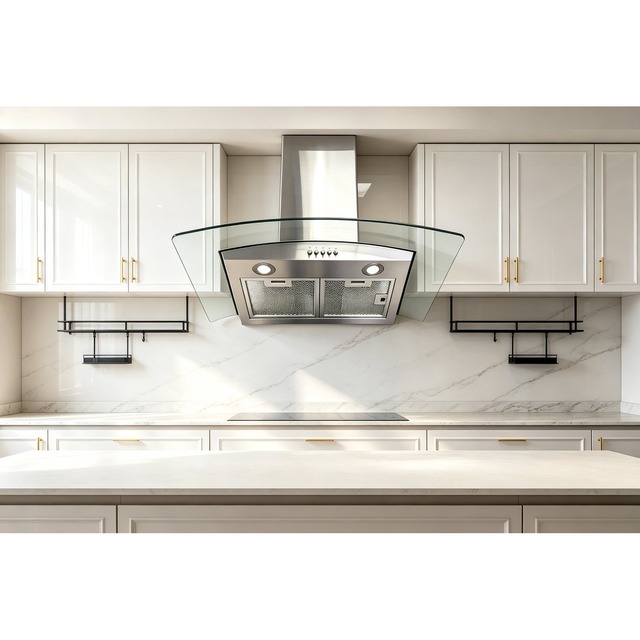
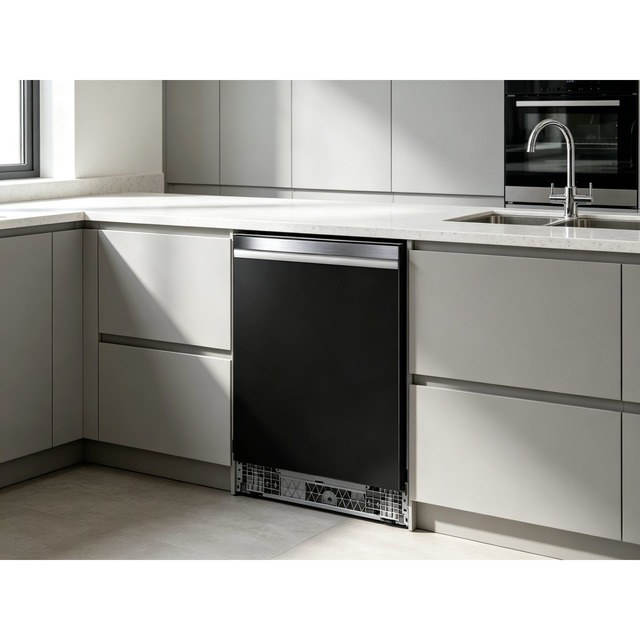
Golenda’s new production base, launched in November 2025, was built around this principle. The facility operates under a comprehensive 4S management system designed to ensure streamlined operations, strict quality control, and superior product consistency from raw components through to finished goods, supported by full automation. That structure matters across a diverse portfolio: a 750 m³/h wall-mounted range hood (model CC60IX-A-N1P1L) with three fan speeds and touch control, a built-in dishwasher (model DWB-20A) with 1650-1950W total power and a 1-24 hour timer, and a 3000W two-zone built-in infrared cooktop (model CHK-HD3004) with a 200mm 1800W front zone and a 165mm 1200W rear zone all pass through the same disciplined process.
Step 3: Quality Control, Compliance, and Delivery
Quality control in OEM manufacturing is not a final inspection; it is a thread running through the entire process. Because OEMs carry deep experience building, storing, and distributing parts and services, they can apply increased quality control at every stage rather than catching defects at the end.
Compliance documentation is part of that discipline. Golenda’s induction cooker models carry CB, GS, EMC, LVD, BSCI, RoHS, and Reach listings, and the company has published a 2026 B2B compliance guide on EU energy label requirements for kitchen appliances. For buyers selling into regulated markets, this documentation is as important as the hardware itself. The final steps, packing, documentation, and shipment, close the loop on a process that began with a design brief.
Recent Company News
Golenda Appliances launched its new production base in November 2025, operating under a comprehensive 4S management system with full automation to ensure quality control and product consistency from raw components to finished goods.
Shenzhen Xinhuike announced the establishment of a multi-million-dollar annual innovation fund, described as a commitment to technology-driven innovation and long-term competitiveness.
CHK successfully listed on the Beijing Stock Exchange on May 27 under stock code 831167, holding a listing ceremony at its headquarters in Guangming. CHK has focused on research and development of smart control technologies for home appliances.
Conclusion
The OEM manufacturing process runs from specification and design through component sourcing, assembly, quality control, compliance, and delivery, and each stage depends on the one before it. For B2B buyers, the practical takeaway is to choose a partner whose process is visible and documented. Golenda Appliances offers that visibility across range hoods, dishwashers, infrared cooktops, and induction cookers, backed by an automated production base and published compliance guidance for export markets.
About Golenda Appliances
Golenda Appliances is a Chinese OEM/ODM kitchen appliance manufacturer producing induction cooktops, infrared cookers, gas hobs, built-in ovens, range hoods, dishwashers, and air fryers. The company launched a new production base in November 2025 featuring 4S management and full automation, and it publishes B2B sourcing and compliance resources for international buyers.
Sources
- https://www.ibm.com/think/topics/oem
- https://www.zebra.com/us/en/resource-library/faq/what-does-oem-mean.html
- https://en.wikipedia.org/wiki/Original_equipment_manufacturer
- https://www.investopedia.com/terms/o/oem.asp