
Kitchen Appliances Industry Trends 2026: What B2B Buyers Need to Know
The kitchen appliance market in 2026 is being reshaped by forces that matter directly to importers, distributors, and private-label brands. Demand is rising, but so are buyer expectations around compliance, product experience, and supplier capability. For B2B buyers sourcing induction cooktops, air fryers, dishwashers, and other kitchen appliances from China, understanding these shifts is the difference between a profitable product line and a costly one. This article outlines the trends defining 2026 and what they mean for your sourcing strategy.
Market Momentum and the Shift Toward Cooking Appliances
Global demand for cooking appliances continues to expand. The global induction cooktop market was valued at more than USD 27.96 billion in 2024 and is expected to exceed USD 39.57 billion by 2030, growing at a CAGR of 6.11% from 2025 to 2030, according to Bonafide Research. A separate projection estimates the global induction cooktop market at USD 5.97 billion in 2026, reaching USD 7.52 billion by 2035 at a 2.6% CAGR. Regional markets are also maturing: India’s induction cooktop market was valued at USD 763 million in 2025 and estimated at USD 842 million in 2026, per Vyansa Intelligence.
For buyers, this means competition for production capacity is intensifying, and product differentiation matters more than ever. The market is also splitting along performance lines. Industry design surveys show stainless steel still dominates at just over 81% of kitchen designs, while roughly 16.6% of projects now include pro-quality equipment such as ranges, hoods, and high-end refrigeration. Buyers serving both value and premium segments should plan SKU ranges accordingly.
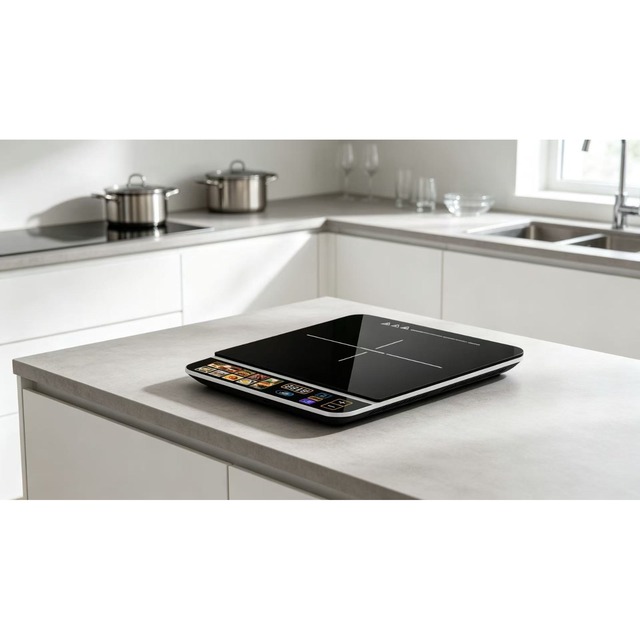
Golenda’s own catalog reflects this breadth. The company manufactures portable and built-in induction cookers — including the BI-18A17-C Induction Cooker with 1800W or 2000W copper coil heating, 10 power levels, and a 60–240°C temperature range, and the 7000W three-zone built-in induction hob (Model PIT01B70CAD) with a 280mm right zone delivering 3000W and 3500W boost. For buyers targeting compact countertop segments, the CHK-CCA12 portable induction cooktop offers 1800W in a W270 x D340 x H60mm frame with push-button control.
Compliance, Customization, and the New Sourcing Bar
Compliance is no longer a checkbox — it is a gate. Industry sourcing analysis identifies food-grade materials, heating safety, plug compatibility, and voltage customization as core 2026 challenges for B2B kitchen appliance sourcing. Suppliers that understand international compliance requirements help buyers reduce import risks significantly. This is especially relevant for induction and infrared categories, where electrical safety and EMC performance vary by destination market.
Golenda’s BI-18A17-C Induction Cooker carries CB, GS, EMC, LVD, BSCI, RoHS, and Reach certifications, and the TDQR11B built-in dishwasher holds CE, CB, and ETL listings while operating at 220–240V 50/60Hz with 950W power. For buyers, documented certification coverage shortens the path to market and reduces the risk of customs or retail rejection.
Customization is the second pillar. Voltage and plug configuration are baseline requirements for multi-region distribution, and buyers increasingly expect suppliers to adapt. Golenda’s product range spans 120V portable induction (CHK-CCA12) and 220–240V built-in appliances, giving buyers options across North American and European requirements. The 6600W four-zone built-in induction hob (Model CHK-IF6600) with four 165mm zones rated at 1300W and 2000W illustrates how power architecture can be tailored to different kitchen formats.
The Experience Economy Comes to B2B Sourcing
Perhaps the most underrated trend of 2026 is the migration of B2C-style expectations into B2B purchasing. According to FedEx industry research, 75% of B2B buyers say they would switch suppliers for a better experience. That finding should reframe how buyers evaluate manufacturers — and how manufacturers support buyers.
Two practical implications stand out. First, marketing support is now a sourcing criterion. Industry analysis notes that B2B buyers increasingly prefer suppliers that can provide product videos and factory content, because these assets directly fuel retail listings, distributor catalogs, and e-commerce conversion. Second, B2B eCommerce trends for 2026 point to AI-ready product data, API-first architecture, self-service buying, and the convergence of B2B and B2C models as defining forces. Buyers should ask whether a supplier’s product data is structured for digital channels, not just PDF spec sheets.
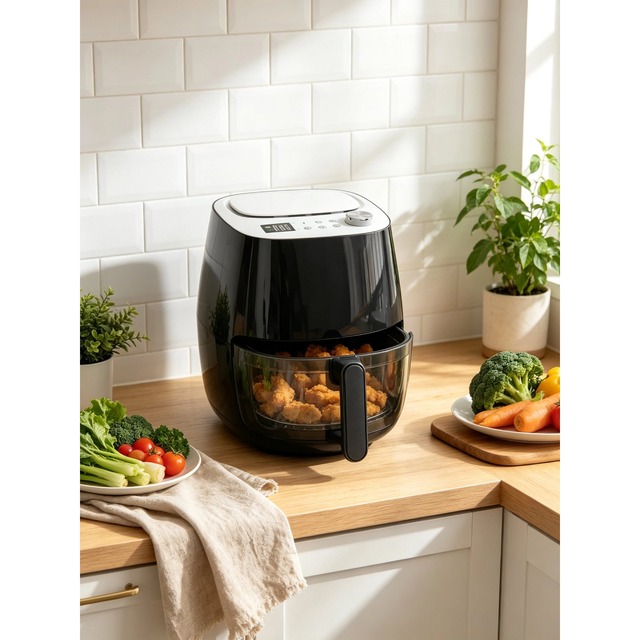
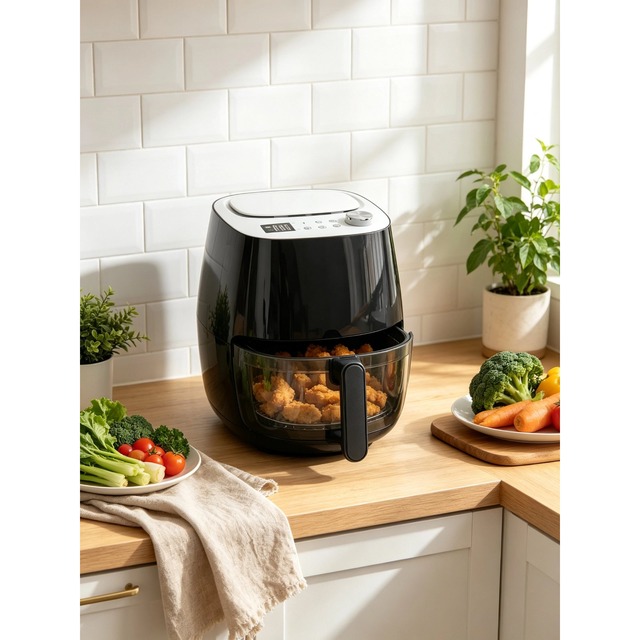
Product design itself is responding to end-user experience. The Golenda 3.5L Air Fryer (Model AFE09BL) pairs 1300W oil-free cooking with a transparent glass pot without coating and a see-through PC window, letting users monitor food without interrupting the cooking cycle — a feature that translates directly into stronger retail storytelling. Similarly, the TDQR11B dishwasher’s 2–3 place setting (EU) capacity, dual water inlet options, and up/down spray arms target compact commercial and residential spaces, a growing niche as urban kitchens shrink.
Recent Company News
Golenda’s parent group, CHK (Stock Code: 831167), successfully listed on the Beijing Stock Exchange on May 27, holding a grand listing ceremony at its headquarters in Guangming. The company has long focused on research and development of smart control technologies for home appliances.
In November 2025, Golenda Appliances launched a new production base operating under a comprehensive 4S management system, designed to ensure streamlined operations, strict quality control, and superior product consistency from raw components to finished goods.
The company has also announced the establishment of a multi-million-dollar annual innovation fund, signaling a long-term commitment to technology-driven product development.
Conclusion
The 2026 kitchen appliance landscape rewards buyers who treat compliance, customization, and supplier experience as strategic variables rather than administrative details. With the global induction cooktop market on a steady growth trajectory and B2B buyer loyalty increasingly tied to service quality, the strongest sourcing partnerships will be with manufacturers that combine certified product ranges, flexible voltage and plug configurations, and marketing-ready assets. Buyers should audit their supplier shortlists against these criteria before committing to 2026 programs.
About Golenda Appliances
Golenda Appliances is a Chinese OEM/ODM kitchen appliance manufacturer producing induction cooktops, infrared cookers, gas hobs, built-in ovens, range hoods, dishwashers, and air fryers. The company is part of CHK (Stock Code: 831167), listed on the Beijing Stock Exchange, and operates a new production base launched in November 2025 under a 4S management system with full automation. Golenda serves B2B buyers worldwide with certified, customizable kitchen appliances.
Sources
- https://www.bonafideresearch.com/product/230119167/global-induction-cooktop-market-overview
- https://www.businessresearchinsights.com/market-reports/induction-cooktop-market-122403
- https://www.vyansaintelligence.com/industry-report/india-induction-cooktop-market-size
- https://www.youtube.com/watch?v=tcWyb4BQuQo
- https://www.yolec-electronics.com/why-b2b-buyers-are-struggling-to-source-reliable-small-kitchen-appliances-in-2026
- https://newsroom.fedex.com/newsroom/global-english/these-b2b-business-trends-are-defining-2026
- https://www.elasticpath.com/blog/b2b-ecommerce-trends