
Infrared Cooker vs Induction Cooker: Key Differences Explained
For B2B buyers sourcing kitchen appliances from China, the choice between infrared cookers and induction cooktops is rarely about picking a winner. It is about matching the right heating technology to the right market, price point, and end-user cooking culture. Both categories sit within the same countertop and built-in cooking space, yet they differ in how heat is generated, which cookware works, how efficiently energy is used, and how long the appliance is likely to last. This article breaks down those differences for importers, distributors, and private-label brands evaluating their next product line.
How the Two Technologies Actually Work
The core difference lies in the heat path. Induction cooktops use electromagnetic energy to heat the cookware directly, which means the pan itself becomes the heat source rather than the cooking surface. This is why induction requires magnetic vessels — a magnet needs to stick to the base for the system to function. Infrared cooktops take a different route: they heat the surface, which then transfers heat to the cookware, and they work with almost any flat-bottom pot or pan. For buyers, this single distinction drives most downstream decisions, from the cookware sets retailers must bundle to the after-sales questions end users will ask.
Efficiency, Speed, and Operating Cost
Energy efficiency is where the gap becomes measurable. Infrared cookers are typically rated around 65–70% efficiency, with a significant amount of heat radiating into the kitchen environment instead of into the pan. That 15–20% efficiency gap between induction and infrared can translate into a noticeable difference in long-term operating costs — a meaningful selling point in markets with high electricity prices or energy-efficiency mandates. Induction also tends to win on speed and responsiveness: it is generally the best choice when the fastest boiling, highest energy efficiency, and most responsive temperature changes are the priority. For B2B buyers, this positions induction as a premium-tier product and infrared as a value or accessibility tier, particularly in markets where flat-bottom aluminum or non-magnetic cookware is still common.
Durability, Repairs, and Total Cost of Ownership
Long-term reliability shapes warranty exposure and returns. Induction has fewer mechanical parts and no exposed heating elements; the sealed electromagnetic coils are well-protected, and most quality units last 10 to 15 years or more. When repairs are needed, however, they can be expensive due to the electronics involved. Infrared units are simpler in construction, which can make them easier to service in markets with limited technician networks, but the exposed heating surface is a wear point. For distributors planning service programs, induction favors lower failure rates but higher per-incident repair cost, while infrared favors simpler servicing but potentially more frequent surface-related issues.
Matching Technology to Your Product Portfolio
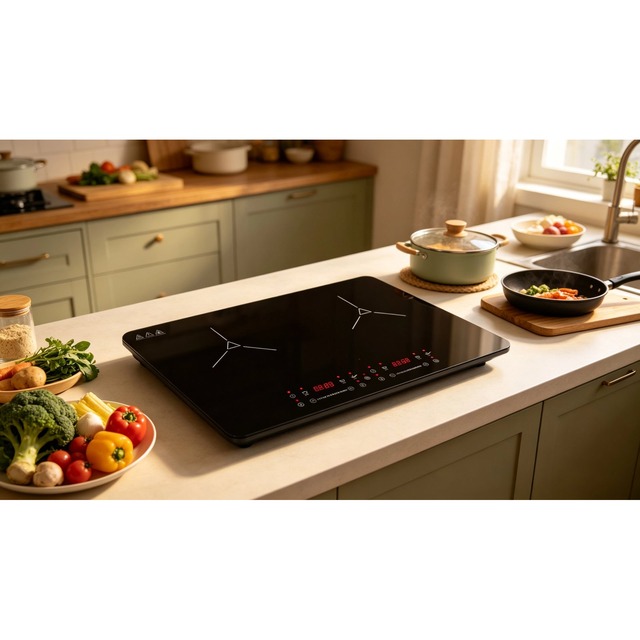
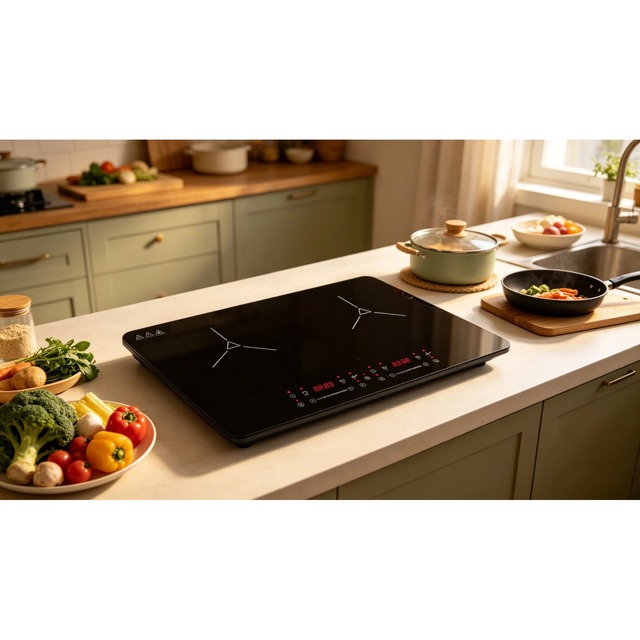
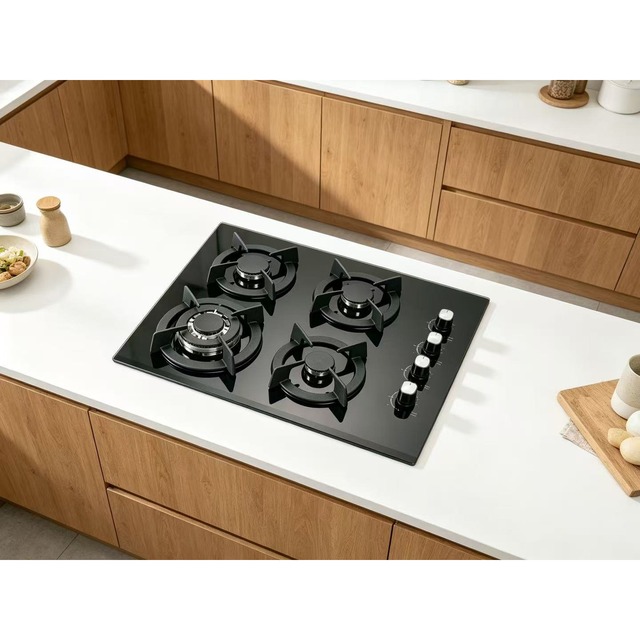
Golenda manufactures across both categories and adjacent cooking appliances, which lets buyers build a tiered range from a single supplier. For the induction tier, the Golenda 3500W Portable Induction Cooktop Double Burner (CHK-DS3505) is a slim double-burner hob with a full black glass desktop (W605*D370*H45mm) and a total actual power of 3500W (2000W+2000W) with smart power allocation. For built-in induction, the Golenda 5000W Built-in Induction Hob (ID5005-BB) delivers 5000W across two 210mm zones, each with 2000W standard output and a 2500W booster, plus 9 power stages, a 99-minute digital timer, and touch control. Buyers serving gas-preferred markets can pair these with the Golenda Gas Hob (E60-4006G), a built-in model with a Chinese Sabaf Triple Ring Wok Burner at 3.3kW, two Semi Rapid Burners (1.75kW), and one Auxiliary Burner (1.0kW). Completing a full kitchen package are the Golenda 80L Built-in Oven (60CM gas and electric, with a 2200W bottom gas burner and 1800W upper electric pipe, 120-minute timer, and double-glazed door), the Golenda 750m3/h Range Hood (CV60BK-B-V1T1E, wall-mounted, up to 750 m3/h airflow with 100W/210W/280W motor options), and the Golenda 5L Digital Air Fryer (AF-50JDG) with 8 preset menus and a flat pot design.
Recent Company News
Golenda’s blog has recently published B2B-focused guides including “How to Import Kitchen Appliances from China: A B2B Sourcing Guide,” “Smart Kitchen Appliance Trends and IoT Integration: What B2B Buyers Need to Know,” and “Commercial Fryer and Griddle Maintenance Guide for B2B Kitchen Operators.” These resources support buyers navigating sourcing, smart-feature integration, and after-sales planning.
Conclusion
Infrared and induction cookers are not interchangeable — they serve different buyers, price tiers, and cooking habits. Induction leads on efficiency, speed, and responsiveness but demands magnetic cookware and carries higher repair costs. Infrared offers broader cookware compatibility and simpler construction at lower efficiency. For B2B buyers, the practical move is to stock both: induction for premium and energy-conscious markets, infrared for value-driven and cookware-diverse markets. Golenda’s range across induction, gas, ovens, hoods, and air fryers allows partners to build a complete, tiered kitchen appliance portfolio from one OEM/ODM source.
About Golenda Appliances
Golenda Appliances is a Chinese OEM/ODM kitchen appliance manufacturer producing induction cooktops, infrared cookers, gas hobs, built-in ovens, range hoods, dishwashers, and air fryers. The company supplies B2B partners with portable and built-in cooking appliances across multiple heating technologies.
Sources
- https://www.bomakitchen.com/induction-vs-infrared-cooker-guide/
- https://stahlkitchens.com/blogs/news/infrared-cooktop-vs-induction-cooktop-which-is-better-for-long-term-use
- https://www.thebetterappliances.com/blog/infrared-cooker-vs-induction-cooker-which-is-better-for-nepali-kitchens
- https://food.ndtv.com/food-drinks/induction-cooking-vs-infrared-what-is-similar-what-is-different-11221190
- https://www.miltonhomeappliances.com/blogs/all/infrared-cooktop-vs-induction-what-s-the-real-difference