
Infrared Cooker vs Induction Cooker: Key Differences Explained for B2B Buyers
For kitchen appliance importers, distributors, and OEM/ODM partners, choosing the right product line is a strategic decision. Two of the most popular electric cooking technologies on the market today are infrared cookers and induction cookers. While both offer flameless, efficient cooking, they operate on fundamentally different principles. Understanding these differences is critical for selecting the right products for your target market, whether you are sourcing built-in hobs, portable cookers, or complete kitchen suites.
This guide breaks down the key differences between infrared and induction cookers, helping you make informed decisions for your 2026 product lineup.
How They Work: Heating Mechanisms Compared
The primary difference between an infrared cooker and an induction cooker lies in how they generate and transfer heat.
**Induction Cookers: Magnetic Induction**
Induction cooktops use electromagnetic energy. Beneath the ceramic glass surface sits a copper coil. When an electric current passes through this coil, it creates a high-frequency magnetic field. This field interacts directly with the ferromagnetic (magnetic) base of your cookware, inducing an electric current within the pan itself. This current generates resistance, which heats the pan directly. The glass surface itself remains relatively cool, only heating up indirectly from the hot pan above it.
**Infrared Cookers: Radiant Heat Transfer**
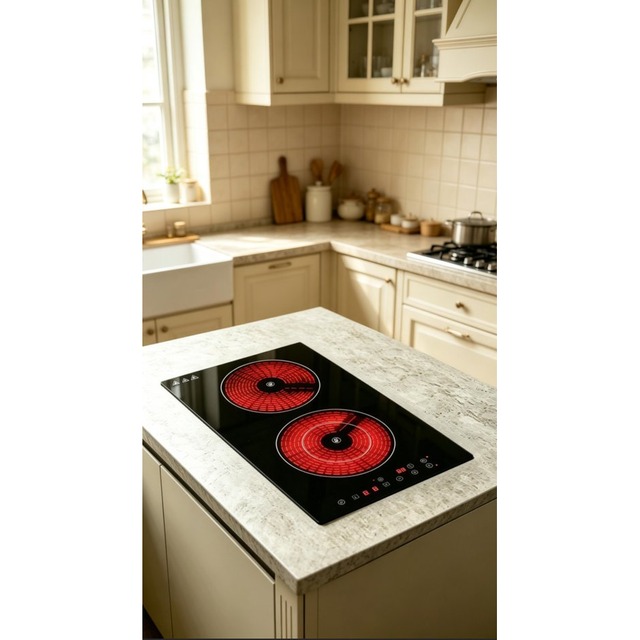
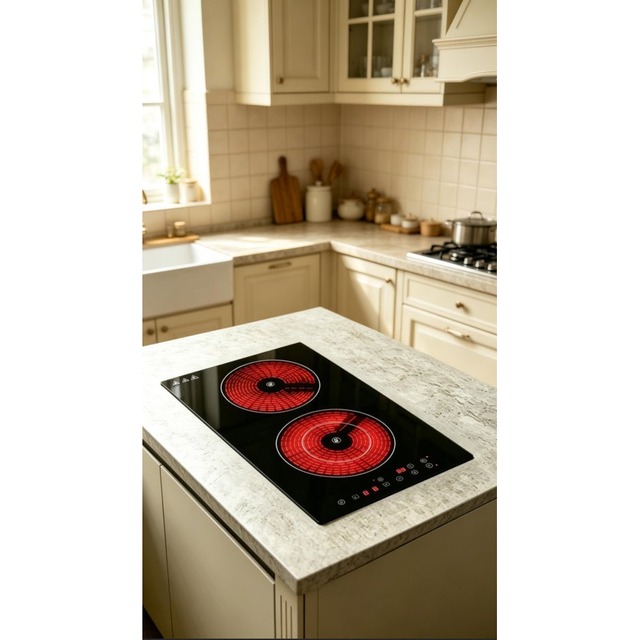
Infrared cookers, also known as radiant or halogen cookers, use infrared radiation. They contain heating elements (often halogen tubes or quartz elements) located beneath a ceramic glass surface. When turned on, these elements glow red and emit infrared radiation. This radiation travels upward, first heating the glass surface, which then transfers heat to the cookware placed on top. Unlike induction, the glass surface becomes very hot and acts as the primary heat conductor.
This fundamental difference dictates everything from cookware compatibility to energy efficiency and temperature control.
Key Differences in Performance and Usability
For B2B buyers, understanding the practical implications of these technologies is essential for advising your own retail clients.
**1. Cookware Compatibility**
This is often the deciding factor for end-users.
- **Induction:** Requires cookware with a magnetic base, such as cast iron or magnetic stainless steel. If a magnet doesn’t stick to the bottom of the pan, it won’t work. This can be a barrier for consumers with existing non-magnetic cookware.
- **Infrared:** Works with virtually any cookware material, including glass, ceramic, aluminum, and copper. This universal compatibility makes infrared a more flexible option for many households.
**2. Energy Efficiency and Heat Control**
- **Induction:** Induction is renowned for its energy efficiency. Because heat is generated directly in the pan, very little energy is wasted heating the surrounding air or the glass surface. This allows for rapid heating and incredibly precise temperature control. The response time is near-instantaneous; when you adjust the power, the pan responds immediately.
- **Infrared:** Infrared cookers are also energy-efficient compared to traditional gas or electric coil stoves, as they heat the cookware’s base directly. However, they are generally less efficient than induction because some heat is lost in warming the glass surface first. The glass also retains heat, meaning it takes longer to cool down and can be less responsive to rapid temperature changes.
**3. Safety Features**
- **Induction:** Since the surface doesn’t get hot from the element itself, the risk of burns is significantly lower. Most induction cooktops also feature automatic shut-off when cookware is removed, making them a very safe option, especially for households with children.
- **Infrared:** The glass surface of an infrared cooker gets extremely hot during operation and remains hot for a period after being switched off. This presents a higher burn risk. However, most modern infrared hobs, like Golenda’s built-in models, are equipped with safety features such as residual heat indicators to alert users to hot surfaces.
**4. Visual Design and Aesthetics**
- **Induction:** Induction cooktops offer a sleek, minimalist look. They are often favored in modern kitchen designs for their clean lines and the fact that the surface stays cooler, making spills easier to wipe away without baking on.
- **Infrared:** Infrared cooktops also feature a smooth ceramic glass surface, offering a similar premium aesthetic. However, the heating elements are often visible through the glass, glowing red when in use, which some users may find less visually appealing than the completely blank surface of an induction model.
Choosing the Right Technology for Your Market
Your choice between infrared and induction should be guided by your target market’s needs and preferences.
**When to consider Infrared:**
- **Versatility:** If your market has a high percentage of users with diverse cookware, infrared is a safer bet.
- **Cost-Effectiveness:** Infrared cookers are typically more affordable to manufacture than induction models, offering a strong value proposition for price-sensitive markets.
- **Built-in Aesthetics:** Infrared built-in hobs, like the **Golenda CHK-HD3021 3000W Built-in Infrared Cooktop**, offer a premium built-in look with the flexibility of universal cookware use. This 2-zone model features sleek touch controls and 9 power stages, providing professional-grade precision for a built-in kitchen setup.
**When to consider Induction:**
- **Energy Efficiency Focus:** In regions with high electricity costs or strong environmental regulations, such as Europe, induction is a major selling point. Market research indicates that Europe dominated the global household induction cooktops market in 2026 with a 38.6% share, driven by a strong preference for energy-efficient appliances.
- **Performance and Safety:** For consumers who prioritize rapid heating, precise control, and maximum safety, induction is the premium choice.
- **Portable Solutions:** The portable induction market is strong. Products like the **Golenda CHK-CCA16-US 1800W Portable Induction Cooktop** or the **Golenda 3500W Portable Induction Cooktop 2 Burner** offer powerful, dual-zone cooking solutions for countertops, catering to apartments and small spaces where flexibility is key.
Recent Company News
Golenda Appliances, a brand under Shenzhen Xinhuike, continues to strengthen its position in the global kitchen appliance market. The company has announced the establishment of a multi-million-dollar annual innovation fund, signaling a significant commitment to technology-driven product development and overcoming external market challenges.
In a related milestone, CHK, the parent entity, successfully listed on the Beijing Stock Exchange on May 27, marking its official entry into the capital market. This strategic move is set to fuel further research and development in smart control technologies for home appliances.
Furthermore, in November 2025, Golenda Appliances unveiled a new production base operating under an advanced 4S management system. This fully automated facility is designed to ensure streamlined operations and strict quality control from raw components to finished products, reinforcing the company’s commitment to manufacturing excellence and consistent product quality for its global B2B partners.
Conclusion
Both infrared and induction cookers offer significant advantages over traditional gas and electric coil stoves. The choice is not about which is universally “better,” but which is better for your specific customer base.
- **Induction** is the high-tech, high-efficiency choice for the modern, performance-driven consumer.
- **Infrared** offers a versatile, cost-effective, and user-friendly alternative that works with any cookware.
For B2B buyers, offering both technologies in your portfolio allows you to cater to a wider range of consumer needs and budgets. By partnering with a manufacturer like Golenda Appliances, which offers a diverse range of built-in and portable models in both categories, you can ensure your product lineup is well-positioned for the growing electric cooking market, which is projected to see significant expansion through 2035.
About Golenda Appliances
Golenda Appliances is a professional Chinese OEM/ODM manufacturer specializing in a comprehensive range of kitchen appliances, including induction cooktops, infrared cookers, gas hobs, built-in ovens, range hoods, dishwashers, and air fryers. Backed by the resources of its parent company, CHK, and its new automated production base, Golenda is dedicated to delivering high-quality, innovative cooking solutions to partners worldwide.
Sources
- [https://auxiliaryenergy.com/induction-vs-infrared-cooker](https://auxiliaryenergy.com/induction-vs-infrared-cooker)
- [https://www.thebetterappliances.com/blog/infrared-cooker-vs-induction-cooker-which-is-better-for-nepali-kitchens](https://www.thebetterappliances.com/blog/infrared-cooker-vs-induction-cooker-which-is-better-for-nepali-kitchens)
- [https://greenwaykitchen.com/induction-cooker-vs-infrared-cooker-bangla](https://greenwaykitchen.com/induction-cooker-vs-infrared-cooker-bangla)
- [https://www.virtueglassgroup.com/key-differences-between-induction-cooker-glass-and-infrared-cooker-glass](https://www.virtueglassgroup.com/key-differences-between-induction-cooker-glass-and-infrared-cooker-glass)
- [https://www.coherentmarketinsights.com/market-insight/household-induction-cooktops-market-4572](https://www.coherentmarketinsights.com/market-insight/household-induction-cooktops-market-4572)
- [https://www.businessresearchinsights.com/market-reports/induction-cooktop-market-122403](https://www.businessresearchinsights.com/market-reports/induction-cooktop-market-122403)