
Induction Cooktop Buying Guide for Wholesalers: Key Factors for Sourcing in 2026
As the global shift toward energy-efficient cooking accelerates, induction cooktops have moved from premium novelty to mainstream necessity. For wholesalers and B2B buyers, understanding what separates a reliable, profitable product line from a costly mistake requires more than a glance at wattage. The market is expanding rapidly—industry analysis projects the induction cooktops market to grow from USD 24.79 billion in 2025 to USD 39.53 billion by 2035, with Europe leading household adoption at a 38.6% market share in 2026. This guide outlines the critical specifications, compliance considerations, and supplier capabilities that should shape your sourcing strategy.
Power, Zones, and Configuration: Matching Products to End-User Needs
The first decision in any induction cooktop order is configuration. Wholesalers must align product portfolios with the demands of residential versus commercial kitchens, as well as regional cooking habits.
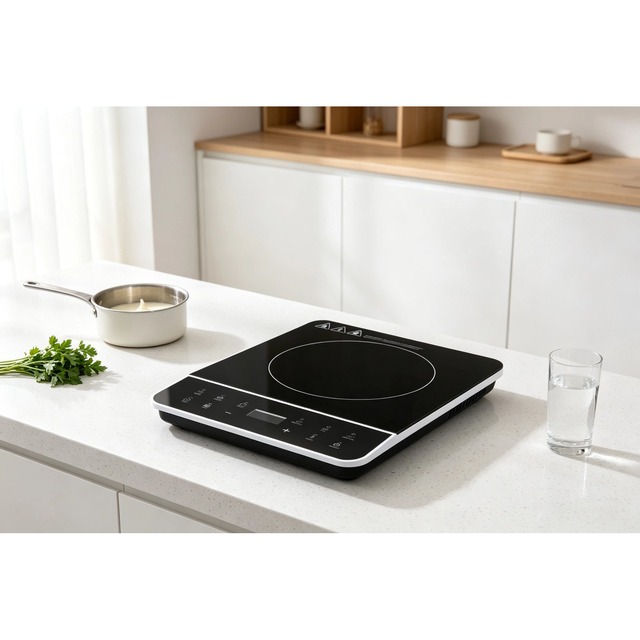
For residential and light commercial settings, portable induction cooktops offer flexibility and low entry cost. The Golenda ALP-I01, for instance, delivers 2000W of power in a compact 350×280×56mm body with touch sensor control and a digital display—ideal for apartments, catering events, or as a supplementary burner. Similarly, the Golenda BI-18A13 provides 1800W with 10 power levels and a temperature range of 60°C to 240°C, featuring both touch and knob controls for user preference.
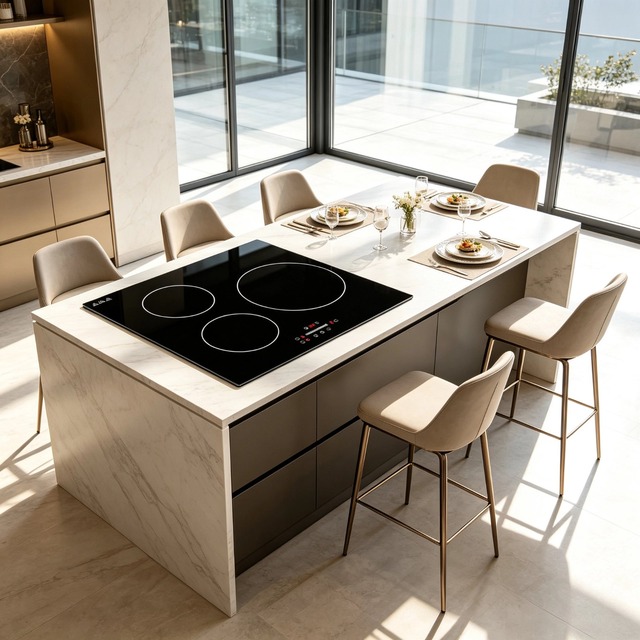
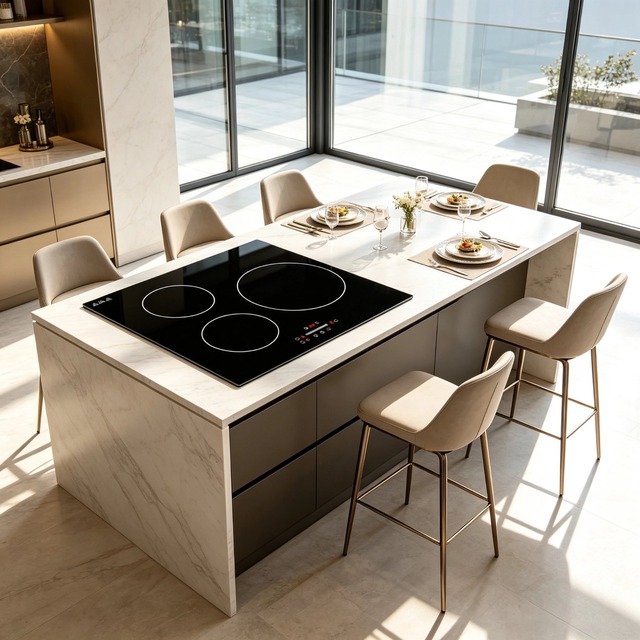
For built-in installations, power distribution across zones matters more than total wattage alone. The Golenda PIT02B70CAD-3, a 7000W three-zone built-in induction hob, demonstrates this principle: it includes a large 280mm right zone with 3000W power and a 3500W boost function. This configuration supports high-heat cooking methods like wok frying while maintaining independent zone control for multi-dish preparation. When sourcing built-in models, verify that power is distributed sensibly—a single high-power zone is often more valuable than evenly split lower wattages.
Zone size and count also affect marketability. Consumer Reports notes that induction cooktops deliver faster boil times and precise temperature control compared with gas or electric ranges. Wholesalers should therefore prioritize models with at least one large zone (200mm or more) to accommodate stockpots and family-sized cookware. The number of zones should correspond to typical household needs—three to four zones for standard built-in units, while two-zone models like the Golenda EC2H75-4402 infrared cooktop (4400W, two 230mm zones) suit compact kitchens or secondary cooking areas.
Compliance, Certifications, and Safety Standards
For B2B buyers, certification is not optional paperwork—it is market access. Different regions enforce distinct requirements, and failure to comply can result in shipment rejections or legal liability.
European buyers should prioritize products with CE certification at minimum. The Golenda ALP-I01 portable induction cooktop carries CE approval, making it suitable for EU distribution. For higher-end markets, additional certifications signal quality and safety rigor. The Golenda BI-18A13, for example, holds CE, GS, EMC, LVD, BSCI, RoHS, and Reach certifications—a comprehensive compliance profile that simplifies multi-country distribution within Europe and demonstrates factory-level social and environmental responsibility.
Wholesalers should also note that European regulations are tightening. Mordor Intelligence reports that Europe is advancing new Ecodesign requirements for domestic cooking appliances and mandating emissions reporting for gas appliances, which is accelerating the shift toward induction. Sourcing induction cooktops with full compliance documentation positions your inventory ahead of these regulatory curves.
Beyond certifications, examine safety features embedded in the product design. Induction technology inherently offers safety advantages—the surface stays cool to the touch, reducing burn risks, as Consumer Reports highlights. However, look for additional protective elements: automatic pan detection, overheat protection, and child safety locks. These features reduce warranty claims and enhance end-user satisfaction, which directly impacts your brand reputation as a distributor.
Supplier Capabilities: OEM/ODM Flexibility and Manufacturing Stability
For wholesalers, the supplier relationship determines long-term profitability. Beyond individual product specs, evaluate the manufacturer’s capacity for customization, quality control, and production consistency.
Golenda Appliances, operating under the parent company Shenzhen Xinhuike, has demonstrated significant investment in innovation and manufacturing infrastructure. The company established a multi-million-dollar annual innovation fund to drive core competitiveness—a signal of sustained R&D commitment that benefits buyers seeking updated product lines. In November 2025, Golenda unveiled a new production base operating under a comprehensive 4S management system, ensuring streamlined operations and strict quality control from raw components to finished products. For wholesalers, this translates to consistent batch quality and reliable lead times.
OEM/ODM capability is another critical factor. Wholesalers often require private-label branding, custom control interfaces, or region-specific voltage configurations. Golenda’s product range—including the BI-18A12-S with touch and slide control, 10 power levels, and a timer range of 0:00 to 3:00—shows the design flexibility available for customization. When evaluating suppliers, request documentation of their customization process, minimum order quantities, and lead times for modified products.
Financial stability of the supplier also matters. The parent company CHK successfully listed on the Beijing Stock Exchange (Stock Code: 831167) on May 27, marking its official entry into the capital market. This public listing provides financial transparency and indicates long-term operational viability—an important consideration when committing to large-volume wholesale orders.
Recent Company News
Golenda Appliances has made notable operational advancements. In November 2025, the company launched a new production base featuring advanced 4S management and full automation, enhancing manufacturing consistency and quality control. Additionally, parent company Shenzhen Xinhuike established a multi-million-dollar annual innovation fund to strengthen core competitiveness through sustained product development. CHK, the parent entity, successfully listed on the Beijing Stock Exchange (Stock Code: 831167) on May 27, marking a significant capital market milestone and providing financial transparency for B2B partners.
Conclusion
The induction cooktop market offers substantial opportunity for wholesalers who source strategically. Prioritize products with appropriate power distribution and zone configurations for your target markets, ensure comprehensive certifications for your distribution regions, and partner with manufacturers that demonstrate financial stability and production capability. As 2026 trends emphasize sustainability, sleek design, and precise performance, induction cooktops have become the default choice for many consumers. By aligning your product portfolio with these market realities and supplier standards, you position your wholesale business for sustained growth in this expanding category.
About Golenda Appliances
Golenda Appliances is a Chinese OEM/ODM kitchen appliance manufacturer specializing in induction cooktops, infrared cookers, gas hobs, built-in ovens, range hoods, dishwashers, and air fryers. The company operates under parent Shenzhen Xinhuike and benefits from the capital market listing of CHK on the Beijing Stock Exchange. Golenda’s product line includes portable and built-in induction cooktops, infrared cooktops, and built-in ovens, with a range of certifications including CE, GS, EMC, LVD, BSCI, RoHS, and Reach. The company’s new production base operates under a 4S management system with full automation, supporting consistent quality and OEM/ODM customization.
Sources
- https://www.consumerreports.org/appliances/cooktops/the-best-induction-cooktops-a1194688661
- https://www.mordorintelligence.com/industry-reports/residential-induction-cooktops-market
- https://www.coherentmarketinsights.com/market-insight/household-induction-cooktops-market-4572
- https://www.snsinsider.com/reports/induction-cooktops-market-9823
- https://www.ajmadison.com/learn/cooking/trends/cooking-appliance-trends-2026