
Gas Hob vs Induction Cooktop: Which Fits Your Market?
For importers, distributors, and private-label buyers, the gas hob versus induction cooktop decision is rarely about which technology is “better.” It is about which technology sells in your specific market — and increasingly, the answer is both. Gas and induction hobs use fundamentally different heating methods: a gas hob delivers heat through an open flame adjusted with dials, while induction transfers energy electromagnetically to the pan itself. That single difference drives everything from consumer preference and safety perception to installation requirements and after-sales profile. This guide breaks down the trade-offs so you can build the right assortment for your region.
Understanding the Core Differences
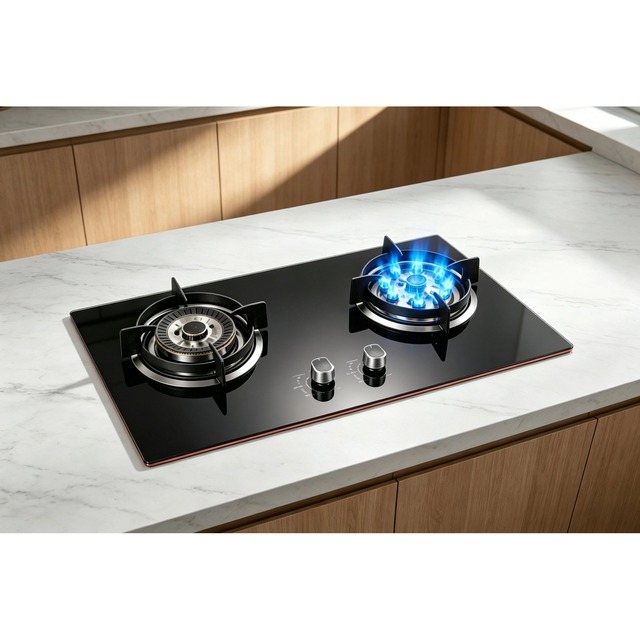
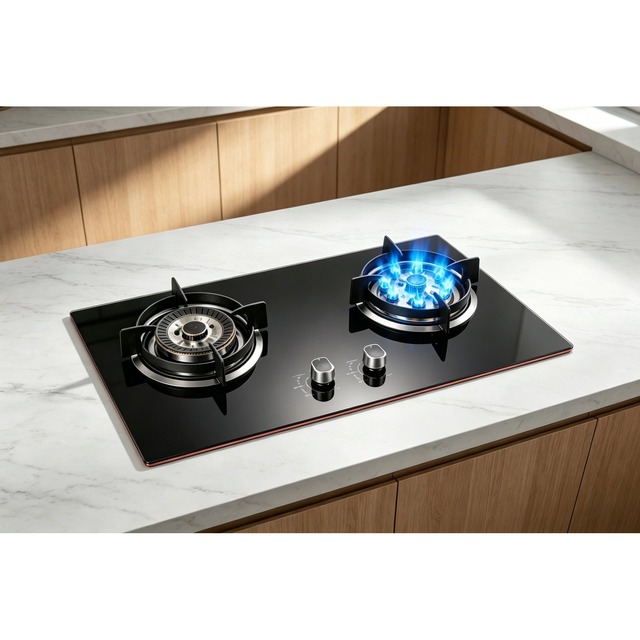
A gas hob gives cooks visual, tactile control. The flame is immediate and its size is adjusted with a dial, which is why gas remains the default in many markets with established gas infrastructure and a strong wok-cooking culture. Gas hobs are also forgiving with cookware — any flat-bottomed pot or pan works. The trade-offs are practical: gas hobs have burners, grooves, and crevices that require more cleaning effort, and cast iron pan supports usually need to be removed before a proper clean. There is also an open flame, which some households view as a safety consideration.
Induction cooktops are generally seen as the safer option for family kitchens because there is no exposed flame. The surface can still become warm from the hot pan resting on it, but it does not heat the way a gas or traditional electric surface does. Induction also tends to win on precision and cleanability, since the flat glass surface wipes down easily. The catch is cookware compatibility: pans must be magnetic to work, and buyers in markets where aluminium or glass cookware dominates may need education at the point of sale.
Matching the Product to Your Market
Induction cooktops are gaining ground rapidly in urbanizing regions, in markets with strong energy-efficiency incentives, and in premium design segments. If your territory includes new-build apartments, compact urban kitchens, or retail channels that reward sleek glass aesthetics and safety messaging, induction deserves shelf space. If your market has mature gas infrastructure, price-sensitive consumers, or a strong tradition of high-heat flame cooking, gas hobs will remain the volume driver.
Many successful distributors carry both. A dual-technology catalogue lets you serve multiple customer profiles without betting on a single trend, and it hedges against regional energy policy shifts. For buyers sourcing from an OEM/ODM manufacturer, this also simplifies private-label strategy: one supplier, one compliance conversation, two product families.
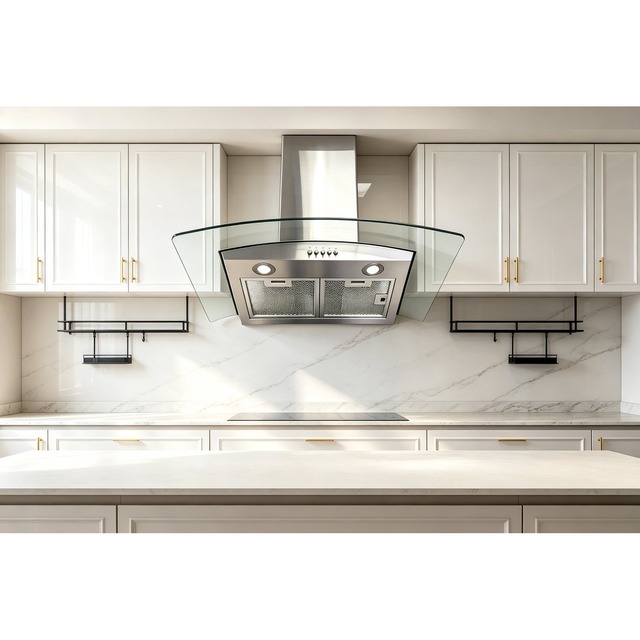
Golenda’s range reflects that dual approach. On the gas side, the GO-GP2014 gas hob pairs a 760×440×155mm 8mm tempered glass panel with cast iron pan supports and a brass burner rated at 4.5×4.5kW, and it supports both LPG and NG. For compact installations, the 2-burner built-in gas cooktop uses a tempered glass panel and dual-fuel NG/LPG compatibility. On the induction side, the PIT03B70CAD built-in induction hob delivers 7000W across three zones, including a 280mm centre zone with 3000W output and 3500W boost, plus 9 power levels and a 99-minute timer. For countertop retail, the CHK-S2105-E portable induction cooktop offers 2000W, a 295×361mm black glass panel, 4 touch keys, and a two-digit segment display. Ventilation should be planned alongside either choice — options include the CC60IX-A-N1P1L wall-mounted hood at 750 m³/h with three speeds and touch control, and the JO-BF036 900mm chimney hood at 860 m³/hr with a 24# copper motor and stainless steel cone filter.
Sourcing and Compliance Considerations
Whichever technology you choose, two B2B factors shape your margin. First, compliance: energy label requirements for kitchen appliances in the EU are a live issue for any distributor selling into European channels, and the labelling and documentation burden differs by product category. Second, manufacturing: understanding the OEM kitchen appliance manufacturing process step by step helps you plan tooling, lead times, and private-label packaging before you commit to a container. Buyers building a full kitchen assortment should also review adjacent categories — a dishwasher buying guide for importers and distributors is a useful companion when you are negotiating a mixed-category programme.
Recent Company News
Golenda publishes ongoing guidance for trade buyers on its blog. Recent articles include a dishwasher buying guide for importers and distributors, a step-by-step explanation of the OEM kitchen appliance manufacturing process, a comparison of gas ovens versus electric ovens for retail markets, a B2B compliance guide to EU energy label requirements for kitchen appliances, and a commercial induction cooktop guide for restaurants and canteens. These resources are aimed at distributors and importers planning category strategy and compliance.
Conclusion
There is no universal winner in the gas hob versus induction cooktop question — only the right fit for your market. Gas hobs suit regions with strong gas infrastructure, flame-cooking traditions, and price-sensitive shoppers. Induction cooktops suit urbanizing markets, energy-efficiency incentive programmes, and premium design segments, and they carry a favourable safety and cleaning story. For most distributors, a dual-technology line-up is the most resilient commercial position. Assess your local infrastructure, cookware habits, and channel mix first, then source both families from a manufacturer that can support private-label programmes across the category.
About Golenda Appliances
Golenda Appliances is a Chinese OEM/ODM kitchen appliance manufacturer producing induction cooktops, infrared cookers, gas hobs, built-in ovens, range hoods, dishwashers, and air fryers. The company supplies trade buyers with built-in and portable cooking appliances, ventilation products, and private-label manufacturing support.
Sources
- https://qanvast.com/sg/articles/induction-hob-vs-gas-stove-which-should-you-get-137
- https://golenda-appliances.com/gas-hob-vs-induction-cooktop-which-fits-your-market/
- https://www.vees.com.my/2026/06/06/gas-hob-vs-induction/
- https://www.airtasker.com/uk/comparisons/gas-vs-induction-hob/
- https://www.youtube.com/watch?v=0tzgULZjvdA