
Gas Hob vs Induction Cooktop: Which Fits Your Market?
For kitchen appliance buyers, importers, and distributors, the gas hob versus induction cooktop decision is rarely about personal preference. It is a market-fit question shaped by local fuel infrastructure, consumer cooking culture, energy costs, and regulatory direction. Both categories remain strong sellers, but they serve different buyers and different regions. This guide breaks down the practical differences and how Golenda’s OEM/ODM range covers both sides of the debate.
How the Two Technologies Actually Differ
The core difference is the heat source. Gas hobs burn an open flame, while induction cooktops use electromagnetism to turn compatible cookware itself into the heating element, as explained by Whirlpool. KitchenAid notes the same distinction: gas requires a gas line and an open flame, while induction relies on electromagnetic energy and compatible pots and pans.
That single difference drives nearly every commercial consideration. Because induction heats the cookware directly rather than the air around it, there is less heat loss, making induction generally more energy-efficient than gas, according to House & Garden. Induction also delivers faster boiling times, easier cleanup, and a cooler kitchen environment, while gas remains the choice for buyers who prefer open-flame cooking techniques, have limited electrical capacity, or need specialized flame control, per comparative industry analysis.
For a wholesaler, this translates into two distinct customer profiles. Gas buyers tend to be markets with established gas infrastructure and a strong tradition of wok or flame cooking. Induction buyers tend to be markets with reliable electricity, higher energy awareness, and modern kitchen design trends.
Matching Product Format to Market Demand
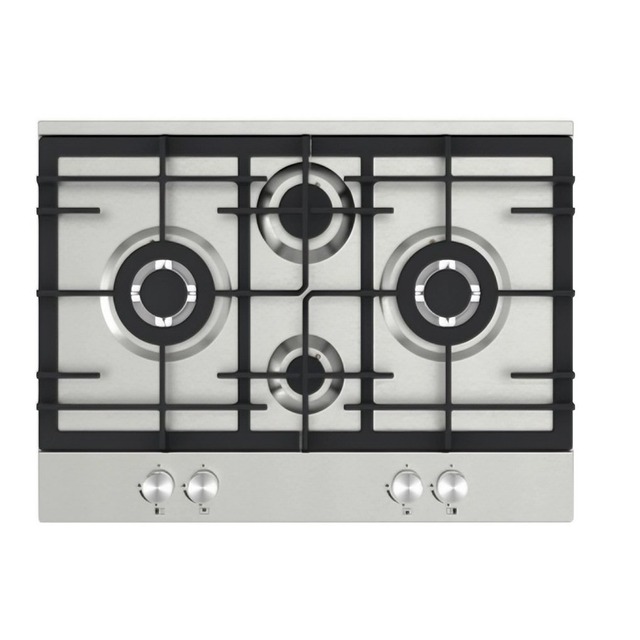
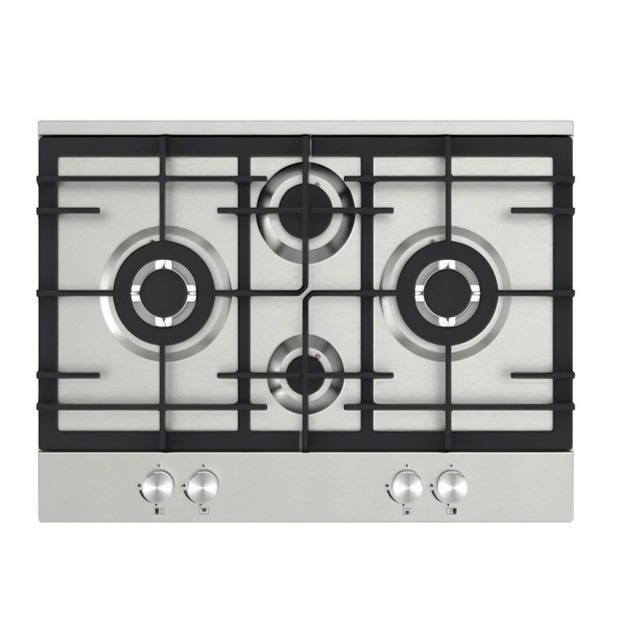
Golenda’s catalog illustrates how broad the gas category still is. The Golenda 5 Burner Gas Hob 70cm Built-In Cooktop (CICA7042-A) includes two 3.5kW wok burners and a 1.0kW auxiliary burner with front metal knobs and auto-ignition — a configuration aimed at high-performance residential cooking. For larger installations, the Golenda 900mm Gas Hob Built-in Gas Cooktop (JO-HT006) pairs a 28# copper motor and metal blower box with 1200 m³/hr airflow. A third option, the Golenda 3.3kW Gas Hob Built-in Gas Cooktop 5 Burner, uses a stainless steel panel (760*510*0.7mm) with a big cast iron pan support and supports both LPG and NG — an important flexibility point for buyers sourcing for multiple gas-supply markets.
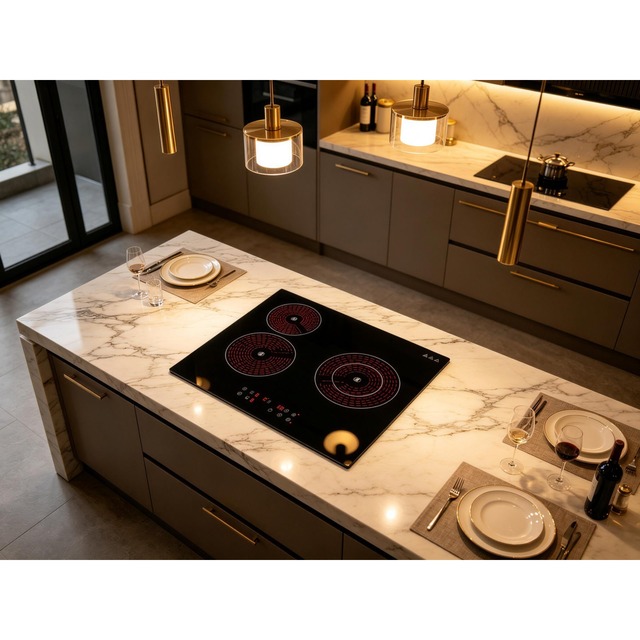
On the induction side, the Golenda 5200W Built-in Infrared Cooktop (EC360-5202) offers three zones — 200mm 1800W, 165mm 1200W, and a 230mm dual-power 2200/1100W rear zone — with touch control and CE CB certification. For entry-level or countertop demand, the Golenda Portable Induction Cooktop Single Burner (ALP-I03) uses an unpolished black crystal plate (250x250mm) and a copper clad aluminum heating coil.
Market data supports stocking both. The global induction cooktop market is estimated at USD 5.97 billion in 2026 and projected to reach USD 7.52 billion by 2035, per Business Research Insights. SNS Insider values the broader induction cooktops market at USD 24.79 billion in 2025, growing to USD 39.53 billion by 2035 at a 4.78% CAGR. Europe dominated the household induction cooktops market in 2026 with a 38.6% share, driven by energy-efficiency preferences and high electricity costs, according to Coherent Market Insights. Meanwhile, gas hobs remain essential in markets where open-flame cooking and existing gas lines define the kitchen.
Regulatory and Sustainability Signals to Watch
Buyers planning 12–24 month inventory should track policy. Mordor Intelligence reports that pricing parity is accelerating induction adoption as Europe advances new Ecodesign requirements for domestic cooking appliances and mandates emissions reporting for gas appliances. Research also indicates traditional gas stoves can emit methane even when off, while induction cooktops produce no such emissions — a factor in household carbon footprint discussions, per Yahoo Finance.
That does not mean gas is disappearing. It means the split is becoming more regional and more regulated. A distributor serving European urban apartments and a distributor serving markets with strong gas infrastructure may need very different SKU mixes from the same supplier.
Recent Company News
Golenda’s parent group, Shenzhen Xinhuike, has announced a multi-million-dollar annual innovation fund to strengthen core competitiveness and support technology-driven product development. In November 2025, Golenda Appliances launched a new production base operating under a comprehensive 4S management system with full automation, designed to ensure streamlined operations, strict quality control, and product consistency from raw components to finished goods. Separately, CHK (Stock Code: 831167) listed on the Beijing Stock Exchange on May 27, marking a capital-market milestone for the group behind smart control technologies for home appliances.
Conclusion
There is no universal winner between gas hobs and induction cooktops — only the right fit for your market. Gas remains the workhorse where open-flame cooking, gas infrastructure, and wok performance matter. Induction wins where efficiency, safety, clean design, and tightening emissions rules shape demand. A supplier with credible OEM/ODM depth in both categories lets you hedge regional risk instead of betting on one fuel type. Golenda’s gas hob and induction ranges, backed by automated production and an active innovation fund, are built for exactly that kind of portfolio approach.
About Golenda Appliances
Golenda Appliances is a Chinese OEM/ODM kitchen appliance manufacturer producing induction cooktops, infrared cookers, gas hobs, built-in ovens, range hoods, dishwashers, and air fryers. The company operates a new production base launched in November 2025 with 4S management and full automation, and its parent group has established a multi-million-dollar annual innovation fund. Golenda serves B2B buyers, wholesalers, and kitchen dealers worldwide.
Sources
- https://www.kitchenaid.com/pinch-of-help/major-appliances/induction-vs-gas.html
- https://www.whirlpool.com/blog/kitchen/induction-cooktop-vs-gas-cooktop.html
- https://www.houseandgarden.co.uk/article/induction-hob-vs-gas
- https://www.youtube.com/watch?v=gbh3Y6e7p5g
- https://finance.yahoo.com/news/global-induction-cooktop-market-forecast-141100565.html
- https://www.businessresearchinsights.com/market-reports/induction-cooktop-market-122403
- https://www.snsinsider.com/reports/induction-cooktops-market-9823
- https://www.mordorintelligence.com/industry-reports/residential-induction-cooktops-market
- https://www.coherentmarketinsights.com/market-insight/household-induction-cooktops-market-4572