
CE, CB, and ETL Certification Guide for Kitchen Appliance Importers
Importing kitchen appliances from China into the EU, North America, or other major markets requires more than a good product and a competitive price. Certification is the gatekeeper: without the right marks, your shipment can be stopped at customs, pulled from retail shelves, or rejected by insurers. For distributors and wholesalers, understanding what CE, CB, and ETL actually mean — and how they differ — is essential to planning a compliant, profitable product line.
What CE, CB, and ETL Actually Cover
**CE marking** is the European Union’s mandatory conformity mark for products sold within the EEA. For kitchen appliances, CE compliance typically involves testing against applicable standards and preparing a technical file and Declaration of Conformity. It is not issued by a single authority; the manufacturer or importer takes legal responsibility for compliance. CE is required for gas hobs, induction cooktops, infrared cookers, range hoods, and other household appliances placed on the EU market.
**CB Scheme certification** is an international system for mutual recognition of test reports for electrical products. Operated under the IECEE, the CB Scheme allows a test report issued by one participating national certification body to be accepted by others, reducing the need for duplicate testing across countries. Intertek, for example, operates four IECEE NCBs — in the United States, United Kingdom, Sweden, and Singapore — supported by a global network of more than 45 CB testing laboratories. For importers sourcing appliances for multiple markets, a CB report can be a practical starting point that feeds into national certification schemes.
**ETL certification** is a North American safety mark issued by Intertek. Products bearing the ETL mark have been tested and meet safety standards set by organizations such as OSHA in the United States and the Standards Council of Canada. ETL is recognized in both the U.S. and Canada and is an accepted alternative to the UL mark for many product categories, including kitchen appliances.
In short: CE opens the EU, ETL opens the U.S. and Canada, and CB provides a foundation that can support multiple national approvals. A supplier that already holds CE, GS, CB, RoHS, REACH, ERP, UL, and ETL certifications — as some established Chinese manufacturers do — can shorten your time to market considerably.
Matching Certifications to Your Target Markets
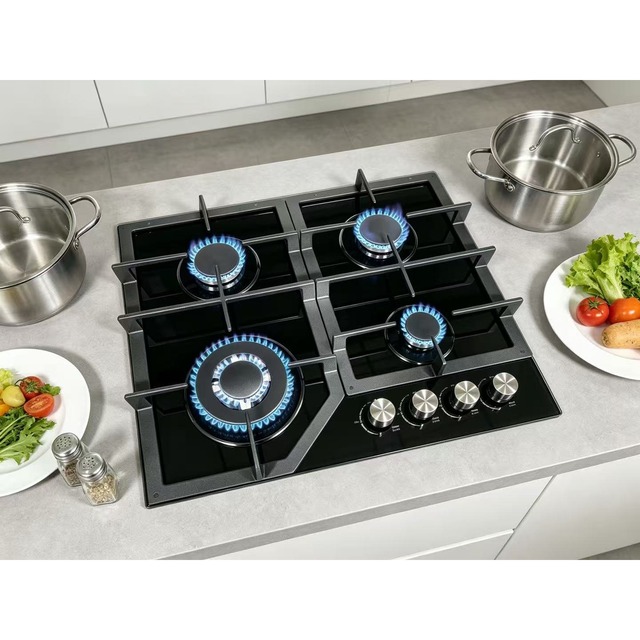
Different markets demand different marks, and the appliance category matters. Gas hobs require attention to gas safety standards in addition to electrical requirements. Induction and infrared cooktops are electrical products subject to electromagnetic compatibility and safety testing. Range hoods, built-in ovens, dishwashers, and air fryers each fall under specific household appliance standards.
For the EU, CE is non-negotiable, and RoHS and REACH compliance are also expected for electrical appliances. For the U.S. and Canada, ETL or UL listing is the practical requirement for retail acceptance. For markets such as the UK, Australia, and the Middle East, additional national schemes may apply.
This is where supplier certification coverage becomes a sourcing advantage. A manufacturer whose products carry international certifications covering the EU, USA, UK, Australia, and the Middle East reduces the risk of a shipment being held up because a required mark is missing. When evaluating an OEM/ODM partner, ask for the complete appliance certification list rather than a single certificate — coverage across your target regions matters more than any one document.
Recent Company News
Golenda Appliances continues to invest in manufacturing and innovation capacity. In November 2025, the company launched a new production base operating under a comprehensive 4S management system, designed to ensure streamlined operations, strict quality control, and product consistency from raw components to finished goods. Separately, Shenzhen Xinhuike announced the establishment of a multi-million-dollar annual innovation fund to strengthen its core competitiveness. CHK (Stock Code: 831167) also successfully listed on the Beijing Stock Exchange on May 27, marking its entry into the capital market.
Conclusion
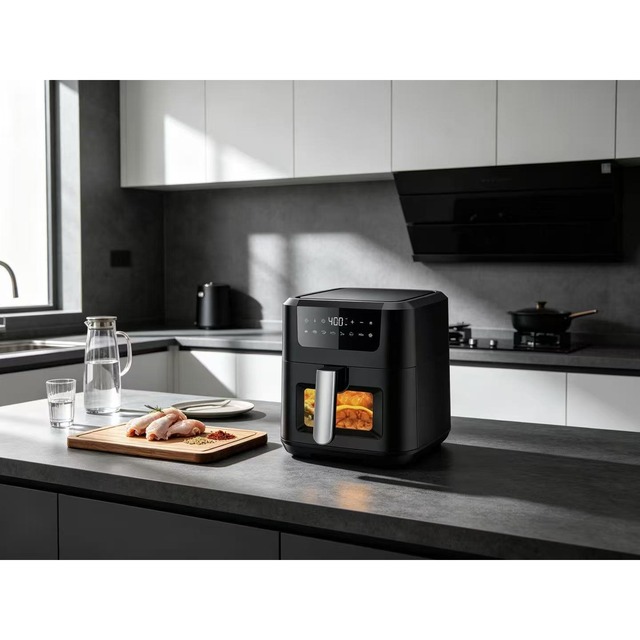
For importers, certification is not a paperwork formality — it is the foundation of market access. CE gets you into Europe, ETL into the U.S. and Canada, and CB reports can streamline approvals across multiple countries. The most efficient path is to source from manufacturers whose products already carry the certifications your target markets require. Golenda Appliances offers a range of kitchen appliances — including the AF-50CDG 5L digital air fryer, the GHG60-411SA and E60-4020S gas hobs, the AICK6042 4-burner gas hob with CE/SAA certification, the JO-HW001 900mm range hood, and the CHK-HD4002 built-in infrared cooktop — supported by real manufacturing infrastructure and a commitment to quality management.
About Golenda Appliances
Golenda Appliances is a Chinese OEM/ODM kitchen appliance manufacturer producing induction cooktops, infrared cookers, gas hobs, built-in ovens, range hoods, dishwashers, and air fryers. The company operates a new production base with 4S management and full automation, and is backed by CHK’s listing on the Beijing Stock Exchange. Golenda serves importers and distributors across the EU, USA, UK, Australia, and the Middle East.
Sources
- https://yld-home.com/how-to-import-kitchen-appliances-from-china
- https://www.sofeast.com/knowledgebase/kitchen-electrical-appliances-ul-ce-certification-tips
- https://www.compliancegate.com/kitchen-appliance-regulations-united-states
- https://www.prorestaurantequipment.com/blog/nsf-ce-etl-and-ul-certifications-what-do-they-mean
- https://www.intertek.com/product-certification-marks/cb-scheme