
Kitchen Appliance Voltage and Frequency Standards by Country: A B2B Sourcing Guide
For importers and distributors of kitchen appliances, voltage and frequency compatibility is not a technical footnote — it is a commercial risk. A built-in oven rated for the wrong grid, or a gas hob ignition module wired for the wrong frequency, can trigger installation delays, modification costs, or product returns. This guide outlines how voltage and frequency standards vary by country, what that means for OEM/ODM sourcing decisions, and how manufacturers like Golenda Appliances build flexibility into their product platforms.
Why Voltage and Frequency Standards Differ by Country
National power grids were built at different times under different engineering conventions, and those historical choices still shape appliance design today. Most of Europe, China, Australia, and much of Africa and the Middle East operate on 220–240V at 50 Hz. North America, parts of South America, and several Caribbean markets use 110–120V at 60 Hz. A smaller group of countries — including Brazil, Belize, and Cuba — support dual voltage systems, which adds another layer of complexity for buyers.
According to country-by-country reference data, examples include:
- **Australia:** 240V, 50 Hz
- **Canada:** 110V, 60 Hz
- **China:** 220V, 50 Hz
- **Croatia:** 230V, 400V, 50 Hz
- **Costa Rica:** 120V, 240V, 60 Hz
- **Cyprus:** 230V, 400V, 50 Hz
- **Czech Republic:** 230V, 400V, 50 Hz
- **Côte d’Ivoire (Ivory Coast):** 220V, 380V, 50 Hz
These figures come from published voltage and frequency tables maintained by Depco Power Systems, Sun Transformer, and the Engineering ToolBox. For buyers, the practical takeaway is that a single “export model” rarely fits every destination. Commercial kitchen equipment operates in high-frequency business environments, and mismatched voltage, plug, or wiring expectations can create real operational friction after delivery.
What This Means for Appliance Categories
Different appliance types carry different sensitivity to voltage and frequency mismatches.
**Electric cooking appliances** — induction cooktops, infrared cookers, built-in ovens, and dishwashers — are the most exposed. Heating elements, control boards, and motors are all engineered around a specific voltage and frequency. A 2200W portable infrared cooktop like the Golenda CHK-RTD2206, for example, is designed to deliver its rated power within its intended electrical environment; running it on an incompatible grid can reduce performance or damage components.
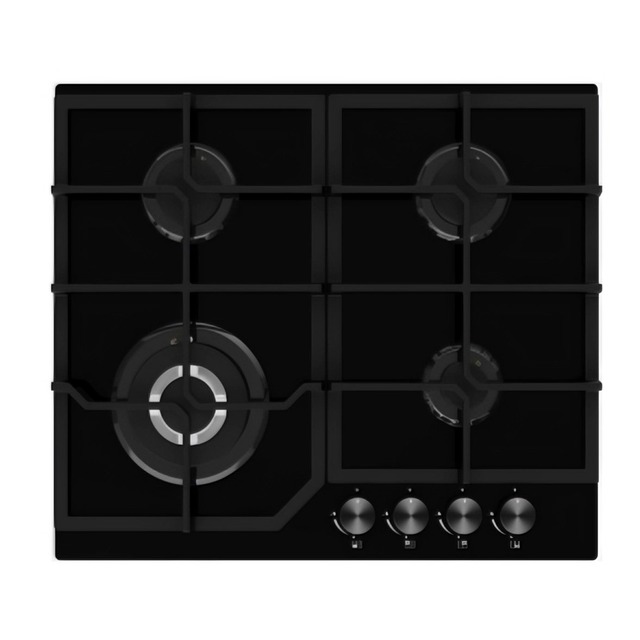
**Gas appliances** — gas hobs and gas ovens — are less voltage-dependent for the cooking function itself, but still rely on electricity for ignition, timers, and controls. The Golenda AGCP6042-A gas hob and the GO-GP5012 five-burner gas hob both use electronic ignition and control systems that must match local power standards.
**Small countertop appliances** — air fryers such as the Golenda 3.5L AFE09BL — are typically single-voltage products, which makes market-specific production runs essential.
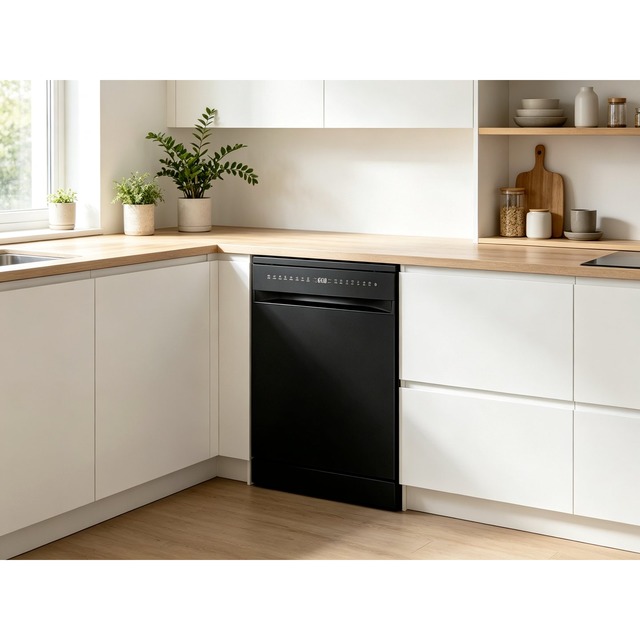
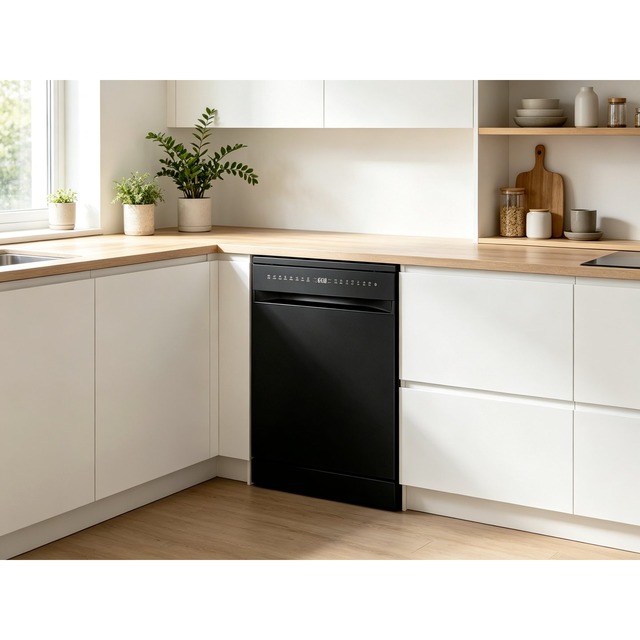
**Dishwashers** are a special case. The Golenda DWB-18B built-in dishwasher is engineered to operate at 1750W with dual voltage options: 220–240V 50/60Hz or 120V 60Hz. This kind of dual-rating design is increasingly common among manufacturers serving multiple export markets, because it reduces the number of SKUs a distributor must stock while still meeting local requirements.
Sourcing Checklist for Importers and Distributors
Before placing an order for electric fryers, griddles, ovens, or any kitchen appliance, buyers should confirm the destination country’s voltage, frequency, plug type, and wiring expectations. Industry guidance from commercial kitchen equipment suppliers recommends providing this information upfront rather than after production, since retrofitting finished goods is far more expensive than specifying correctly at the OEM stage.
A practical checklist:
1. Confirm the destination country’s nominal voltage and frequency.
2. Confirm plug type and any local wiring code requirements.
3. Decide whether a dual-voltage model or a market-specific model is more cost-effective.
4. Verify that the manufacturer can produce to that specification consistently.
5. Factor certification and energy labeling requirements into the timeline — for example, the EU’s energy label rules for kitchen appliances.
Market context reinforces the stakes. The global induction cooktop market has grown rapidly, with portable single-burner units representing one of the fastest-growing segments. As adoption spreads across regions with different grid standards, the ability to supply correctly rated products becomes a competitive advantage for distributors.
Recent Company News
Golenda Appliances has continued to invest in manufacturing capability and innovation. In November 2025, the company launched a new production base operating under a comprehensive 4S management system with full automation, covering everything from raw components to finished goods. The company has also established a multi-million-dollar annual innovation fund to support technology-driven product development. Additionally, CHK (Stock Code: 831167) successfully listed on the Beijing Stock Exchange on May 27, marking a significant milestone for the organization behind Golenda’s smart control technology.
Conclusion
Voltage and frequency standards are not uniform across markets, and treating them as an afterthought is one of the most common — and costly — mistakes in appliance importing. Buyers who specify electrical requirements at the quotation stage, and who work with manufacturers capable of dual-voltage or market-specific production, avoid installation delays, modification costs, and returns. Golenda Appliances’ range — from the DWB-18B dishwasher with dual voltage options to the CHK-RTD2206 infrared cooktop and AFE09BL air fryer — reflects the kind of specification flexibility that export markets demand.
About Golenda Appliances
Golenda Appliances is a Chinese OEM/ODM kitchen appliance manufacturer producing induction cooktops, infrared cookers, gas hobs, built-in ovens, range hoods, dishwashers, and air fryers. The company operates a new production base with 4S management and full automation, and backs product development through a multi-million-dollar annual innovation fund. Its parent organization, CHK, is listed on the Beijing Stock Exchange under stock code 831167.
Sources
- https://www.sunchefequipment.com/voltage-plug-standards-commercial-kitchen-equipment
- https://www.depco.com/resources/voltage-and-frequency-by-country
- https://www.suntransformer.com/transformer-information/worldwide-voltage-and-frequency-standards
- http://www.engineeringtoolbox.com/voltage-country-d_1920.html
- https://czckitchen.com/induction-cooktop-rate
- https://golenda-appliances.com/energy-label-requirements-for-kitchen-appliances-in-the-eu-a-b2b-compliance-guide/