
How to Choose a Reliable Kitchen Appliance OEM Manufacturer
For brands, distributors, and importers, the kitchen appliance OEM relationship is one of the most consequential sourcing decisions a business can make. The right manufacturing partner can shorten development cycles, protect your brand reputation, and scale with your growth. The wrong one can create quality problems, missed deadlines, and compliance headaches that damage customer trust. This guide outlines what B2B buyers should evaluate before committing to a kitchen appliance OEM or ODM manufacturer.
Evaluate Manufacturing Capability and Quality Systems
The first step in assessing any OEM partner is understanding how they actually build products — not just what their brochure says. Buyers should look for evidence of structured production management and consistent quality control across the entire process, from raw components to finished goods. A manufacturer that operates under a formal management system, such as a comprehensive 4S management approach, is better positioned to deliver streamlined operations and superior product consistency.
Factory transparency matters here. Rather than relying only on pictures or brochures, buyers can benefit from seeing how a factory operates in real time, which supports a more confident sourcing decision. Video walkthroughs, live factory tours, and sample evaluations all help verify that stated capabilities match reality.
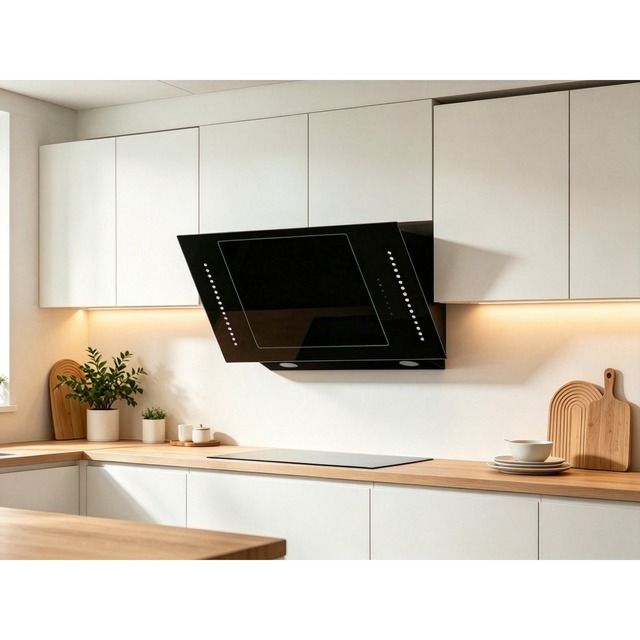
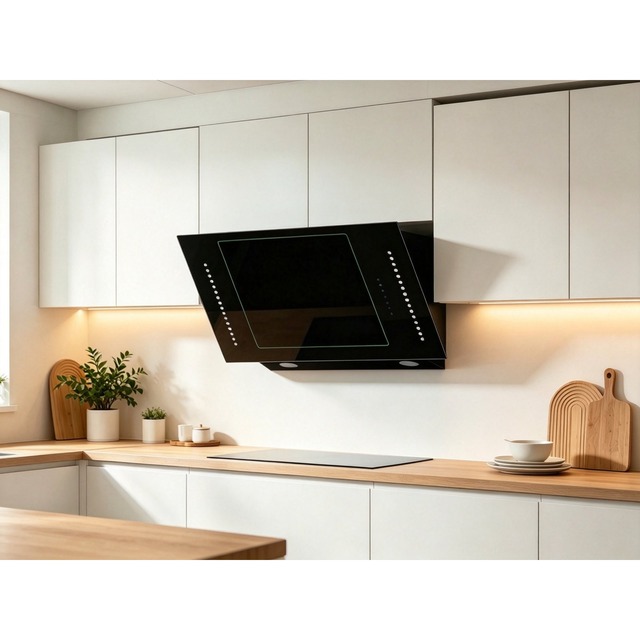
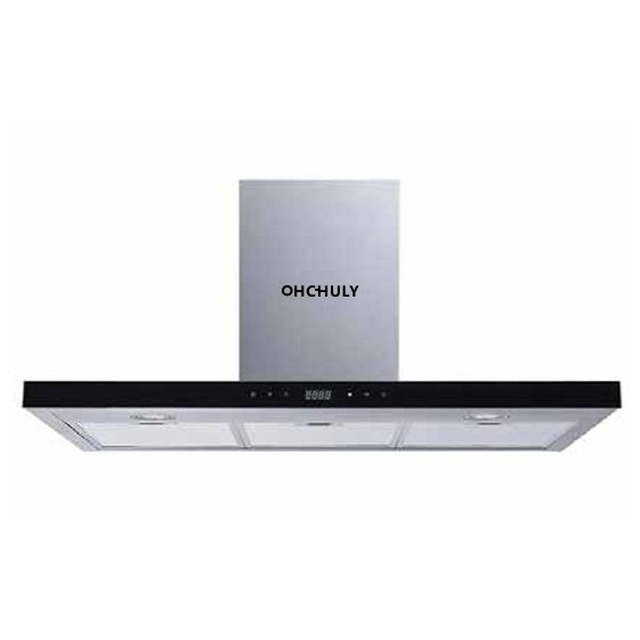
Product breadth is another signal of manufacturing depth. A supplier that produces across multiple categories — induction cooktops, infrared cookers, gas hobs, built-in ovens, range hoods, dishwashers, and air fryers — demonstrates the engineering range and production flexibility that OEM and ODM programs require. For example, Golenda’s catalog spans a range hood such as the Angled Glass Range Hood (model CV60BK-B-V1T1F) with touch control, 3 fan speeds, and a maximum airflow of 750 m3/h, alongside gas hobs like the AICK6042 with four burners and a 3.5kW wok burner, and portable induction cooktops such as the CHK-CCB2002A and ALP-I01, both rated at 2000W.
Verify Certifications, Communication, and Production Timelines
Compliance is non-negotiable in kitchen appliance sourcing, particularly for export markets. Buyers should confirm which certifications a manufacturer’s products actually hold and for which models. Real certification coverage varies by product line, so it pays to ask for documentation per SKU rather than accepting general claims. Among Golenda’s products, for instance, the 3500W four-burner gas hob carries CE/SAA certification, the CHK-CCB2002A portable induction cooktop holds CE CB ERP, and the ALP-I01 portable induction cooktop holds CE.
Clear OEM/ODM communication is equally important. A reliable partner can work from photos, sketches, samples, or ideas and help confirm the best production direction before tooling and mass production begin. Buyers should also assess whether the manufacturer offers flexible minimum order quantities suitable for samples, small launches, and growing collections, and whether they can commit to a reliable production timeline from sample development through delivery.
Market context reinforces the value of choosing the right partner. The residential induction cooktops market is expected to grow from USD 16.49 billion in 2025 to USD 23.90 billion by 2031, at a CAGR of 6.39% over 2026–2031, with Europe advancing new Ecodesign requirements for domestic cooking appliances and mandates for emissions reporting on gas appliances. Meanwhile, Europe dominated the global household induction cooktops market in 2026 with a 38.6% share, driven by consumer preference for energy-efficient appliances and high electricity costs. These trends mean OEM partners must be able to support evolving regulatory and efficiency requirements.
Recent Company News
Golenda’s parent group, CHK (Stock Code: 831167), successfully listed on the Beijing Stock Exchange on May 27, holding a grand listing ceremony at its headquarters in Guangming. The event marked the company’s official entry into the capital market.
In November 2025, Golenda Appliances launched a new production base operating under a comprehensive 4S management system, designed to ensure streamlined operations, strict quality control, and superior product consistency from raw components to finished goods.
Shenzhen Xinhuike also announced the establishment of a multi-million-dollar annual innovation fund, reflecting a technology-driven innovation philosophy and a commitment to sustained competitiveness.
Conclusion
Choosing a reliable kitchen appliance OEM manufacturer comes down to verifiable capability: structured quality systems, transparent factories, genuine certification coverage, clear communication, and dependable timelines. Buyers who evaluate these factors — and who partner with manufacturers investing in production infrastructure and innovation — are better positioned to compete in a growing, regulation-sensitive global market.
About Golenda Appliances
Golenda Appliances is a Chinese OEM/ODM kitchen appliance manufacturer producing induction cooktops, infrared cookers, gas hobs, built-in ovens, range hoods, dishwashers, and air fryers. The company is part of CHK (Stock Code: 831167), listed on the Beijing Stock Exchange, and operates a new production base launched in November 2025 under a 4S management system.
Sources
- https://www.yolec-electronics.com/how-to-choose-a-reliable-oem-small-kitchen-appliance-manufacturer-for-your-brand
- https://www.ub-jewelry.com
- https://www.mordorintelligence.com/industry-reports/residential-induction-cooktops-market
- https://www.coherentmarketinsights.com/market-insight/household-induction-cooktops-market-4572