
Built-In Gas Hob Selection Guide for Kitchen Dealers
For kitchen dealers and distributors, the built-in gas hob remains one of the most requested categories in any kitchen appliance portfolio. It sits at the center of the cooking experience, and the choices you make about which models to stock directly affect customer satisfaction, return rates, and repeat business. This guide covers the practical selection criteria that matter most when building a gas hob range for your market, along with the trends shaping buyer expectations in 2026.
Core Selection Criteria for Dealers
When evaluating built-in gas hobs for your catalog, start with the fundamentals that end users and installers both care about. Industry buying guides consistently highlight flame failure devices, auto ignition, and quality materials as essential features to prioritize. These are not premium extras — they are baseline expectations in most mature markets, and dealers who stock hobs without them often face complaints and service calls.
Cookware compatibility is another practical consideration. Flat-bottomed cookware is recommended for even heating and cooking performance, so hobs with well-spaced, stable pan supports tend to generate fewer customer complaints. Safety and ventilation also matter: buyers should be advised to ensure good ventilation to disperse gas fumes, and dealers can add value by including clear installation guidance with every unit.
Cleaning and maintenance influence long-term satisfaction. Built-in cooktops generally offer easier cleaning than freestanding alternatives because the smooth, integrated surface eliminates gaps and crevices that trap food and grime. Many models include removable components for straightforward cleaning, which is a strong selling point for busy households.
Budget positioning is equally important. Entry-level hobs and premium models can differ significantly in price, with premium hobs often exceeding $1,200 and typically including improved safety features and better heat distribution. Since kitchen appliances account for roughly 20% of overall kitchen renovation costs, dealers should stock a tiered range that gives customers a clear value ladder rather than a single price point.
Design, Technology, and Market Trends
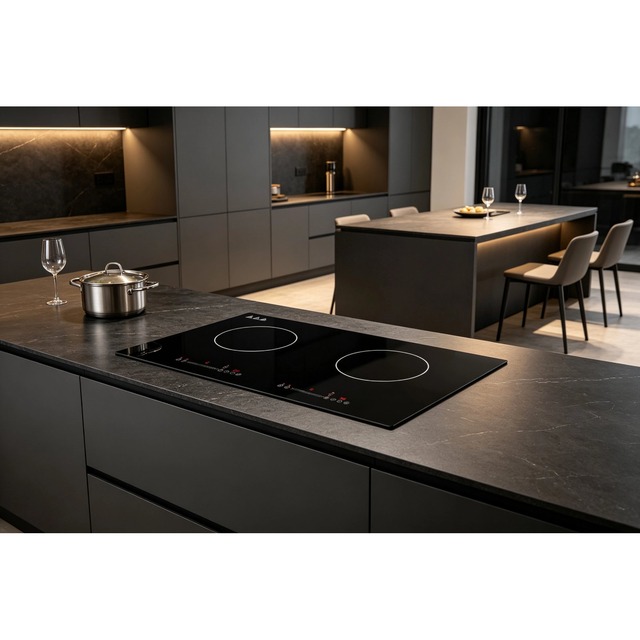
Design has become a decisive factor in hob selection. Glass on a gas hob is trending, and an elegant black gas hob in tempered glass or ceramic adds a sophisticated note to the kitchen. White gas hobs remain a timeless option, while stainless steel or black metal appeals to buyers seeking an industrial edge. Because the hob is often the visual centerpiece of the kitchen, dealers should treat finish and form factor as seriously as burner count.
Smart technology is now a mainstream expectation rather than a novelty. The integration of smart technology in kitchens has reached new heights, with WiFi connectivity allowing appliances to be controlled remotely through apps. At KBIS 2026, major brands showcased enhanced cooking products and new cooking technologies, confirming that innovation in cooking appliances remains a key competitive battleground. Modular setups with integrated burners are also gaining traction, which suggests dealers should watch for flexible, design-led configurations.
Electrification is reshaping the broader cooktop market, and dealers should understand how it affects gas hob demand. The induction cooktop market is projected to grow from USD 5.97 billion in 2026 to USD 7.52 billion by 2035, at a CAGR of 2.6%. North America holds a commanding 36.20% share of the global induction cooktop market in 2026, driven by electrification in new construction and demand for premium, smart-enabled appliances in remodeling. The U.S. induction cooktop market was valued at USD 3.23 billion in 2025 and is projected to reach USD 4.62 billion by 2035. These figures do not mean gas hobs are disappearing — but they do mean dealers should pair gas hob ranges with complementary electric options to capture both preferences.
That is where a diversified supplier relationship helps. Golenda Appliances manufactures built-in induction cooktops, infrared cookers, gas hobs, built-in ovens, range hoods, dishwashers, and air fryers, allowing dealers to source a full cooking suite from one OEM/ODM partner. For buyers comparing technologies, Golenda’s published guide on infrared versus induction cookers explains the key differences, and its 2026 kitchen appliance industry trends articles cover what B2B buyers need to know.
Recent Company News
Golenda Appliances continues to publish B2B-focused resources for kitchen appliance buyers, including “Kitchen Appliances Industry Trends 2026: What B2B Buyers Need to Know,” “Infrared Cooker vs Induction Cooker: Key Differences Explained,” and a “Commercial Fryer and Griddle Maintenance Guide for B2B Kitchen Operators.” These materials support dealers and operators in making informed sourcing and maintenance decisions.
Conclusion
Selecting built-in gas hobs for a dealer portfolio comes down to balancing safety fundamentals, cleaning convenience, design appeal, and price tiering. Stock models with flame failure devices and auto ignition, offer multiple finishes, and provide clear installation and ventilation guidance. At the same time, keep an eye on electrification and smart technology trends so your range reflects where the market is heading. Partnering with an OEM/ODM manufacturer such as Golenda Appliances lets you build a coordinated cooking appliance lineup — from gas and induction hobs to infrared cooktops, range hoods, and ovens — under one supply relationship.
About Golenda Appliances
Golenda Appliances is a Chinese OEM/ODM kitchen appliance manufacturer producing induction cooktops, infrared cookers, gas hobs, built-in ovens, range hoods, dishwashers, and air fryers. Its built-in cooking lineup includes the GXMC-AS01 1800W built-in infrared cooktop with 10 power levels, the ID4202 4200W two-zone built-in induction hob with CB certification, the CHK-FD6002 6000W four-zone built-in infrared cooktop, the CHK-ID3002 3000W Domino built-in induction hob with CE and CB certification, the CHK-HD3004 3000W two-zone built-in infrared cooktop, and the CL60IX-A-N1P1L 750 m³/h wall mounted range hood.
Sources
- https://www.bosch-home.com/ne/products/cooking-baking/hobs/gas-hobs-buying-guide
- https://simsng.com/how-to-choose-the-right-gas-hob-for-your-kitchen/
- https://www.aimpuro.com/blog/top-built-in-gas-hobs-for-kitchen-upgrade/
- https://beyondappliances.in/blogs/compact-modern-design/top-rated-gas-hobs-your-complete-buying-guide
- https://us.sndoas.com/blogs/tieasy-range-kitchen-hoods-blog/is-a-built-in-gas-hob-the-right-choice-for-you
- https://www.dewaardandbode.com/blog/kitchen-appliance-design-trends
- https://www.cnet.com/home/kitchen-and-household/10-best-large-appliance-innovations-in-2026/
- https://www.ajmadison.com/learn/cooking/trends/cooking-appliance-trends-2026/
- https://www.businessresearchinsights.com/market-reports/induction-cooktop-market-122403
- https://www.cognitivemarketresearch.com/induction-cooktop-market-report
- https://www.snsinsider.com/reports/induction-cooktops-market-9823