
Smart Kitchen Appliance Trends and IoT Integration: What B2B Buyers Need to Know
The modern kitchen is no longer just a room where meals are prepared — it is becoming a connected ecosystem. For importers, distributors, and private-label buyers, understanding how smart kitchen appliance trends and IoT integration are reshaping product demand is essential for building a competitive catalog. This article examines the forces driving connected cooking, what “smart” actually means in practice, and how OEM/ODM manufacturers such as Golenda Appliances are positioned to support B2B partners.
The Shift Toward Connected, IoT-Enabled Kitchens
IoT is widely described as the backbone of the modern smart kitchen, allowing appliances to connect, communicate, and function with greater autonomy. According to Market Research Future, the trend toward integrating smart appliances into kitchen systems is gaining momentum, with IoT-equipped devices enabling users to control and monitor kitchen equipment remotely from smartphones or tablets. This integration improves convenience and efficiency by letting consumers manage cooking processes without being physically present at the appliance.
Academic research reinforces the direction of travel. A systematic review published via ScienceDirect, covering peer-reviewed studies from January 2018 to September 2024, found that IoT integration into kitchens is revolutionizing food storage, preparation, and dining experiences. Smart kitchen furniture — including IoT-enabled refrigerators and cooking appliances — enhances food management, reduces waste, and promotes nutritional awareness.
Industry commentary from Techstrong.ai highlights the practical manifestations of this shift: smart fridges, ovens, and coffee makers can sync with phones or home assistants, sending notifications when groceries run low or allowing users to preheat an oven on the way home. Meanwhile, guidance from Moss Building and Design notes that smart appliances typically use Wi-Fi or Bluetooth to deliver remote control via phone or tablet, voice activation through assistants such as Alexa, Google, or Siri, and sensors that adjust temperature, water use, or timing.
For B2B buyers, the implication is clear: connectivity is moving from a premium novelty to an expected feature set. Sourcing decisions increasingly need to account for how — and whether — a supplier’s product roadmap accommodates connected functionality.
Interoperability: The Make-or-Break Factor for Smart Kitchens
One of the most common pitfalls in smart kitchen planning, according to RSI KB, is building a fragmented ecosystem. If an oven and a lighting system “speak different languages,” the promise of seamless integration quickly falls apart. Their guidance points buyers toward appliances and devices certified for Matter 1.4, described as the current industry interoperability standard, which allows products from different brands — ovens, cooktops, water systems, and more — to work together.
This has direct consequences for OEM/ODM sourcing. A connected appliance that cannot communicate with the wider home ecosystem creates friction for end users and returns for distributors. Buyers evaluating suppliers should therefore ask how smart features are implemented and whether products are designed with interoperability in mind, rather than treating connectivity as a bolt-on afterthought.
The Induction Cooktop Opportunity in a Smart Kitchen Era
The cooking surface sits at the center of the connected kitchen, and market data shows strong momentum behind induction in particular. Precedence Research reports that the household induction cooktops market reached USD 5.30 billion in 2026 and is projected to reach USD 10.78 billion by 2035, growing at a CAGR of 8.20%. Business Research Insights estimates the global induction cooktop market at USD 5.97 billion in 2026, projected to reach USD 7.52 billion by 2035 at a CAGR of 2.6%. SNS Insider values the induction cooktops market at USD 24.79 billion in 2025, expected to reach USD 39.53 billion by 2035 at a CAGR of 4.78%. Mordor Intelligence projects the residential induction cooktops segment growing from USD 16.49 billion in 2025 to USD 23.90 billion by 2031, at a CAGR of 6.39%.
Regional dynamics matter for buyers planning distribution. Coherent Market Insights reports that Europe dominated the global household induction cooktops market in 2026 with a 38.6% market share, driven by strong consumer preference for energy-efficient and eco-friendly appliances, high electricity costs, strict environmental regulations, and government incentives. Mordor Intelligence also notes that pricing parity shifts are accelerating adoption as Europe advances new Ecodesign requirements for domestic cooking appliances and mandates emissions reporting for gas appliances.
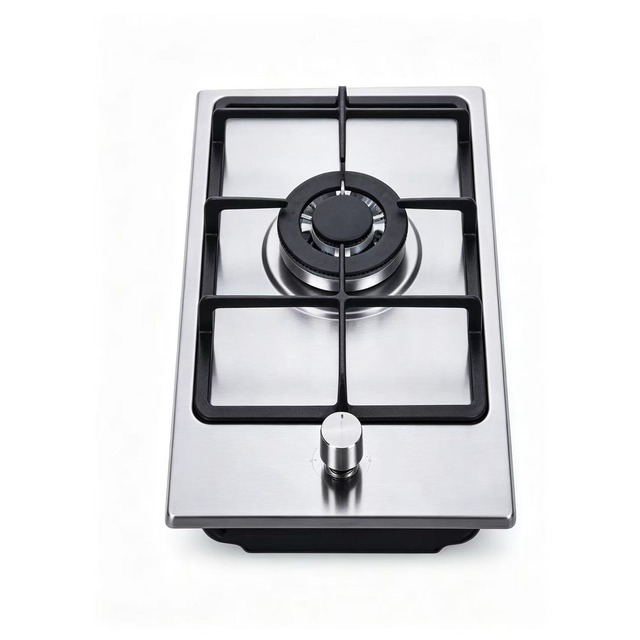
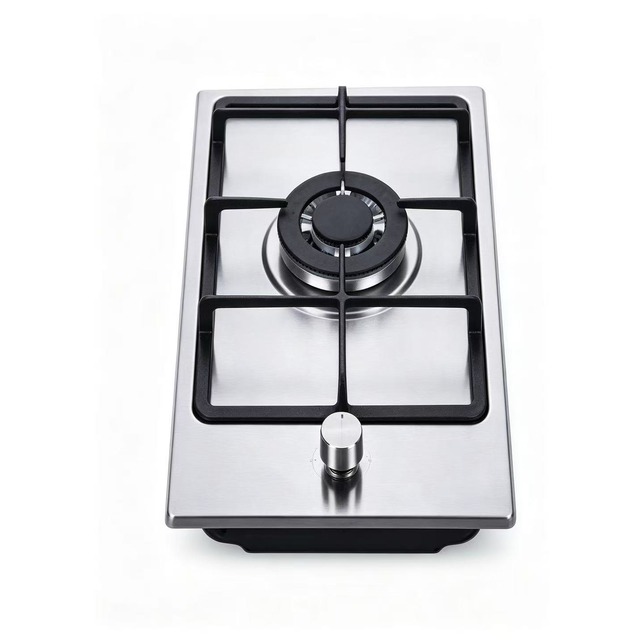
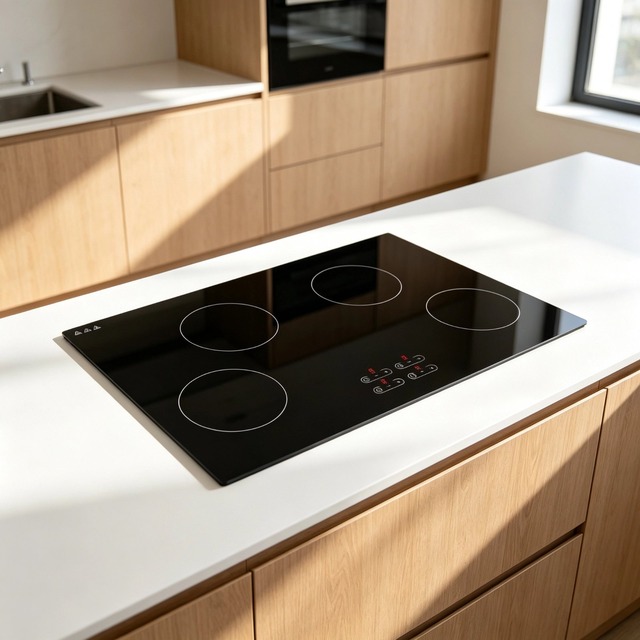
For suppliers, this means induction platforms are a natural anchor for smart functionality. Golenda’s product range reflects this demand: the Golenda 6600W Built-in Induction Hob (Model CHK-IF6600) offers four 165mm cooking zones with individual power ratings of 1300W and 2000W, touch control, and a booster function — a professional-grade platform suited to markets where performance and efficiency are priorities. Alongside induction, Golenda’s gas portfolio remains relevant for markets where gas cooking dominates, including the Golenda Gas Hob Built-In Gas Cooktop in stainless steel with NG/LPG dual gas support at 2000/2800Pa, the 5-burner model with a 3.3KW triple ring wok burner, and the 60cm FGCB6042-A glass cooktop with Flame Failure Device and auto-ignition.
Recent Company News
Golenda’s parent group, CHK (Stock Code: 831167), successfully listed on the Beijing Stock Exchange on May 27, holding a grand listing ceremony at its headquarters in Guangming. The company has long been dedicated to the research and development of smart control technologies for home appliances.
In November 2025, Golenda Appliances celebrated the launch of a new production base operating under a comprehensive 4S management system, ensuring streamlined operations, strict quality control, and superior product consistency from raw components to finished goods.
The company has also announced the establishment of a multi-million-dollar annual innovation fund, signaling a commitment to technology-driven innovation and long-term competitiveness.
Conclusion
Smart kitchen appliance trends and IoT integration are reshaping what B2B buyers must evaluate in a supplier. Connectivity, interoperability standards such as Matter 1.4, and the rapid growth of induction cooking all point in the same direction: the kitchen is becoming a connected system, and appliance platforms must be built to participate in it. For importers and distributors, partnering with an OEM/ODM manufacturer that combines smart control technology expertise, scalable production, and a broad cooking appliance portfolio — from induction and gas hobs to dishwashers and built-in appliances — is a practical way to stay ahead of the curve.
About Golenda Appliances
Golenda Appliances is a Chinese OEM/ODM kitchen appliance manufacturer producing induction cooktops, infrared cookers, gas hobs, built-in ovens, range hoods, dishwashers, and air fryers. The company is part of CHK (Stock Code: 831167), listed on the Beijing Stock Exchange, and operates a new production base with 4S management and full automation. Golenda supports private-label and OEM programs for importers and distributors worldwide.
Sources
- https://www.marketresearchfuture.com/reports/iot-in-kitchen-systems-market-32482
- https://www.sciencedirect.com/science/article/abs/pii/S0963996925008956
- https://techstrong.ai/articles/how-ai-and-iot-are-shaping-the-next-generation-of-smart-kitchens
- https://www.mossbuildinganddesign.com/blog/smart-kitchen-appliances
- https://www.rsikb.com/blog/smart-kitchen-remodel-ideas
- https://www.precedenceresearch.com/household-induction-cooktops-market
- https://www.businessresearchinsights.com/market-reports/induction-cooktop-market-122403
- https://www.snsinsider.com/reports/induction-cooktops-market-9823
- https://www.mordorintelligence.com/industry-reports/residential-induction-cooktops-market
- https://www.coherentmarketinsights.com/market-insight/household-induction-cooktops-market-4572