
Range Hood CFM Guide: Choosing the Right Extraction Power for Your B2B Kitchen Appliance Lineup
When sourcing kitchen ventilation for a new product range or a large-scale development project, one specification dominates every conversation: CFM, or cubic feet per minute. This single metric determines how effectively a range hood clears smoke, steam, grease, and cooking odors from a professional or residential kitchen. For importers, distributors, and OEM buyers, understanding CFM is not just a technical exercise—it is a commercial necessity. Specifying the wrong extraction power leads to dissatisfied end users, costly returns, and reputational damage. This guide breaks down what CFM means, how to calculate the right level for different cooking setups, and what B2B buyers should consider when building a ventilation portfolio.
Understanding CFM and Why It Matters
CFM measures the volume of air a range hood can move in one minute. A higher CFM rating indicates greater extraction power, which is essential for capturing airborne contaminants before they settle on cabinetry, walls, or—more importantly—in the lungs of the people cooking. Industry guidance consistently emphasizes that buyers should compare range hoods using verified ducted or operating CFM whenever available, as this provides a more realistic view of how well the hood will capture smoke, steam, grease, and odors during everyday cooking. Static or unverified ratings can mislead, so always request performance data that reflects real-world conditions.
The relevance of CFM scales with cooking intensity. A household that primarily boils water or reheats leftovers requires far less ventilation than a kitchen where a high-output gas wok burner or a char-grilling station is in daily use. For B2B buyers, this means your product lineup must span a range of CFM values to accommodate different market segments. A single high-CFM model will not serve an apartment dweller with an induction cooktop, just as a low-CFM unit will fail a serious home cook who sears, fries, and stir-fries regularly. Matching extraction power to cooking behavior is the core of a successful ventilation strategy.
Calculating the Right CFM for Different Kitchen Setups
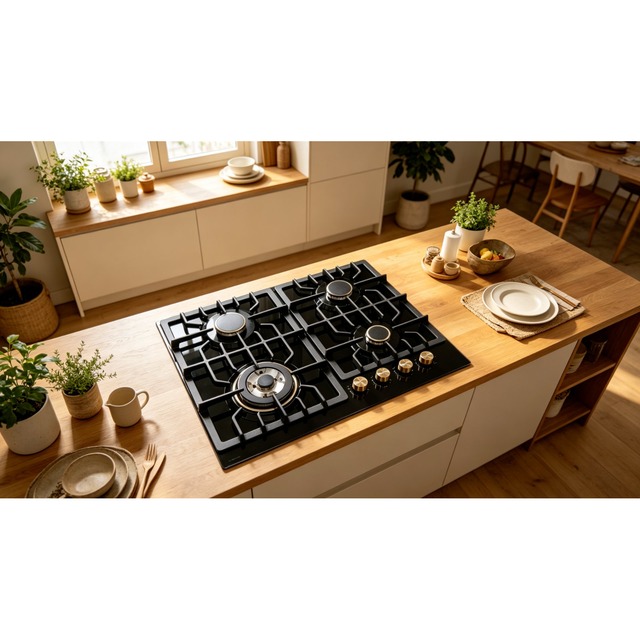
Several established methods exist for sizing range hood CFM, and each depends on the specifics of the cooktop and the kitchen environment. The most common rule of thumb for residential kitchens is based on the heat output of the cooking appliance. For electric cooktops, industry guidance suggests roughly 10 CFM per 1,000 British thermal units (BTUs) of heat output. Gas cooktops, which produce more combustion byproducts, typically require a higher ratio—often 100 CFM per 10,000 BTUs, or approximately 10 CFM per 1,000 BTUs as well, but with additional considerations for the fuel source. For example, a gas hob with a total power of 7.5 kW—such as the Golenda JY-S4033, a four-burner built-in gas cooktop with an inox panel and safety valve—converts to roughly 25,000 BTUs, suggesting a range hood in the 400–600 CFM range for adequate ventilation.
Another widely used method is based on kitchen volume. The U.S. Home Ventilating Institute recommends that a range hood should cycle the entire kitchen air volume approximately 15 times per hour. To calculate this, measure the kitchen’s length, width, and height in feet, multiply those numbers to get cubic feet, then multiply by 15 and divide by 60 to arrive at the minimum CFM. For a 10-foot by 12-foot kitchen with an 8-foot ceiling, the calculation is 10 × 12 × 8 = 960 cubic feet. Multiply by 15 (14,400) and divide by 60, yielding a minimum of 240 CFM. This method is particularly useful for B2B buyers specifying hoods for standard residential layouts, as it provides a baseline that can be adjusted upward for heavy cooking.
Cooktop width and mounting height also influence CFM requirements. Wider cooktops generate a larger plume of rising air, requiring more extraction power to capture contaminants across the entire surface. Similarly, the higher a hood is mounted above the cooking surface, the more air it must move to overcome the increased distance. Industry sources recommend adjusting CFM upward by roughly 100 CFM for every additional foot of mounting height beyond the standard 30 inches for gas cooktops and 24 inches for electric. Ductwork configuration is another critical variable—long duct runs, multiple elbows, and undersized ducts all reduce effective airflow, so buyers should factor in a margin of 10–20% above the calculated minimum to compensate for static pressure losses.
Building a Ventilation Portfolio: Matching CFM to Cooking Technology
For B2B buyers, the choice of range hood CFM is inseparable from the cooking appliances you pair with it. The global cooking appliance market is shifting toward induction technology, with market research indicating that the household induction cooktop segment is expected to dominate in 2026 due to affordability, ease of use, and flexibility, especially in small or shared living spaces. Induction cooktops produce less ambient heat and fewer combustion byproducts than gas, which means they generally require lower CFM ratings. A portable induction cooker like the Golenda BI-18A9-B, which delivers 1800W via a copper coil heating system with 10 power levels and a 60–240°C temperature range, generates minimal airborne grease and smoke during typical use. A range hood in the 200–400 CFM range is usually sufficient for such setups, making lower-CFM hoods an attractive, cost-effective option for compact kitchens and apartment installations.
Conversely, gas hobs remain popular in many markets for their professional-grade performance and precise control. The Golenda E60-4019G, a four-burner built-in gas cooktop with a tempered glass panel and dual ignition options supporting both natural gas and LPG, represents the type of high-output cooking surface that demands robust ventilation. Gas burners produce moisture, carbon monoxide, and nitrogen dioxide as combustion byproducts, all of which must be actively exhausted. For a gas hob of this caliber, buyers should specify range hoods in the 400–600 CFM range, with higher ratings for larger kitchens or open-plan layouts where the cooking area flows into living spaces.
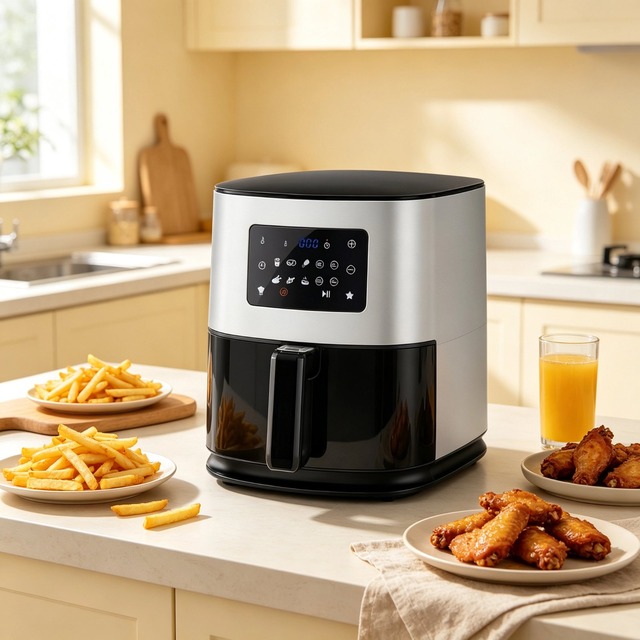
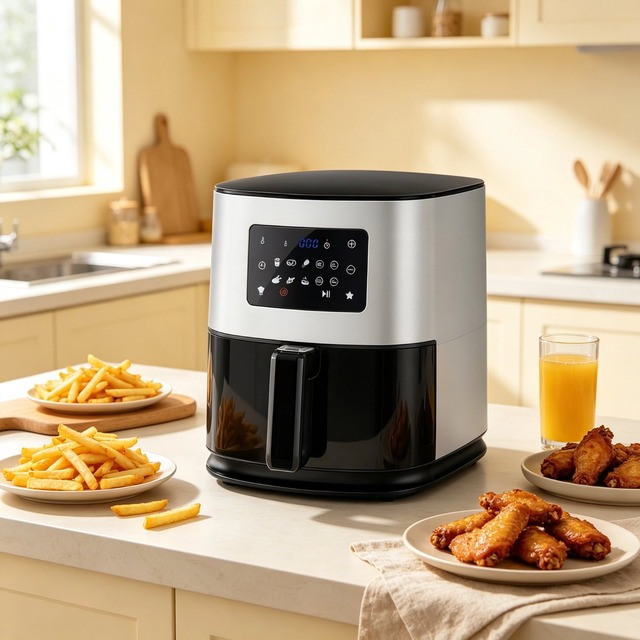
The rise of multi-functional cooking appliances further complicates CFM selection. Built-in ovens, air fryers, and combination cookers introduce additional heat and moisture into the kitchen environment. The Golenda BF-6A22G1E9, a 2200W built-in electric oven with eight cooking functions and a net cavity volume ranging from 61L to 80L, generates significant heat when roasting or broiling at high temperatures. While the oven itself is typically vented separately, the overall kitchen heat load increases, which may justify a slightly higher CFM rating on the range hood to maintain comfortable ambient conditions. Similarly, the Golenda AFE08 6L air fryer, delivering 1700W of power for oil-free cooking with a 60–200°C temperature range, produces steam and cooking odors that need effective extraction, particularly in open-plan kitchens.
Noise levels are another consideration that B2B buyers cannot afford to overlook. Higher CFM ratings generally correlate with increased noise, measured in sones. A hood that sounds like a jet engine during operation will discourage use, negating its ventilation benefits. Industry guidance suggests that buyers should evaluate noise levels at both normal and boost speeds, as some manufacturers achieve high CFM ratings only at maximum fan speed, where noise becomes objectionable. For residential applications, a hood operating at 3 sones or less at normal speed is generally considered acceptable, while commercial kitchens can tolerate higher noise levels in exchange for greater extraction power.
Make-up air requirements are a final, often overlooked factor. High-CFM range hoods—typically those exceeding 400 CFM—can depressurize a home, pulling exhaust gases back down chimneys and causing drafts. Many building codes now require make-up air systems for range hoods above a certain CFM threshold. B2B buyers should be aware of these regulations in their target markets, as they affect installation complexity and cost. Providing hoods in the 400–600 CFM range, which is adequate for most residential gas and induction setups, often avoids the make-up air requirement while still delivering effective ventilation for typical cooking patterns.
Recent Company News
Golenda Appliances continues to expand its B2B educational content for kitchen appliance importers and distributors. Recent publications include a comparative analysis of infrared cookers versus induction cookers, a 2026 air fryer market trends report, a guide to importing kitchen appliances from China, and a breakdown of voltage and frequency standards by country. The company has also published a dishwasher buying guide for importers and distributors, outlining key considerations for the 2026 market. These resources reflect Golenda’s commitment to supporting wholesale buyers with actionable sourcing intelligence.
Conclusion
Choosing the right range hood CFM is a balancing act between cooking technology, kitchen dimensions, installation variables, and end-user expectations. For B2B buyers, the decision is not merely about picking the highest number—it is about matching extraction power to the specific cooking appliances in your lineup and the realities of the kitchens where they will be installed. Induction cooktops and portable cookers generally require lower CFM ratings, while gas hobs and high-output cooking surfaces demand more robust ventilation. By understanding the calculation methods, accounting for ductwork and mounting height, and considering noise and make-up air requirements, buyers can build a range hood portfolio that satisfies diverse market needs. Pairing the right hood with the right cooktop is not just good engineering—it is good business.
About Golenda Appliances
Golenda Appliances is a Chinese OEM/ODM kitchen appliance manufacturer specializing in induction cooktops, infrared cookers, gas hobs, built-in ovens, range hoods, dishwashers, and air fryers. The company’s product line includes models such as the Golenda BI-18A9-B 1800W slim induction cooker, the Golenda GXMI-S03 2200W portable induction cooktop, the Golenda JY-S4033 7.5kW gas hob, the Golenda E60-4019G four-burner gas hob, the Golenda BF-6A22G1E9 2200W built-in oven, and the Golenda AFE08 6L air fryer. Golenda provides design, engineering, and manufacturing support for B2B clients seeking customized kitchen appliance solutions.
Sources
- https://broan-nutone.com/en-us/range-hood-cfm-guide-how-to-choose-the-right
- https://luxuryappliancesdirect.com/blogs/range-hoods-and-ventilation-systems/cfm-guide
- https://www.homecomfortsdepot.com/blogs/kitchen-appliances/range-hood-cfm-guide-how-much-power-do-you-really-need
- https://buildtana.com/articles/range-hood-cfm-sizing-right-airflow-kitchen-setup
- https://applianceperfected.com/what-cfm-should-my-range-hood-be/
- https://www.coherentmarketinsights.com/market-insight/household-induction-cooktops-market-4572
- https://www.cognitivemarketresearch.com/induction-cooktop-market-report