
Gas Hob vs Induction Cooktop: Which Fits Your Market in 2026
For B2B buyers and distributors in the kitchen appliance sector, choosing which cooktop technology to stock is a strategic decision that affects inventory, customer satisfaction, and long-term market positioning. Gas hobs have dominated kitchens for decades, while induction cooktops are rapidly gaining ground in both residential and commercial settings. Understanding the strengths, limitations, and regional preferences for each technology is essential for building a product lineup that meets diverse consumer needs. This guide examines the key differences between gas hobs and induction cooktops to help you determine which fits your target market.
Performance, Efficiency, and Cooking Control
When comparing gas hobs and induction cooktops, performance metrics often take center stage. Induction technology is widely recognized for its speed and efficiency. According to the U.S. Department of Energy, Consumer Reports has found that induction cooktops can boil water 20–40% faster than tested gas and traditional electric cooktops. This speed advantage translates directly into time savings for end users, a compelling selling point for busy households and professional kitchens alike.
Energy efficiency is another critical differentiator. Induction cooktops transfer heat directly to the pan through electromagnetic fields, minimizing heat loss to the surrounding air. This method of heating is inherently more efficient than gas, which loses a significant portion of its heat to the environment. For markets where energy costs are high or where sustainability is a growing consumer priority, induction offers a clear advantage. The global induction cooktop market was estimated at USD 5.97 billion in 2026 and is projected to reach USD 7.52 billion by 2035, reflecting steady growth at a CAGR of 2.6%. This upward trajectory signals increasing consumer acceptance and demand for induction technology.
However, gas hobs retain a loyal following among cooking enthusiasts who value precise, instant flame control. The visual feedback of a flame allows experienced cooks to gauge heat levels intuitively, and gas provides immediate temperature adjustments without the lag sometimes associated with electric or induction surfaces. For markets with established gas infrastructure and cultural cooking traditions that rely on open flame techniques, gas hobs remain a practical and familiar choice.
Safety, Installation, and Market Suitability
Safety considerations play a significant role in cooktop selection, particularly for family-oriented markets. Induction is generally seen as the safer option for family kitchens because there is no exposed flame. The cooktop surface can still get warm from the hot pan sitting on it, but it does not heat the same way a traditional electric or gas surface does. This reduced surface temperature lowers the risk of burns and makes induction an attractive option for households with young children or elderly family members.
Installation requirements also differ substantially between the two technologies. For gas, the correct gas connection and safe installation are essential, and ventilation is especially important to manage combustion byproducts. This infrastructure dependency can limit gas hob adoption in regions where gas lines are not readily available or where new construction increasingly favors all-electric buildings. Induction cooktops, by contrast, require only a suitable electrical supply, making them easier to install in apartments, condominiums, and modern housing developments.
Regional market dynamics further influence the gas versus induction decision. In markets like the United States, the home induction cooktop market benefits from energy efficiency mandates, a rising trend in smart home integration, and a shift towards sustainable living. The US market was valued at approximately USD 3.2 billion in 2024. Meanwhile, certain regions continue to show strong demand for gas appliances, with events like Hot Sale México 2026 highlighting gas appliance brands as key sales moments in specific markets. Understanding these regional nuances is vital for distributors planning their product mix.
Building a Balanced Product Portfolio
For B2B buyers, the question is not always about choosing one technology over the other—it is about offering the right balance to serve diverse customer segments. A well-rounded portfolio might include both gas hobs and induction cooktops to capture different buyer personas and regional preferences.
Golenda Appliances offers a range of cooking solutions that can help distributors build this balanced inventory. For markets leaning toward induction, the Golenda 4 Zone Built-in Induction Hob (Model PIF02B70CACA-1) delivers 7000W of total power across four cooking zones, featuring two 180mm zones at 1800W (2000W boost) and two 160mm zones at 1300W (1500W boost). With 9 power levels and a 99-minute timer, this built-in induction cooktop provides the precision and performance that modern consumers expect.
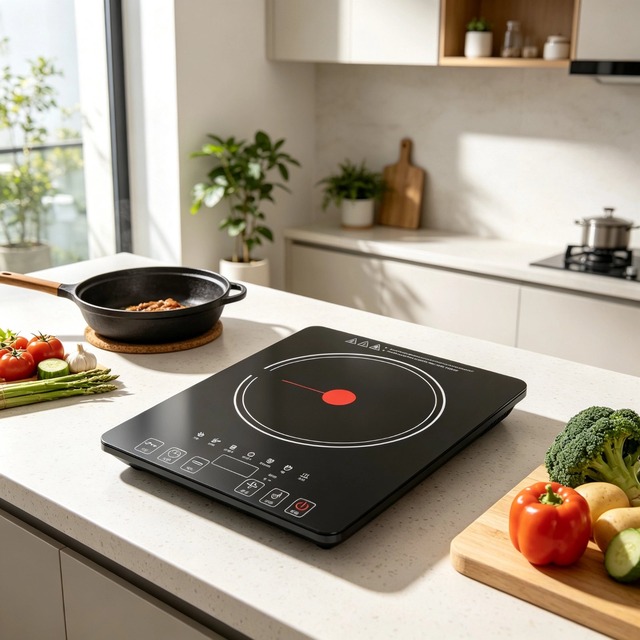
For customers who prefer portable cooking solutions or who may not be ready to commit to built-in installation, the Golenda 1800W Portable Infrared Cooktop (Model GXMC-S08) offers an alternative. With a real power of 1300W and over 86% energy efficiency, this countertop unit features an A-grade integral micro-crystal glass panel and touch button controls, making it a versatile addition to any kitchen appliance lineup.
Distributors should also consider the complementary appliances that complete a kitchen package. Golenda’s built-in ovens, such as the 80L Built-in Oven Gas 3 Programs with a 120-minute timer and double-glazed construction, pair naturally with gas hobs. For induction-focused kitchens, the Golenda Built-in Oven 80L Touch Control with Combi Microwave functionality offers advanced technology that eliminates the glass turntable for effortless cleaning and even cooking. Range hoods, like the Golenda 350m³/h model with 3 speeds and LED lighting, are essential companions for both cooktop types, ensuring proper ventilation regardless of the heat source.
Recent Company News
Golenda Appliances continues to expand its B2B educational content to support distributors and importers. Recent blog posts include a Range Hood CFM Guide covering extraction power selection, Air Fryer Market Trends 2026 for competitive landscape analysis, and a Built-in Oven Installation and Maintenance Tips guide for retailers. The company has also published a 2200W Infrared Cooktop OEM Supplier page and a CE, CB, and ETL Certification Guide for Kitchen Appliance Importers, helping buyers navigate compliance requirements.
Conclusion
The gas hob versus induction cooktop decision ultimately depends on your target market’s infrastructure, cooking culture, and consumer priorities. Induction offers superior energy efficiency, faster cooking times, and enhanced safety features, making it an increasingly attractive option in markets focused on sustainability and modern living. Gas hobs remain reliable, familiar, and preferred by cooking enthusiasts and regions with established gas infrastructure.
For B2B buyers, the most resilient strategy is to offer both technologies, allowing customers to choose based on their specific needs. By partnering with a manufacturer that provides quality options across categories, distributors can position themselves to capture demand in both segments and adapt to evolving market trends.
About Golenda Appliances
Golenda Appliances is a Chinese OEM/ODM kitchen appliance manufacturer specializing in induction cooktops, infrared cookers, gas hobs, built-in ovens, range hoods, dishwashers, and air fryers. The company offers a diverse product portfolio including built-in induction hobs, portable infrared cooktops, 80L built-in ovens, wall-mounted range hoods, and digital air fryers, supporting B2B partners with customizable solutions for global markets.
Sources
- https://golenda-appliances.com/gas-hob-vs-induction-cooktop-which-fits-your-market-in-2026/
- https://www.vees.com.my/2026/06/06/gas-hob-vs-induction/
- https://blog.fantasticservices.com/induction-vs-gas-hobs/
- https://www.bora.com/en-int/guides/induction-versus-gas-hobs-which-is-better
- https://shop.casa.sg/blogs/news/gas-hob-vs-induction-hob
- https://www.greaidea.com/blog/Other-Product-Knowledge-and-Industry-Trends_g340
- https://www.goodhousekeeping.com/appliances/
- https://en.awe.com.cn/
- https://www.hollylanelights.com/post-the-kitchen-appliance-industry-has-4177.html
- https://homaxo.com/why-can-the-air-fryer-become-a-star-product-in-the-home-appliance-industry/
- https://www.businessresearchinsights.com/market-reports/induction-cooktop-market-122403
- https://www.linkedin.com/pulse/home-induction-cooktop-market-size-trends-2rncc
- https://www.accio.com/business/trend-of-commercial-induction-cooker-2026
- https://www.grandviewresearch.com/industry-analysis/induction-cooktops-market
- https://www.verifiedmarketreports.com/product/smart-induction-cooktop-market/