
Gas Hob vs Induction Cooktop: Which Fits Your Market in 2026
For B2B buyers, distributors, and kitchen appliance wholesalers, the choice between gas hobs and induction cooktops is no longer a simple matter of customer preference. It is a strategic decision shaped by regional energy policies, installation infrastructure, cooking culture, and shifting consumer expectations. As we move through 2026, understanding the strengths and limitations of each technology — and where they fit in different markets — is essential for building a product portfolio that sells.
The Core Differences: Flame vs Electromagnetism
At the most fundamental level, gas hobs and induction cooktops operate on entirely different principles. Gas hobs rely on an open flame and require a gas line connection, while induction cooktops use electromagnetism to transform compatible cookware into its own source of heat. This distinction drives nearly every other difference between the two technologies.
Induction cooktops are widely recognized for their speed and efficiency. According to the U.S. Department of Energy, Consumer Reports has found that induction cooktops can boil water 20–40% faster than tested gas and traditional electric cooktops. Because the heat is generated directly in the cookware rather than lost to the surrounding air, induction offers more precise, even heating and a cooler kitchen environment. For commercial and residential users alike, this translates into real energy savings and faster meal preparation.
Gas hobs, by contrast, offer tactile control and a traditional cooking experience that many professional chefs and home cooks still prefer. The open flame allows for immediate visual feedback, and gas cooktops are generally easier to install in markets where electrical capacity is limited or where gas infrastructure is already well established. As Whirlpool notes, both options offer precision and temperature control, but the fuel type may suit different cooking styles and kitchen setups.
For wholesalers, the practical implications are clear. Induction cooktops appeal to markets prioritizing energy efficiency, modern design, and safety. Gas hobs remain the default choice in regions with abundant natural gas, lower electricity costs, or established installation habits. The decision is not about which technology is “better” in absolute terms, but which fits the specific needs of your target market.
Market Trends and Regional Demand in 2026
The global shift toward electrification and sustainable kitchen solutions is reshaping demand patterns. The residential induction cooktops market is expected to grow from USD 16.49 billion in 2025 to USD 17.54 billion in 2026, reaching USD 23.90 billion by 2031, at a CAGR of 6.39% over 2026–2031. Mordor Intelligence attributes this growth partly to pricing parity shifts and new Ecodesign requirements in Europe, alongside mandatory emissions reporting for gas appliances. Europe currently dominates the global household induction cooktops market with a 38.6% share, driven by high electricity costs, strict environmental regulations, and strong consumer preference for energy-efficient appliances.
The commercial segment is also expanding. The global commercial induction cooktops market is projected to grow at a 5.6% CAGR between 2026 and 2036, with countertop, built-in, and floor-standing induction cooktops as the key product types. Meanwhile, the overall induction cooktops market was valued at USD 24.79 billion in 2025 and is expected to reach USD 39.53 billion by 2035, according to SNS Insider.
What does this mean for B2B buyers? In European and other regulated markets, induction is increasingly becoming the default recommendation for new kitchen installations. In markets where gas infrastructure is deeply embedded — or where electricity grids are less reliable — gas hobs will continue to hold significant share. The key is to offer both technologies across your portfolio, with clear differentiation in features, price points, and target applications.
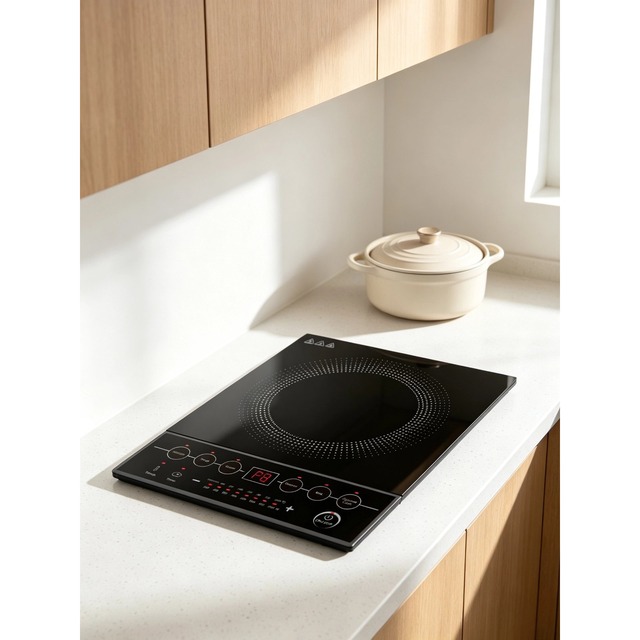
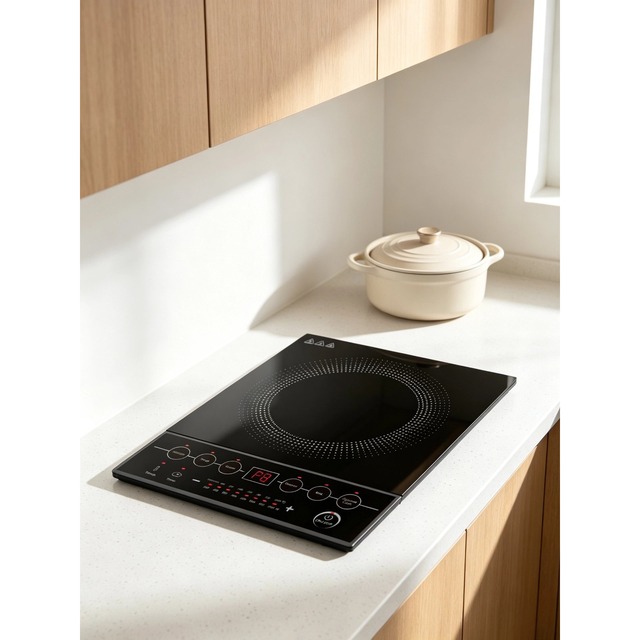
Golenda Appliances supports this dual-track strategy with a range of products designed for different market needs. For induction, the Golenda CHK-CCA12 portable induction cooktop delivers 1800W of induction heating power in a compact W270 x D340 x H60mm frame, featuring push-button controls with 11 keys and 17 LEDs — an ideal countertop solution for professional and residential use. For markets that prefer built-in solutions, Golenda also offers a 4400W built-in infrared cooktop with two 230mm zones, each delivering 2200/1100W, with touch control and a 99-minute timer. While infrared and induction differ in heating technology, both offer the sleek, integrated look that modern kitchens demand.
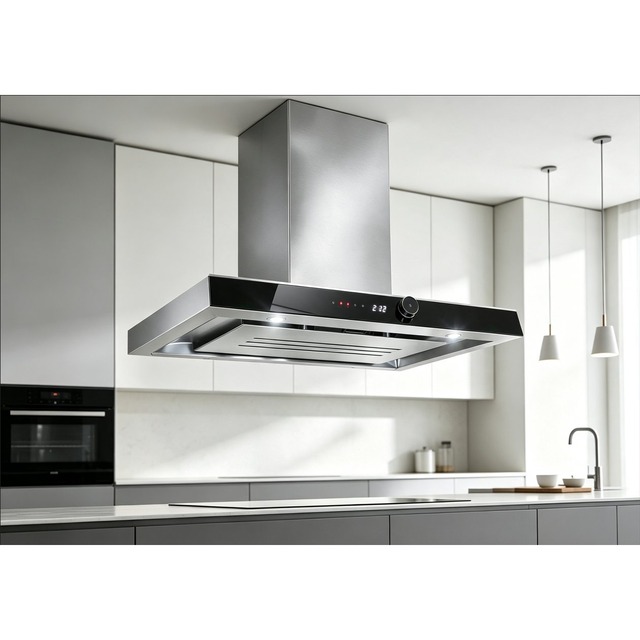
On the gas side, Golenda’s range hoods are designed to pair well with gas or induction cooktops. The CS70IX-V-E4T10L wall-mounted range hood delivers powerful extraction with a maximum airflow of 850m³/h, driven by a 300W EC motor, with 3 fan speeds and touch control. Similarly, the CT70IX-T-E4T13L model offers 850m³/h airflow, touch control, and dual 1.5W LED lamps, built for efficient kitchen ventilation. These hoods ensure that regardless of which cooktop technology your customers choose, their kitchen remains well-ventilated and comfortable.
Sourcing Considerations for Wholesalers
When deciding which cooktop technology to stock, wholesalers should evaluate several factors beyond consumer preference. Installation requirements are critical. Gas hobs require gas lines, ventilation, and often professional installation, which can add cost and complexity. Induction cooktops require adequate electrical capacity and compatible cookware — a consideration that may affect customer satisfaction if they are not informed upfront.
Energy efficiency is another major driver. Induction cooktops heat cookware directly, making them more efficient than gas or traditional electric cooktops. This efficiency is a strong selling point in markets with high electricity costs or aggressive sustainability targets. As the Department of Energy highlights, the electromagnetic field provides more precise, even heating compared to traditional cooktops, which appeals to both home cooks and commercial operators.
Safety is also a differentiator. Induction cooktops do not use open flames, and the cooking surface remains cooler after the cookware is removed, reducing burn risks. This is particularly attractive for households with children or elderly family members, as well as for commercial kitchens with strict safety protocols.
Finally, consider the broader design trends shaping the 2026 kitchen appliance market. Stainless steel remains the dominant finish, accounting for just over 81% of the market according to recent industry observations, while black and white finishes hold smaller shares at 9% and 4.5%, respectively. Seamless integration, quiet operation, and sustainable features are increasingly prioritized by kitchen designers and consumers alike. Offering cooktops and range hoods that align with these aesthetic and functional trends will help your customers build cohesive, modern kitchens.
Recent Company News
Golenda Appliances has made significant strides in manufacturing and corporate development. In November 2025, the company launched a new production base operating under a comprehensive 4S management system, ensuring streamlined operations, strict quality control, and superior product consistency across the entire production process. The facility is designed with full automation, from raw components to finished products.
Additionally, Golenda’s parent company, CHK (Stock Code: 831167), successfully listed on the Beijing Stock Exchange on May 27, marking its official entry into the capital market. For years, CHK has been dedicated to the research and development of smart control technologies for home appliances. Golenda has also announced the establishment of a multi-million-dollar annual innovation fund, reinforcing its commitment to technology-driven innovation and core competitiveness.
Conclusion
The gas hob vs induction cooktop decision is not a one-size-fits-all answer. It depends on your target market’s energy infrastructure, regulatory environment, cooking culture, and consumer priorities. Induction is gaining ground rapidly, particularly in Europe and other markets focused on energy efficiency and sustainability. Gas remains a reliable, familiar choice in regions with established gas networks and lower electrification pressure.
For B2B buyers, the smartest approach is to offer a balanced portfolio that includes both technologies, supported by quality ventilation solutions and a reliable OEM/ODM partner. Golenda Appliances provides a range of induction cooktops, infrared cookers, gas hobs, and range hoods designed to meet diverse market needs — backed by advanced manufacturing and a commitment to innovation.
About Golenda Appliances
Golenda Appliances is a Chinese OEM/ODM kitchen appliance manufacturer specializing in induction cooktops, infrared cookers, gas hobs, built-in ovens, range hoods, dishwashers, and air fryers. The company operates a new production base with advanced 4S management and full automation, and is backed by CHK, a company listed on the Beijing Stock Exchange. Golenda is committed to technology-driven innovation and offers OEM customization to support wholesale partners worldwide.
Sources
- https://www.energy.gov/articles/making-switch-induction-stoves-or-cooktops
- https://www.whirlpool.com/blog/kitchen/induction-cooktop-vs-gas-cooktop.html
- https://www.kitchenaid.com/pinch-of-help/major-appliances/induction-vs-gas.html
- https://www.mordorintelligence.com/industry-reports/residential-induction-cooktops-market
- https://www.futuremarketinsights.com/reports/commercial-induction-cooktops-market
- https://www.snsinsider.com/reports/induction-cooktops-market-9823
- https://www.coherentmarketinsights.com/market-insight/household-induction-cooktops-market-4572
- https://www.youtube.com/watch?v=tcWyb4BQuQo