
Range Hood Ducting Types and Installation Requirements: A B2B Buyer’s Guide
For kitchen appliance dealers, distributors, and project specifiers, range hood ducting is one of the most misunderstood parts of a ventilation package. The hood itself may be perfectly suited to a cooking setup, yet poor duct selection can undermine airflow, create noise, and fail local code inspections. This guide covers the main ducting types, sizing considerations, and installation requirements that matter when specifying range hoods for residential and light commercial kitchens.
Ducted vs. Recirculating Ventilation
Range hood ventilation falls into two broad categories: external venting and recirculating venting. External venting pushes cooking air, grease, and moisture through ductwork to the outdoors, while recirculating hoods pass air through a filter and return it to the kitchen. Some models are convertible, meaning they can switch between the two modes depending on whether ductwork exists in the kitchen. Where ductwork is absent, it can be professionally installed if the layout allows.
Building codes reflect this distinction. The 2018 International Residential Code (IRC) states that ductless range hoods are not required to discharge outdoors only where they are listed and labeled as ductless and installed per the manufacturer’s instructions, and where mechanical or natural ventilation is otherwise provided. For most new-build and renovation projects, ducted installation remains the default expectation.
Duct material is also regulated. Under IRC M1503.4, ducts serving domestic cooking exhaust equipment must be constructed of galvanized steel, stainless steel, or other approved materials. This is a key specification point for dealers sourcing hoods for code-sensitive markets.
Common Ducting Types and Sizing
The most common ducting configurations in residential kitchens are rigid metal duct, semi-rigid flexible duct, and fully flexible foil or plastic duct. Rigid galvanized or stainless steel duct offers the best airflow characteristics and is the preferred choice for longer runs. Flexible duct is easier to route through tight spaces but introduces more resistance and should generally be kept as short as possible.
Duct diameter must be matched to the hood’s airflow and the complexity of the run. Manufacturer installation documentation shows that duct size recommendations vary by model series — for example, one range hood installation guide lists a 6⅞-inch duct size with a recommended duct pipe of 7″–8″ for certain series, and a 7⅝-inch duct size with an 8″–9″ recommendation for another series. This illustrates why buyers should always confirm the duct specification for each model rather than assuming a universal size.
Industry guidance on duct sizing notes that larger diameters — such as 10-inch duct — allow air to flow freely even through installations with multiple bends, and that professional-grade gas cooktops in high-end kitchens typically need excellent venting. Local building codes may also specify minimum duct size requirements based on the hood and kitchen layout, so specifiers should verify requirements in the destination market.
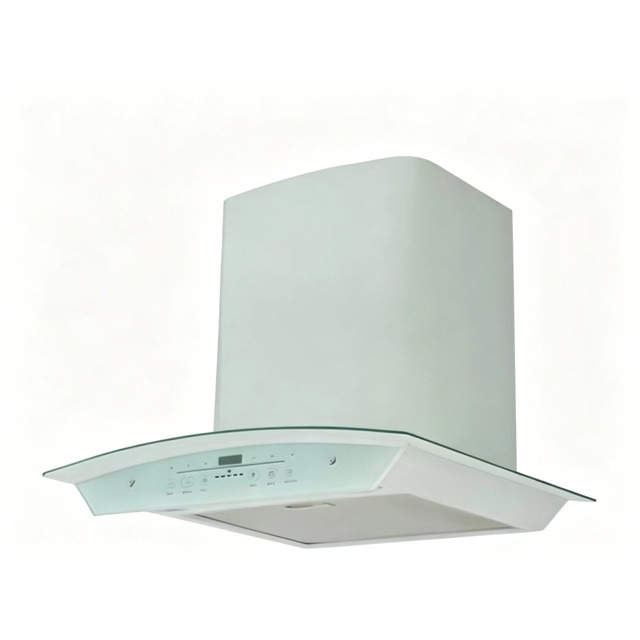
For Golenda’s range hood lineup, this means matching duct plans to the actual airflow rating. The Golenda JO-BF031 chimney range hood delivers 860 m³/hr through a 24# copper motor and metal blower box, while the Golenda CN60IX-A-N1P1L wall mounted range hood delivers a maximum 750 m³/h across 3 fan speeds. Higher-airflow models generally benefit from larger-diameter, short, straight duct runs.
Installation Requirements to Verify Before Ordering
Several practical requirements should be confirmed before finalizing a range hood order:
- **Duct route and length.** Count every elbow and transition. Each bend adds resistance, and complex routes may require upsizing the duct.
- **Duct material compliance.** Confirm galvanized or stainless steel construction where local codes require it.
- **Power connection.** Installation guides typically instruct connecting the power cord to the hood’s power outlet, often located at the top rear right of the unit. Buyers should confirm the electrical configuration for the destination market.
- **Filter and grease tray access.** Grease trays and filters must remain accessible after installation for routine cleaning.
- **Mounting type.** Wall-mounted, under-cabinet, and island hoods may each carry different duct size and installation requirements depending on their design.
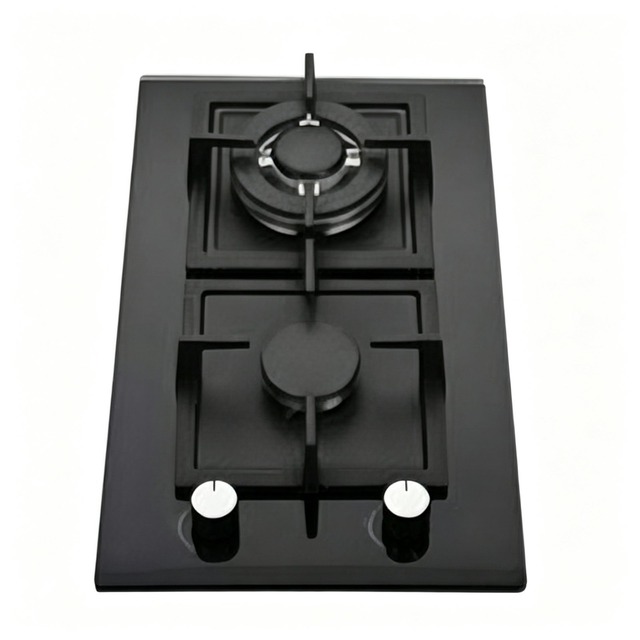
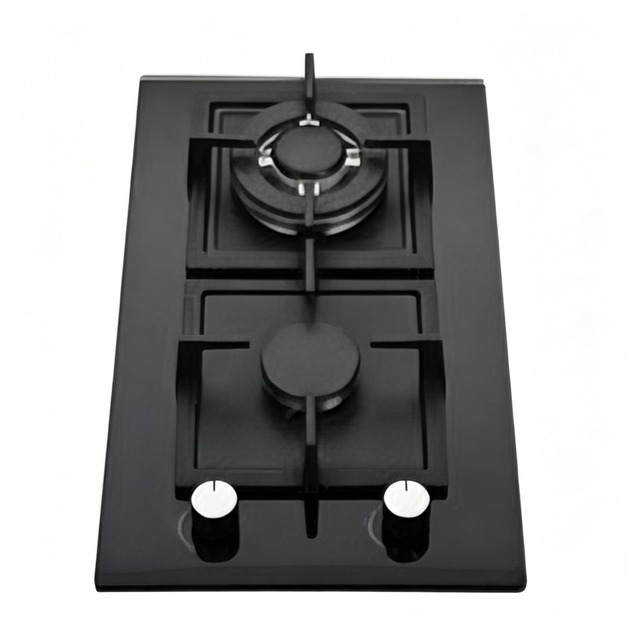
For dealers assembling a full kitchen package, it also helps to coordinate the hood with the cooking appliance. Golenda’s catalog includes the GO-GP2003 gas hob with a Chinese Sabaf burner and 8mm tempered glass panel, the 4-burner built-in gas hob with DC/AC ignition, the CHK-7041 7000W built-in induction hob with four zones and a 99-minute timer, and the GXMC-AS01 1800W built-in infrared cooktop with 10 power levels. Each cooking style produces different heat, grease, and moisture loads, which should inform hood airflow and duct sizing.
Recent Company News
Golenda’s parent group, CHK (Stock Code: 831167), successfully listed on the Beijing Stock Exchange on May 27, marking its entry into the capital market. In November 2025, Golenda Appliances launched a new production base operating under a comprehensive 4S management system, with full automation and strict quality control from raw components to finished goods. The company has also established a multi-million-dollar annual innovation fund to support technology-driven product development.
Conclusion
Range hood ducting is not a commodity decision. Duct type, diameter, material, and route length all affect real-world extraction performance, noise, and code compliance. For B2B buyers, the safest approach is to match duct specifications to each hood model’s airflow rating, confirm local code requirements on duct material and sizing, and plan the duct route before installation begins. Working with a manufacturer that documents duct and installation requirements clearly reduces after-sales issues and supports smoother project delivery.
About Golenda Appliances
Golenda Appliances is a Chinese OEM/ODM kitchen appliance manufacturer producing induction cooktops, infrared cookers, gas hobs, built-in ovens, range hoods, dishwashers, and air fryers. The company is part of CHK, which listed on the Beijing Stock Exchange on May 27 under stock code 831167. Golenda operates a new production base launched in November 2025 with 4S management and full automation, and has established a multi-million-dollar annual innovation fund. Its range hood portfolio includes the JO-BF031 600mm chimney hood (860 m³/hr) and the CN60IX-A-N1P1L wall mounted hood (750 m³/h, 3 speeds, available in 60cm and 90cm).
Sources
- http://pdf.lowes.com/installationguides/6926697048061_install.pdf
- https://www.amorettibrothers.com/journal-post/range-hood-duct-size-a-complete-guide-custom-kitchen
- https://www.kitchenaid.com/pinch-of-help/major-appliances/types-of-range-hoods.html
- https://www.worldcoppersmith.com/articles/duct-size-for-range-hoods-6-vs-8-vs-10
- https://codes.iccsafe.org/content/IRC2018P3/chapter-15-exhaust-systems