
OEM Kitchen Appliance Manufacturing Process Step by Step
For importers, distributors, and retail chains sourcing private-label cooking appliances, understanding how an OEM/ODM partner actually builds a product is the difference between a smooth program and a costly one. This guide walks through the typical stages of OEM kitchen appliance manufacturing, using Golenda Appliances’ real product range — from gas hobs and built-in ovens to induction cooktops — as working examples of what happens at each step.
Step 1: Product Definition and ODM/OEM Selection
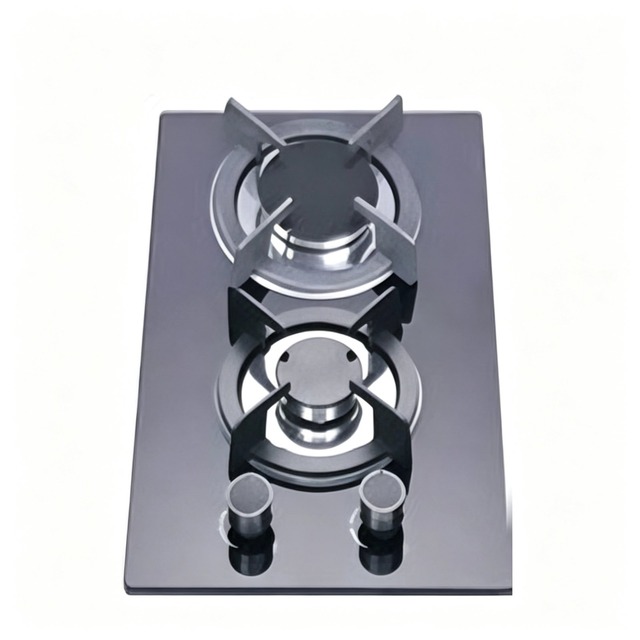
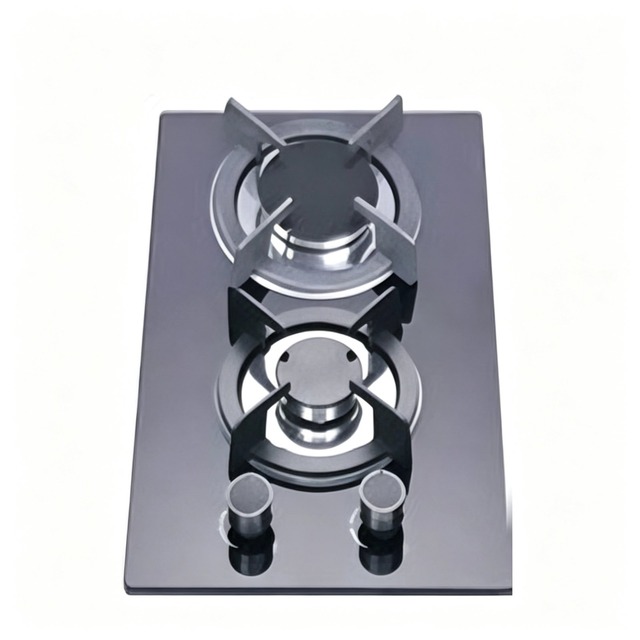
Every project starts with a decision: do you bring a fully specified design (OEM), or do you adapt an existing platform (ODM)? For buyers who want speed to market, ODM platforms are often the practical route. Golenda’s catalogue illustrates how much variation can be built on shared platforms. The GO-GP2002 gas hob, for example, is a built-in cooktop with an 8mm tempered glass panel, cast iron pan support, a Chinese Sabaf burner delivering 3.3*1.75kW total power, and metal knob control. A different buyer targeting the 60cm segment might instead start from the GHS604A-L4C2B, a three-burner gas cooktop with a 3.4kW triple ring burner, two semi-rapid burners at 1.88kW each, and a 0.9kW auxiliary burner, plus a flame failure device and NG/LPG compatibility.
At this stage, the buyer and manufacturer agree on gas type, ignition method, panel material, control interface, and market-specific requirements. Golenda’s stainless steel gas hob model shows how flexible this definition stage can be: it supports both NG and LPG at pressures of 2000/2800Pa and offers a dual ignition system (DC 1.5V/AC 110-240V).
Step 2: Engineering, Components, and Compliance
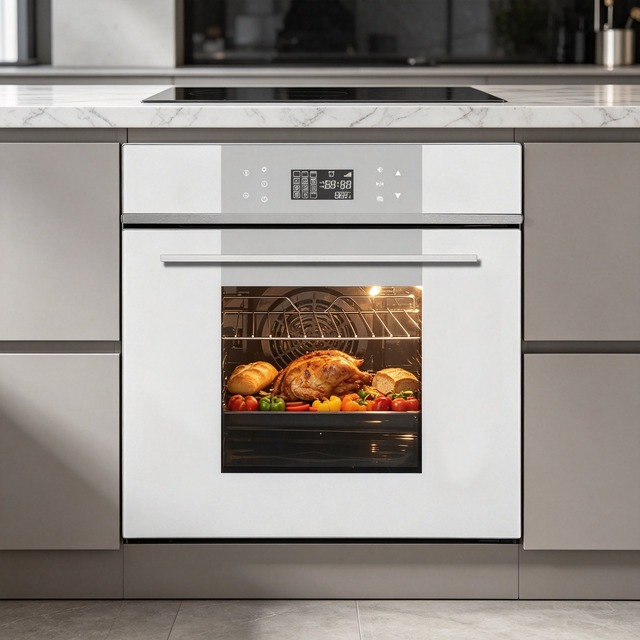
Once the specification is locked, engineering teams translate it into a bill of materials and a compliance plan. For electric products, this means selecting heating elements and cavity design. Golenda’s BH-6A29J2T4 built-in electric oven is a useful reference: 2900W total power, 13 cooking functions, a 61L, 73L, or 80L enamelled cavity with chrome side racks and five shelf positions, and a 1300W top element, 1600W grill element, and 900W bottom element. On the induction side, the IS2002 built-in induction hob pairs 2000W total power and nine power levels with a copper coil system, while the CHK-S2105 portable induction cooktop delivers 2000W in a slim W295 x D375 x H60mm footprint with a black 295x361mm panel, six touch keys, two red LED indicators, and a four-digit display.
Compliance is not an afterthought. Buyers selling into Europe should review energy label obligations, and buyers of countertop appliances should understand the differences between UL, ETL, and CE safety standards — both topics Golenda covers in its published B2B guides.
Step 3: Tooling, Production, Testing, and Fulfilment
With components confirmed, tooling and moulds are prepared for panels, cavities, and housings, followed by pilot runs to validate fit and function. Production then moves to assembly lines where gas and electrical sub-assemblies are built, tested, and integrated. Gas appliances are checked for ignition reliability and flame stability — features reflected in the pulse ignition of the GO-GP2002 and the flame failure device on the GHS604A-L4C2B. Electrical appliances undergo power, control, and safety verification before packing.
The final steps — packaging, documentation, and logistics — are where OEM programs succeed or fail commercially. Retail-ready cartons, multilingual manuals, and market-specific plugs and voltages must be confirmed early, because changes late in the process are expensive.
Recent Company News
Golenda Appliances continues to publish B2B guidance for international buyers through its blog, including “Gas Oven vs Electric Oven: Which Fits Your Retail Market?”, “Energy Label Requirements for Kitchen Appliances in the EU: A B2B Compliance Guide”, “Commercial Induction Cooktop Guide for Restaurants and Canteens”, “Countertop Appliance Safety Standards: UL, ETL, and CE Explained for B2B Buyers”, and “Smart Kitchen Appliance Demand in Europe and the USA: What B2B Buyers Need to Know”.
Conclusion
OEM kitchen appliance manufacturing is a staged discipline: define the product, engineer and certify it, then tool, build, test, and ship. Buyers who engage early on specification and compliance — and who choose a manufacturer with a broad, proven platform range — reduce risk and shorten time to shelf. Market context supports the opportunity: the induction cooktop market is projected to grow at a CAGR of 2.6% from 2026 to 2035, reaching USD 7.52 billion, while another forecast sees growth from USD 18.52 billion in 2025 to USD 38.98 billion by 2034 at 8.62% CAGR. Energy-efficiency mandates, smart home integration, and sustainable living trends are cited as key drivers.
About Golenda Appliances
Golenda Appliances is a Chinese OEM/ODM kitchen appliance manufacturer producing induction cooktops, infrared cookers, gas hobs, built-in ovens, range hoods, dishwashers, and air fryers. Its product range includes the GO-GP2002 and GHS604A-L4C2B gas hobs, the BH-6A29J2T4 built-in electric oven, the IS2002 built-in induction hob, and the CHK-S2105 portable induction cooktop.
Sources
- https://www.businessresearchinsights.com/market-reports/induction-cooktop-market-122403
- https://www.valuemarketresearch.com/report/induction-cooktop-market
- https://www.linkedin.com/pulse/home-induction-cooktop-market-size-trends-2rncc
- https://www.accio.com/business/trend-of-commercial-induction-cooker-2026
- https://www.grandviewresearch.com/industry-analysis/induction-cooktops-market
- https://golenda-appliances.com/energy-label-requirements-for-kitchen-appliances-in-the-eu-a-b2b-compliance-guide/
- https://golenda-appliances.com/countertop-appliance-safety-standards-ul-etl-and-ce-explained-for-b2b-buyers-2/