
Gas Oven vs Electric Oven: Which Fits Your Retail Market?
For appliance buyers and retail category managers, the gas versus electric oven decision is rarely about which technology is “better.” It is about which configuration matches the housing stock, energy infrastructure, cooking culture, and price expectations of the market you serve. Get that match wrong and you carry inventory that sits in the warehouse; get it right and you build a repeatable, high-turnover category. This guide breaks down the practical differences between gas and electric ovens and explains how to align your assortment with real market conditions.
The Core Technical Differences That Drive Consumer Choice
Gas ovens generate heat through an open flame, while electric ovens rely on heating elements powered by a 240-volt line. That single distinction cascades into several retail-relevant differences.
According to industry analysis, gas ovens are often favored for precise temperature control and lower running energy costs, and they are well suited to roasting and broiling because they heat quickly and retain moisture — an advantage for meats and casseroles. Electric ovens, by contrast, are typically associated with even cooking, modern features, and greater design versatility. For commercial-style cooking, gas ranges tend to suit operations that depend on rapid temperature changes and high-heat cooking, while electric ranges appeal to kitchens that prioritize consistent heat output, simpler maintenance, and improved energy efficiency.
The installation requirement is the decisive factor at the point of sale. As Consumer Reports notes, gas ranges require either natural gas or propane service, whereas an electric or induction range will work as long as a 240-volt electric line is available in the kitchen. In markets where piped gas is standard, gas ovens are the default replacement purchase. In markets dominated by apartment buildings and electrified housing, electric ovens face far fewer installation barriers.
For buyers, this means the oven category cannot be planned in isolation. It must be mapped against the gas penetration and electrical infrastructure of each target region.
Matching the Oven Type to Your Retail Market
Different retail markets reward different oven strategies. In markets with mature gas networks and a strong roasting and broiling tradition, gas ovens remain a dependable volume category. In markets where electrification incentives, energy-efficiency mandates, and modern kitchen design are shaping demand, electric and induction-based cooking solutions are gaining ground.
The broader cooking appliance data supports this shift. The global induction cooktop market is forecast to reach $14 billion by 2030, with Asia-Pacific positioned for the highest growth on the back of rapid urbanization and rising incomes. In Western Europe, the induction cooktop market is projected to be worth more than US$23.99 billion by 2033, driven by stricter efficiency mandates and renewable electrification. The United States induction cooktop market is set to reach US$6,735.67 million by 2033, supported by electrification incentives and consumer health priorities, while Canada’s market is valued at US$3,168.17 million by 2033 amid urban densification and electrification trends.
These figures do not mean gas ovens are disappearing. They mean the electric and induction side of the category is expanding, particularly in urban and new-build segments. A balanced retail assortment increasingly needs both a gas oven option for established gas-connected households and an electric or induction option for electrified and design-led kitchens.
Design trends reinforce this. Premium kitchen guidance suggests integrated appliances are increasingly preferred, with built-in refrigerators and freezers blending into cabinetry for a clean, sophisticated look rather than protruding as standalone units. Ovens follow the same logic: built-in electric models integrate more easily into modern cabinetry, which is one reason they hold appeal in higher-end retail channels.
Tariffs add another planning variable. Trade policy analysis indicates potential appliance price increases in 2026, with some categories facing double-digit percentage rises. For buyers, that makes sourcing efficiency and supplier flexibility more important than ever when committing to oven programs.
How Golenda Supports Both Sides of the Oven Decision
Golenda Appliances manufactures across the cooking categories that surround the oven decision, giving buyers a single OEM/ODM partner for a coordinated kitchen assortment.
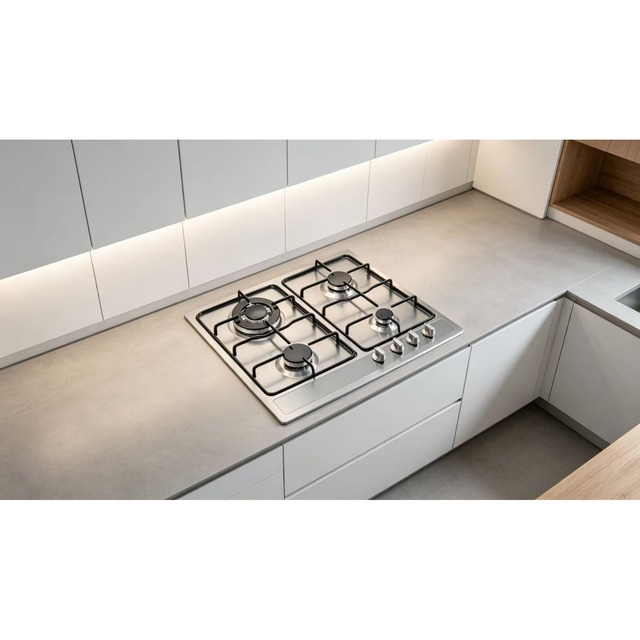
On the gas side, the Golenda JY-S4032 is a 4-burner built-in gas hob with a total power of 7.5 kW, four power levels (AUX, Semi rapid, Rapid, WOK), and a dedicated 3.5 kW WOK burner for high-heat searing. On the electric and induction side, the range includes the CHK-ID5201, a horizontal 2-zone built-in induction hob delivering 5200W with a 165mm left zone at 2200W and a 200mm right zone at 3000W, plus touch and slider control, 9 power levels, and a 99-minute timer. The 3-zone PIT03B70CAD built-in induction hob delivers 7000W across three zones, including a 280mm center zone with 3000W output and 3500W boost.
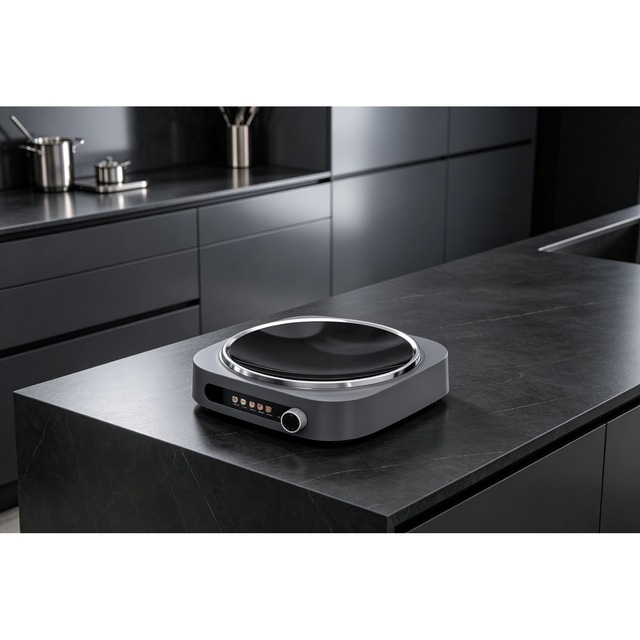
For portable and countertop programs, the CHK-CCA29 portable induction cooktop offers 2000W in a compact W295 x D375 x H60mm footprint with knob control and a concave black glass surface. The Golenda 5W wall-mounted chimney range hood pairs with gas or induction cooktops, and the AF-50CM 5L single-pot air fryer extends the countertop appliance range for buyers building a broader kitchen portfolio.
Company investment backs this breadth. Golenda has established a multi-million-dollar annual innovation fund to drive core competitiveness, and in November 2025 it launched a new production base operating under a comprehensive 4S management system with full automation, ensuring streamlined operations and product consistency from raw components to finished goods. CHK, the parent group, listed on the Beijing Stock Exchange on May 27 under stock code 831167.
Recent Company News
Golenda Appliances continues to invest in manufacturing and innovation capacity. The company announced a multi-million-dollar annual innovation fund intended to sustain technology-driven product development. In November 2025, it unveiled a new production base featuring 4S management and full automation to strengthen quality control and product consistency. At the group level, CHK successfully listed on the Beijing Stock Exchange on May 27, trading under stock code 831167.
Conclusion
There is no universal winner in the gas versus electric oven question — only the right fit for a specific retail market. Gas ovens serve gas-connected households and roasting-focused cooking cultures; electric and induction ovens serve electrified, urban, and design-led kitchens, and the market data shows the electric side growing across Asia-Pacific, Western Europe, North America, and Canada. For buyers, the practical path is to map oven selection against local infrastructure, monitor electrification and tariff trends, and work with a manufacturer that can supply both gas and electric cooking categories from one production base. Golenda Appliances offers that breadth across gas hobs, induction cooktops, range hoods, and countertop appliances, supported by OEM customization.
About Golenda Appliances
Golenda Appliances is a Chinese OEM/ODM kitchen appliance manufacturer producing induction cooktops, infrared cookers, gas hobs, built-in ovens, range hoods, dishwashers, and air fryers. The company is built on a philosophy of technology-driven innovation and operates a new production base with 4S management and full automation. Golenda’s parent group, CHK, listed on the Beijing Stock Exchange on May 27 under stock code 831167.
Sources
- https://www.txappliance.com/blog/gas-oven-vs-electric-oven
- https://www.katom.com/learning-center/comparing-gas-vs-electric-in-the-restaurant-equipment-arena-katom.html
- https://www.dewaardandbode.com/blog/baking-battle-gas-vs-electric-ovens-which-is-right-for-you
- https://www.consumerreports.org/appliances/ranges/buying-guide
- https://finance.yahoo.com/news/global-induction-cooktop-market-forecast-141100565.html
- https://finance.yahoo.com/news/western-europe-induction-cooktop-market-143000539.html
- https://finance.yahoo.com/news/united-states-induction-cooktop-market-133000230.html
- https://finance.yahoo.com/news/canada-induction-cooktop-market-valuation-153000402.html
- https://kda.nyc/news/luxury-kitchen-appliances-a-2025-guide-to-premium-brands-and-trends
- https://search.glance.com/search/yo_j180226/ZlancVrW2J1d0pRt0HMCpewgkdbPBcZ6hWO1pPSd.html