
Commercial Induction Cooktop Guide for Restaurants and Canteens
Commercial kitchens face constant pressure to control energy costs, maintain consistent output, and keep staff safe during long service hours. Induction cooking has become a serious alternative to gas in restaurants and canteens for exactly these reasons. This guide outlines what B2B buyers should evaluate when sourcing commercial induction cooktops, from efficiency and durability to the broader market trends shaping demand.
Why Induction Is Gaining Ground in Commercial Kitchens
Induction cooktops generate heat directly in the cookware through a magnetic field rather than an open flame or radiant element. Industry guides note that commercial induction cooktops can be up to 90% more energy efficient than conventional alternatives, which matters when a canteen runs multiple burners for several hours a day. Because the cooking surface itself stays cooler, kitchens also reduce ambient heat and burn risk — a meaningful operational benefit in tight back-of-house layouts.
The market data supports the shift. The global induction cooktops market was valued at USD 24.79 billion in 2025 and is projected to reach USD 39.53 billion by 2035, growing at a CAGR of 4.78% from 2026 to 2035. Europe led the household induction cooktops market in 2026 with a 38.6% share, driven by high electricity costs, strict environmental regulations, and government incentives. Residential induction cooktops are expected to grow from USD 16.49 billion in 2025 to USD 23.90 billion by 2031 at a 6.39% CAGR, with pricing parity and Europe’s Ecodesign requirements for domestic cooking appliances accelerating adoption. For commercial buyers, these forces translate into a maturing supply chain, broader product availability, and more competitive pricing.
Key Factors When Sourcing Commercial Induction Cooktops
**Power and control.** Commercial cooking demands precise, repeatable heat. Look for models with multiple power and temperature levels so staff can move between a rolling boil and a delicate simmer without guesswork. Golenda’s portable induction cooktops, such as the ALP-A80 and ALP-C03D, offer 10 power and temperature levels with a 4-hour timer, operating on a 220V-240V~ 50-60Hz electrical system. Both feature a polished black crystal plate and stainless steel body — materials that hold up to frequent cleaning in a busy kitchen.
**Durability of the cooking surface.** In canteens, cooktops are cleaned and used continuously. Glass and crystal plates resist scratches and staining better than exposed metal elements, and cast iron pan supports (where applicable) add stability for heavy pots. Buyers should also confirm that the appliance matches the pans in use: induction requires magnetic cookware, so a transition plan for existing inventory is essential.
**Safety and compliance.** Safety standards such as UL, ETL, and CE are central to B2B sourcing decisions, and buyers should verify which certifications apply to the specific model and destination market before committing to volume. This is especially important for canteens and institutional kitchens where insurance and inspection requirements are strict.
**Maintenance and serviceability.** Commercial kitchen appliance maintenance best practices emphasize regular cleaning, ventilation checks, and timely replacement of worn components. Induction units have fewer moving parts than gas ranges, but control boards and cooling fans still require attention. Choosing a supplier that documents service procedures and spare-part availability reduces downtime risk.
**Ventilation planning.** Even though induction produces no combustion gases, kitchens still need extraction for smoke, steam, and grease. A range hood CFM guide is a useful reference when sizing extraction power alongside new cooking equipment.
Gas vs. Induction: A Balanced View
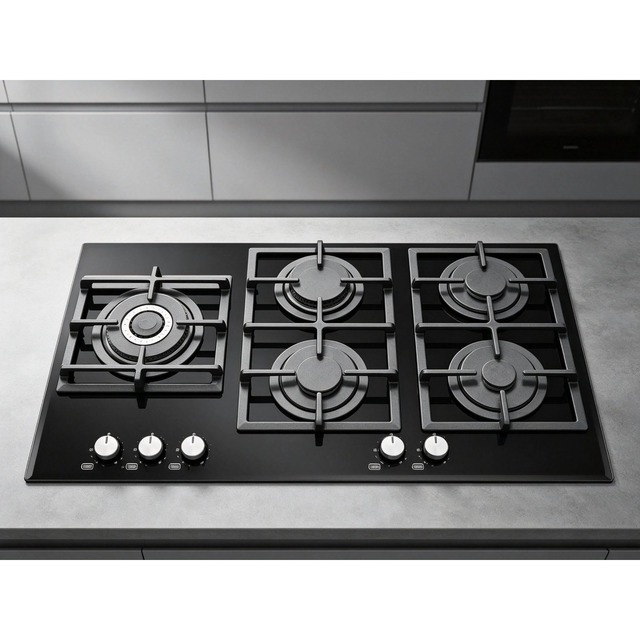
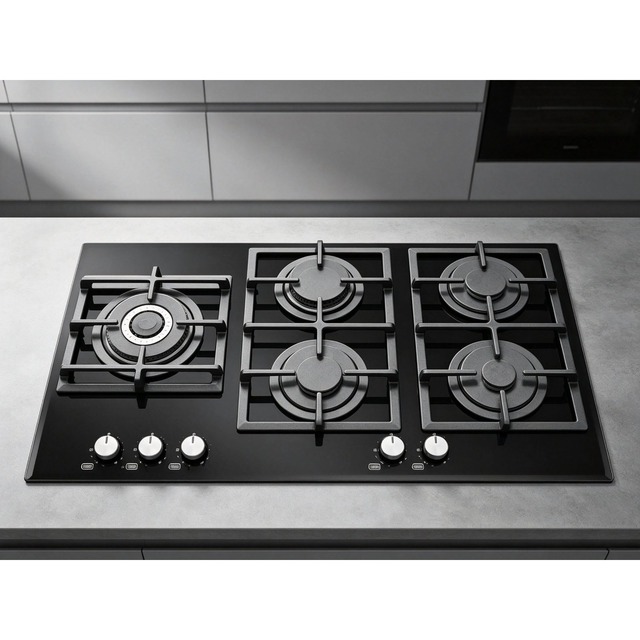
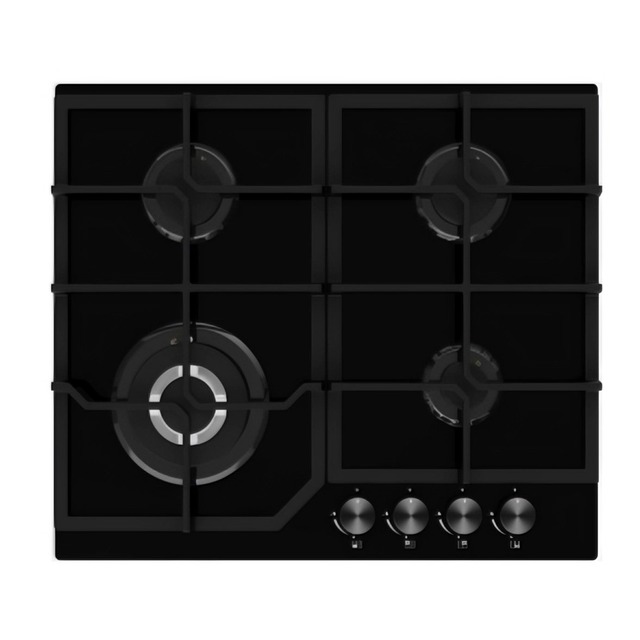
Induction is not the only option, and many commercial kitchens operate hybrid setups. Gas hobs remain popular for wok cooking and high-heat searing. Golenda’s gas hob range illustrates this: the GO-GP5020 5-burner model delivers 3.3*3.0*1.75*1.75*1.0kW with Chinese Sabaf burners and an 8mm tempered glass panel with cast iron pan support; the AGCP6042-A offers a 3.5kW wok burner plus two 1.75kW semi-rapid burners and one 1.0kW auxiliary burner; the AGCY6042 provides a 3.5kW wok burner with front knob control and auto-ignition; and the GO-GP4004 combines an 8mm tempered glass panel with four Chinese Sabaf burners rated at 3.3*3.0*1.75*1.0kW. For canteens that need both gas wok power and induction precision, a mixed equipment strategy can balance upfront cost against long-term energy savings.
Recent Company News
Golenda’s parent company, Shenzhen Xinhuike, has announced the establishment of a multi-million-dollar annual innovation fund to drive core competitiveness, reflecting a technology-driven approach to product development. In November 2025, Golenda Appliances launched a new production base operating under a comprehensive 4S management system with full automation, designed to ensure streamlined operations, strict quality control, and consistent output from raw components to finished goods. Separately, CHK (Stock Code: 831167) successfully listed on the Beijing Stock Exchange on May 27, marking its entry into the capital market.
Conclusion
For restaurants and canteens, commercial induction cooktops offer efficiency, precision, and safety advantages that align with rising energy costs and tightening environmental rules. Buyers should evaluate power control, surface durability, certification coverage, and service support before committing to volume — and consider hybrid gas-plus-induction layouts where wok cooking remains essential. As the induction market continues to expand through 2035, sourcing from a manufacturer with documented quality systems and innovation investment will help wholesale buyers and kitchen operators stay competitive.
About Golenda Appliances
Golenda Appliances is a Chinese OEM/ODM kitchen appliance manufacturer producing induction cooktops, infrared cookers, gas hobs, built-in ovens, range hoods, dishwashers, and air fryers. The company operates a new production base launched in November 2025 with 4S management and full automation, and its parent group has established a multi-million-dollar annual innovation fund. Golenda serves B2B buyers worldwide with a focus on technology-driven manufacturing and consistent quality control.
Sources
- https://golenda-appliances.com/commercial-induction-cooktop-guide-for-restaurants-and-canteens-a-b2b-sourcing-perspective
- https://mkcooktop.com/guide-to-choosing-a-commercial-induction-cooktop
- https://www.wasserstrom.com/blog/2018/01/29/commercial-induction-range-buying-guide
- https://www.webstaurantstore.com/guide/589/induction-equipment-guide.html
- https://www.restaurantware.com/blogs/cooking-equipment/guide-to-induction-cooking
- https://www.snsinsider.com/reports/induction-cooktops-market-9823
- https://www.precedenceresearch.com/household-induction-cooktops-market
- https://www.mordorintelligence.com/industry-reports/residential-induction-cooktops-market
- https://www.coherentmarketinsights.com/market-insight/household-induction-cooktops-market-4572
- https://golenda-appliances.com/countertop-appliance-safety-standards-ul-etl-and-ce-explained-for-b2b-buyers-2/
- https://golenda-appliances.com/commercial-kitchen-appliance-maintenance-best-practices/
- https://golenda-appliances.com/range-hood-cfm-guide-choosing-the-right-extraction-power/