
Countertop Appliance Safety Standards: UL, ETL, and CE Explained for B2B Buyers
When sourcing countertop appliances for the US or European market, safety certification is not a formality — it is a gatekeeper. Retailers, importers, and marketplace platforms increasingly require documented proof that electrical appliances meet recognized safety frameworks before they will stock or list them. For B2B buyers, understanding what UL, ETL, and CE actually mean — and what they do not mean — is essential to avoiding delays, returns, and compliance risk.
This article breaks down the three marks most commonly encountered in countertop appliance sourcing, explains what each one covers, and outlines how they apply to product categories such as induction cooktops, infrared cookers, gas hobs, built-in ovens, range hoods, dishwashers, and air fryers.
What Appliance Safety Standards Actually Cover
Appliance safety standards are a framework of regulations and testing protocols designed to ensure that household appliances operate safely, protecting users from electrical hazards, fires, and mechanical failures. They are not marketing labels — they represent structured evaluation of how a product behaves under normal use and fault conditions.
For countertop appliances, the scope of assessment typically includes enclosure materials, internal wiring and PCB spacing, fault behavior, labeling, and factory production controls. UL certification, for example, focuses specifically on safety — particularly electrical shock and fire risk — and reviews the actual product construction rather than just a prototype. This is why certification delays often stem from design details that were never reviewed against the standard during development.
For buyers, the practical takeaway is that certification is a design and manufacturing discipline, not a sticker applied at the end of the process. A supplier with a mature compliance workflow will typically have fewer surprises at the audit stage.
UL and ETL: The North American Marks
In the United States, UL and ETL are the two marks buyers encounter most often. Both are recognized indicators that a product has been tested against applicable safety standards. UL is the longer-established mark; ETL is issued by Intertek and is widely accepted as an equivalent listing for many product categories.
For countertop appliances destined for the US market, the electrical configuration matters as much as the mark itself. US-market countertop appliances are typically configured for 120 V with a NEMA 1-15P plug, FCC-passed electronics, and FDA food-contact-compliant materials where relevant. California Prop 65 documentation is also commonly requested. ETL or UL listing is frequently available on request rather than as a default, so buyers should confirm listing status at the quotation stage rather than assuming it.
This distinction is important for wholesalers. A supplier may offer a product that is technically capable of passing, but if the listing is not yet in place, the buyer absorbs the timeline risk. Requesting the certificate number, the listing file, and the specific standard referenced is standard due diligence.
CE: The European Framework
CE marking operates differently from UL and ETL. It is a declaration by the manufacturer that the product meets applicable European directives, rather than a third-party listing issued by a single body. For countertop appliances sold into the EU, CE compliance covers electrical safety, electromagnetic compatibility, and related requirements depending on the product type.
Golenda’s 3500W portable induction cooktop, for example, is a dual-zone countertop induction cooker with two unpolished black crystal plates and a combined output of 2000W + 1500W, and it carries CE marking. This is the kind of documentation European buyers expect to see before listing a portable cooker.
It is worth noting that CE and UL/ETL are not interchangeable. A product certified for one market does not automatically satisfy the other. Buyers sourcing for multiple regions should confirm which marks are held for each specific SKU, not for the product family as a whole.
Applying Standards Across Product Categories
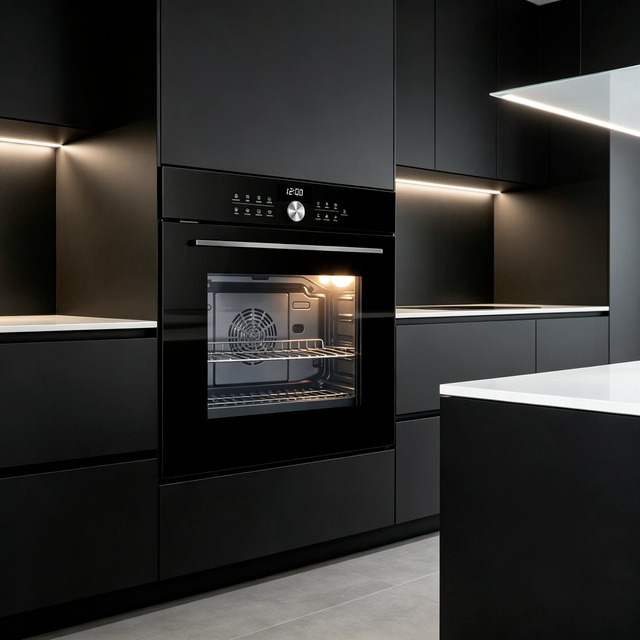
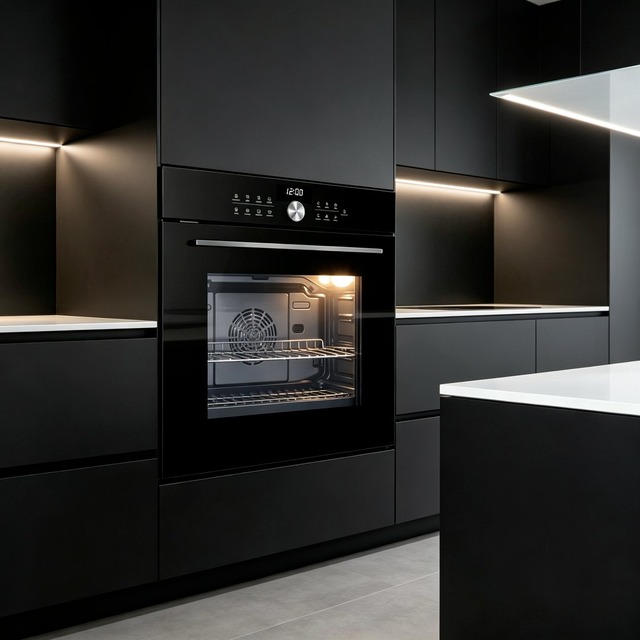
Different countertop categories carry different risk profiles. Induction and infrared cooktops concentrate high power in a compact surface, making thermal and electrical fault behavior central to testing. Gas hobs introduce combustion and gas-tightness considerations alongside electrical components where ignition is electronic. Range hoods combine electrical safety with airflow performance — Golenda’s angled glass hood, for instance, operates at 220–240V with a maximum airflow of 750m³/h and is rated EU Class B. Built-in ovens such as the Golenda EB-ECD9K-11C45, an 80-liter model with Easy-Tronic touch control and five shelf positions, fall under broader household appliance standards that address thermal insulation and cool-touch surfaces.
Air fryers present a distinct case. Heating element design directly affects both cooking quality and safety, and the choice between top-mounted and dual elements, along with the wire type used, is a meaningful differentiator for families and for buyers assessing risk. Suppliers who can explain their element architecture and the corresponding safety rationale are generally easier to qualify.
Recent Company News
Golenda Appliances continues to publish buyer-focused guidance through its blog, including a smart kitchen appliance demand analysis for Europe and the USA, an induction cooktop buying guide for wholesalers, a commercial kitchen appliance maintenance best practices guide, and a range hood CFM guide on choosing the right extraction power. The company also maintains an OEM supplier page for its 1500W portable infrared cooktop.
Conclusion
For B2B buyers, UL, ETL, and CE are not interchangeable boxes to tick. UL and ETL signal third-party safety listing for North America, with US-market configuration details such as voltage, plug type, and Prop 65 documentation forming part of the package. CE represents a manufacturer declaration of conformity for the European market. The right question is never simply “is it certified?” but “certified for which market, under which standard, and can you show the documentation?” Buyers who ask that question at the sourcing stage avoid the more expensive version of the same question at the customs stage.
About Golenda Appliances
Golenda Appliances is a Chinese OEM/ODM kitchen appliance manufacturer producing induction cooktops, infrared cookers, gas hobs, built-in ovens, range hoods, dishwashers, and air fryers. The company’s product range includes the EB-ECD9K-11C45 80L built-in oven with Easy-Tronic touch control, the CV60WH-F-N2T5Q angled glass range hood rated EU Class B, the ALP-I19 dual-zone portable induction cooktop with CE marking, and the GO-GP5022 five-burner gas hob with an 8mm tempered glass panel and cast iron pan supports.
Sources
- https://hapusgapus.com/appliance-safety-standards-explained/
- https://goldhotglobal.com/markets/usa
- https://www.r3recs.com/learn/technology/heating-element-design
- https://ajprotech.com/how-to-avoid-ul-certification-delays-in-hardware-development
- https://ashgrind.com/safety-standards/coffee-station-electrical-safety/