
Commercial Induction Cooktop Guide for Restaurants and Canteens: A B2B Sourcing Perspective
For restaurant groups, institutional canteens, and hospitality procurement teams, the cooking line is where operational efficiency meets food quality. While gas has historically dominated commercial kitchens, a growing number of operators are evaluating induction technology—not as a novelty, but as a strategic investment. This guide examines the key factors buyers should consider when sourcing commercial induction cooktops, with a focus on performance, durability, and return on investment.
Why Commercial Induction Is Gaining Traction in Professional Kitchens
The shift toward induction in commercial settings is driven by measurable operational benefits. Unlike gas or traditional electric coils, induction cooktops use electromagnetic energy to heat pans directly, offering the speed of gas with the precision and safety of electric. For canteens and restaurants where open flames are restricted—such as colleges, factories, and military units—commercial induction cookers with a power range of 3KW to 12KW are regularly deployed as the primary cooking solution.
From a facilities management perspective, induction eliminates the need for gas line installation, reduces ventilation requirements, and lowers ambient kitchen heat. This translates into a cooler, safer working environment for staff and simplified compliance with fire safety regulations. For hotels and serviced apartments, induction cooktops are becoming the default choice in demo kitchens and staff canteens where open flames are a liability.
Market data supports this trajectory. The global induction cooktop market is projected to grow from USD 18.52 billion in 2025 to USD 38.98 billion by 2034, at a CAGR of 8.62%. The U.S. market alone was valued at approximately USD 3.2 billion in 2024, benefiting from energy efficiency mandates and a shift toward sustainable living. For B2B buyers, this means the technology is no longer experimental—it is a mature category with established supply chains and service networks.
Key Specifications and Product Types for Commercial Buyers
When sourcing commercial induction cooktops, buyers must evaluate several technical parameters that directly impact kitchen workflow.
**Power Output and Duty Cycle.** Commercial kitchens require sustained high heat. Look for units with adequate wattage for your specific cooking tasks—wok cooking demands more power than sauce simmering. Countertop induction units offer flexibility for kitchens with changing layouts, allowing chefs to reconfigure stations without fixed installation costs. Built-in units, by contrast, provide a permanent, integrated appearance suitable for open kitchens where aesthetics matter.
**Control Precision and Timer Functions.** Professional cooking requires repeatable results. Multi-stage power controls and digital timers allow chefs to standardize recipes across shifts. For example, a unit with 11 power stages gives fine-grained control from gentle melting to rapid boiling, while a 3-hour timer prevents overcooking during busy service periods.
**Cookware Compatibility.** Induction cooking requires ferromagnetic cookware. While this is a consideration for training staff, most commercial kitchens already use stainless steel or cast iron pans, which are induction-compatible. Buyers should verify that existing cookware inventory will work with new induction units before committing to a full line replacement.
**Durability and Build Quality.** Commercial environments are punishing. The cooking surface should be an A-grade integral micro-crystal panel, which resists thermal shock and scratching. Stainless steel bodies and reinforced control panels are essential for longevity in high-volume settings.
**Safety Features.** Induction inherently offers safety advantages—no open flame, no gas leaks, and the surface cools quickly after use. Additional features such as automatic shut-off, pan detection, and overheat protection are critical for canteens where staff may rotate frequently.
What to Look for in an OEM/ODM Manufacturing Partner
For restaurant chains and kitchen equipment distributors, the decision is not just about the appliance—it is about the supplier. Working with an experienced OEM/ODM manufacturer allows buyers to customize products to their specific brand requirements, voltage standards, and menu needs. Some Chinese commercial induction cooker manufacturers support customized services, from panel design to control logic.
When evaluating potential partners, consider the following:
- **Product Range Breadth.** A manufacturer that produces multiple cooking technologies—induction, infrared, gas hobs, and built-in ovens—can simplify your supply chain and ensure consistent quality across your equipment lineup.
- **Certification and Compliance.** Depending on your target market, look for manufacturers who can produce units meeting relevant safety standards. CE and SAA certifications are common requirements for European and Australian markets, respectively.
- **After-Sales Support.** Commercial equipment must be serviceable. Ask about spare parts availability, warranty terms, and technical documentation before placing bulk orders.
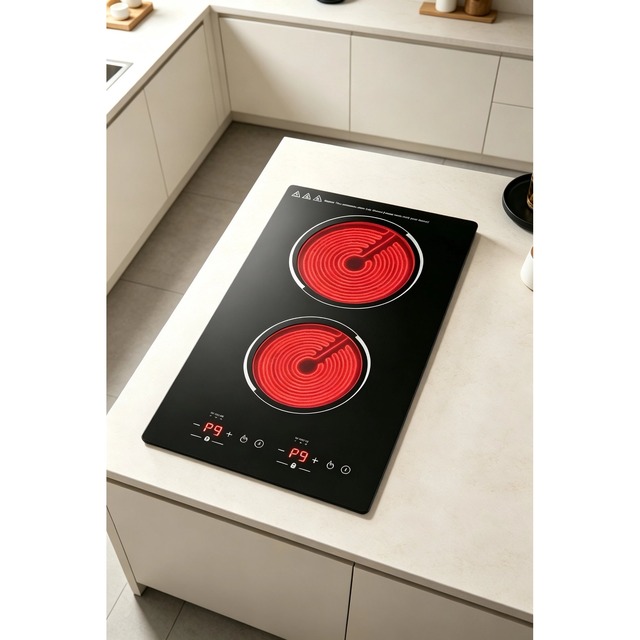
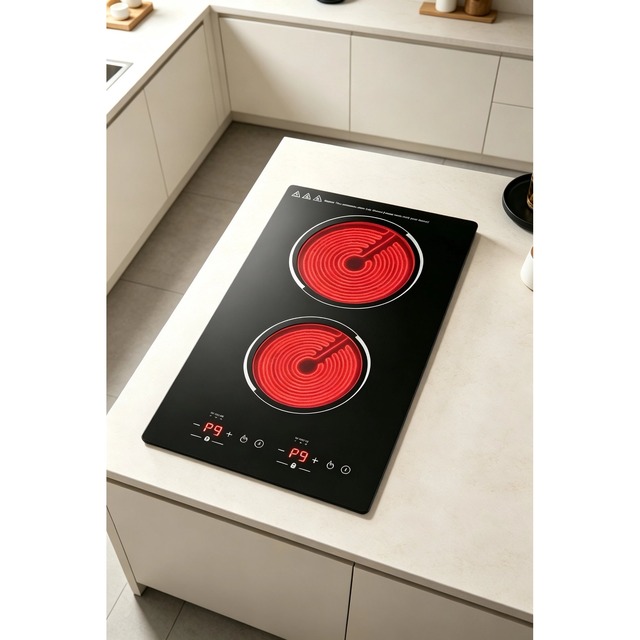
Golenda Appliances, as a Chinese OEM/ODM manufacturer, offers a range of products relevant to commercial buyers. For induction-style cooking without the cookware restrictions, the Golenda GXMC-AD01 built-in infrared cooktop delivers 2200W display power with a real 1800W rated output, featuring an A-grade integral micro-crystal panel and touch button controls. With 11 power stages and a 3-hour timer, it suits canteen applications where precise temperature control is required.
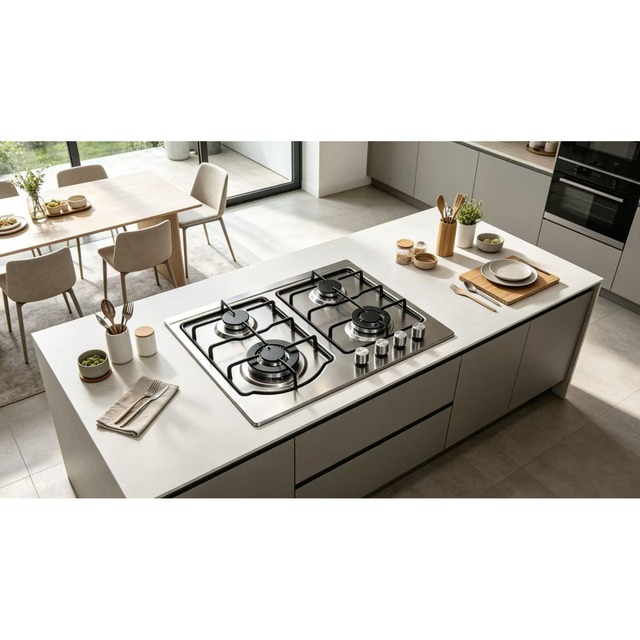
For operations that still prefer gas, the Golenda AICK6042 built-in gas hob features four burners including a high-output 3.5kW wok burner, with a durable SS 201 panel and cast iron pan stands. The Golenda E60-4012S four-burner gas hob supports both NG and LPG gas types, offering flexibility for different facility infrastructures.
Portable options are also valuable for catering and buffet operations. The Golenda CHK-RTD2207 portable infrared cooktop packs 2200W into a compact W288 x D300 x H77mm frame, featuring knob control and touch keys with eight red LED indicators and a three-digit segment display.
Recent Company News
Golenda Appliances continues to publish practical B2B resources for kitchen appliance buyers. Recent articles include a guide to countertop appliance safety standards (UL, ETL, and CE explained for B2B buyers), a 2026 market outlook on smart kitchen appliance demand in Europe and the USA, and best practices for commercial kitchen appliance maintenance. The company also maintains an active blog covering range hood ducting types and installation requirements, providing buyers with technical reference material beyond product specifications.
Conclusion
Commercial induction cooktops represent a significant operational upgrade for restaurants and canteens—offering speed, precision, and safety while reducing ventilation costs and kitchen heat. As market projections indicate sustained growth through the next decade, early adopters will benefit from established supply chains and proven installation practices.
For B2B buyers, the sourcing decision hinges on three pillars: matching product specifications to your specific cooking demands, selecting a manufacturer with a broad product range and customization capability, and ensuring after-sales support is in place before the first unit ships. Whether you choose induction, infrared, or high-efficiency gas, the goal is the same—a cooking line that performs consistently, shift after shift, for years of service.
About Golenda Appliances
Golenda Appliances is a Chinese OEM/ODM kitchen appliance manufacturer specializing in induction cooktops, infrared cookers, gas hobs, built-in ovens, range hoods, dishwashers, and air fryers. The company supports B2B buyers with customizable products for global markets, backed by practical technical resources for commercial kitchen planning.
Sources
- https://golenda-appliances.com/commercial-induction-cooktop-guide-for-restaurants-and-canteens/
- https://atrxid.com/best-commercial-induction-cooktops/
- https://leadstov.com/breaking-mysterious-wall-china-commercial-induction-cooker-buying-guides-2021-new/
- https://www.resortssupplies.com/commercial-induction-cooktop-hotel/
- https://www.grandviewresearch.com/industry-analysis/induction-cooktops-market
- https://www.valuemarketresearch.com/report/induction-cooktop-market
- https://www.linkedin.com/pulse/home-induction-cooktop-market-size-trends-2rncc
- https://golenda-appliances.com/gas-oven-vs-electric-oven-which-fits-your-retail-market/