
Countertop Appliance Safety Standards: UL, ETL, and CE Explained for B2B Buyers
For importers, distributors, and kitchen dealers sourcing countertop appliances, certification marks are not optional badges—they are gateways to market access. Whether you are bringing in portable induction cooktops, infrared burners, or built-in hobs, understanding the difference between UL, ETL, and CE can mean the difference between a smooth launch and a costly customs hold. This guide breaks down what each mark means, why it matters for your product lineup, and how to evaluate compliance when working with an OEM/ODM partner.
UL, ETL, and CE: What Each Mark Actually Means
UL Certification: The North American Benchmark
UL stands for Underwriters Laboratories, a safety science company that tests thousands of consumer and commercial products each year for electrical safety and design integrity. When a product is “UL Listed,” it means the item has been tested against specific safety standards, including potential risks like electrical hazards, fire, and mechanical safety. For countertop appliances sold in the United States and Canada, UL certification is often the reference point that insurance companies and retail buyers expect.
It is important to note that UL has expanded its testing scope in recent years to include eco-friendly goods and sustainable product designs, reflecting broader industry trends toward energy efficiency. For a B2B buyer, UL certification signals that a product has undergone rigorous third-party evaluation—not just a factory self-declaration.
ETL Certification: The Cost-Effective Alternative
ETL stands for Electrical Testing Laboratories. Like UL, ETL certification indicates that a product has been independently tested and meets applicable North American safety standards for electrical and gas-fired appliances. The key difference is that ETL is often more cost-effective for manufacturers, which can translate to consumer savings without sacrificing safety.
Both UL and ETL testing procedures are accredited by OSHA (Occupational Safety and Health Administration) to issue safety marks. In practical terms, ETL-certified equipment meets the same safety requirements as UL-listed equipment. However, UL has become one of the more recognized and referenced product safety marks in the market. For buyers, either mark provides confidence, but you should confirm which mark your target retail channel or jurisdiction requires.
CE Marking: The European Union Requirement
CE marking is fundamentally different from UL and ETL. It is not a certification mark issued by an independent third party. Instead, CE is a self-declaration by the manufacturer that the product complies with applicable European Union directives. For kitchen electrical appliances, the primary directive is the Low Voltage Directive (2014/35/EU), which harmonises safety standards across the EU for electrical products operating within certain voltage limits—typically 50–1000 V AC or 75–1500 V DC.
The directive allows manufacturers to self-declare conformity, but this does not mean the process is simple. The manufacturer must compile a technical file, perform risk assessments, and ensure the product meets essential safety requirements. For a Chinese OEM/ODM manufacturer like Golenda Appliances, providing CE-compliant documentation is a standard part of serving European distributors. However, buyers should always request the Declaration of Conformity and supporting test reports to verify that the self-declaration is backed by real testing.
How Certification Impacts Your Countertop Appliance Sourcing Strategy
Matching Certification to Market and Product Type
When sourcing countertop appliances, certification requirements vary by product category and destination market. For example, a portable induction cooktop destined for the U.S. market should carry UL or ETL certification. A built-in gas hob for Europe will need CE marking under the Gas Appliance Regulation in addition to the LVD. A dishwasher operating at 1750W (120V 60Hz) for the North American market requires a different certification pathway than a 220V model for Asia.
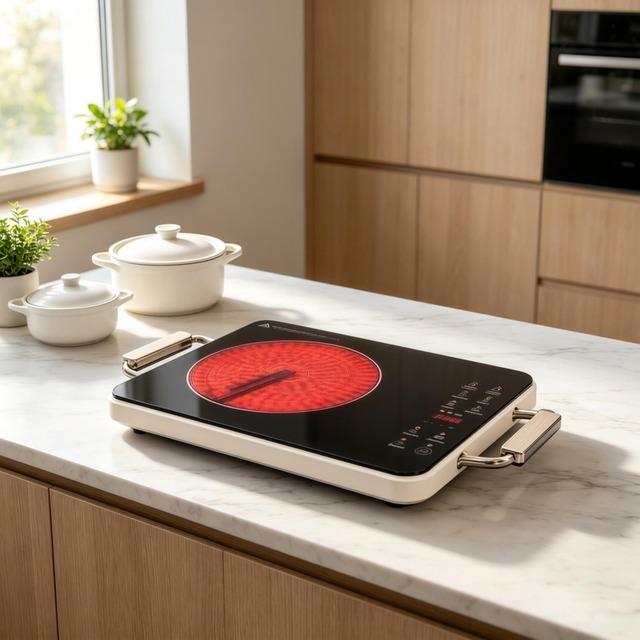
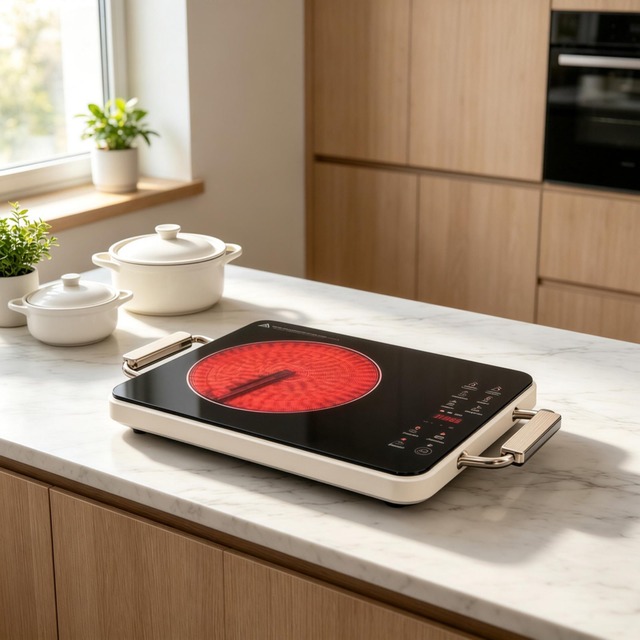
Consider Golenda’s product range as a practical example. The Golenda CHK-RTD2213 is a 2200W portable infrared cooktop with 12 touch keys and a slim W470 x D290 x H43mm footprint. If you are importing this model into the U.S., you would need to verify UL or ETL status. The Golenda CHK-CCA29, a 2000W portable induction cooktop with knob control and a concave black glass surface, is another countertop unit where certification documentation should be reviewed before order confirmation.
The Role of OEM/ODM Partners in Certification
Working with an experienced OEM/ODM manufacturer can simplify the certification process. A factory that already produces certified products for global markets understands the documentation requirements, testing protocols, and labeling standards. Golenda Appliances, for instance, operates a new production base launched in November 2025 under a comprehensive 4S management system. This system ensures streamlined operations, strict quality control, and superior product consistency from raw components to finished goods—factors that directly support repeatable certification outcomes.
The company is also backed by CHK, which successfully listed on the Beijing Stock Exchange on May 27 with stock code 831167. CHK has been dedicated to the research and development of smart control technologies for home appliances, and Golenda has announced a multi-million-dollar annual innovation fund to drive core competitiveness. For B2B buyers, these corporate facts matter because they indicate financial stability and a long-term commitment to quality—both of which reduce the risk of certification gaps appearing after production begins.
Practical Questions to Ask Your Supplier
Before placing an order for countertop appliances, ask your supplier for the following:
1. **Certification copies**: Request the actual UL, ETL, or CE certificates, not just a mention in a brochure.
2. **Test reports**: Verify that the certification covers the specific model you are ordering, not a similar model.
3. **Labeling requirements**: Confirm whether the certification mark must appear on the product, the packaging, or both.
4. **Market-specific variations**: Ask whether the certification applies to 120V/60Hz models for North America or 220-240V/50Hz models for Europe and Asia.
5. **Renewal and surveillance**: Check whether the certification is current and whether the factory undergoes periodic inspections.
Recent Company News
Golenda Appliances has made several strategic moves that reinforce its position as a reliable OEM/ODM partner. In November 2025, the company launched a new production base operating under a comprehensive 4S management system with full automation, ensuring strict quality control across the entire manufacturing process. Additionally, CHK, the parent entity, successfully listed on the Beijing Stock Exchange on May 27, marking its official entry into the capital market. Golenda has also announced the establishment of a multi-million-dollar annual innovation fund to support technology-driven product development and overcome external challenges.
Conclusion
For B2B buyers of countertop kitchen appliances, understanding UL, ETL, and CE is not about memorizing acronyms—it is about protecting your brand, your customers, and your bottom line. UL and ETL provide third-party verification for North American markets, while CE requires a manufacturer’s self-declaration for European compliance. Each mark has its own process, cost structure, and market recognition. By partnering with a manufacturer like Golenda Appliances that invests in production quality and corporate governance, you can navigate these requirements with greater confidence and bring safe, compliant products to market faster.
About Golenda Appliances
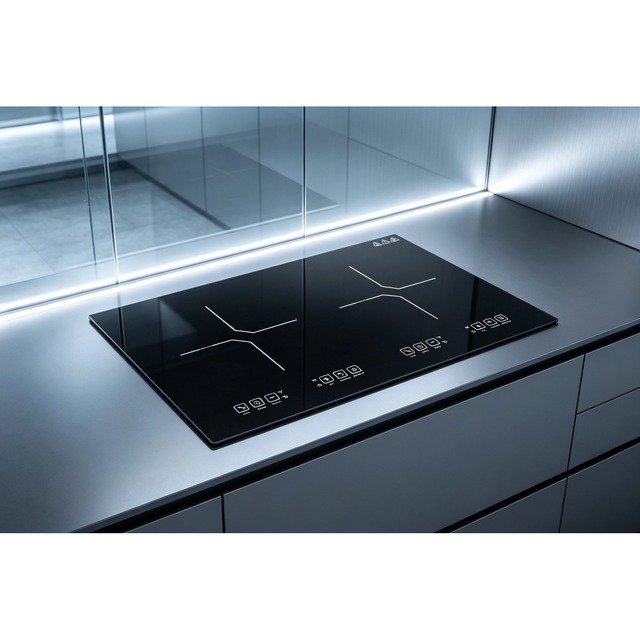
Golenda Appliances is a Chinese OEM/ODM manufacturer of kitchen appliances, including induction cooktops, infrared cookers, gas hobs, built-in ovens, range hoods, dishwashers, and air fryers. The company operates a new production base with advanced 4S management and full automation, launched in November 2025. Golenda is affiliated with CHK, which listed on the Beijing Stock Exchange on May 27 (Stock Code: 831167). The company has announced a multi-million-dollar annual innovation fund to drive core competitiveness. Real product examples include the Golenda CHK-RTD2213 2200W portable infrared cooktop, the Golenda GXMI-AD02 built-in double zone induction hob, the Golenda E60-4011S gas hob, the Golenda DWF-17 built-in dishwasher, the Golenda CHK-CCA29 portable induction cooktop, and an 80L built-in oven with digital and knob control.
Sources
- https://www.cityfoodequipment.com/blogs/learning-center/what-does-nsf-ce-etl-ul-certifications-mean-and-why-is-it-important-for-restaurants
- https://sysracks.com/blog/ul-vs-etl-certifications-meaning-difference
- https://www.sofeast.com/knowledgebase/kitchen-electrical-appliances-ul-ce-certification-tips
- https://www.onlogic.com/blog/etl-listed-vs-ul-listed-a-guide-to-understanding-safety-certifications
- https://www.equippers.com/blog/nsf-ul-etl-energy-star-certifications-meanings